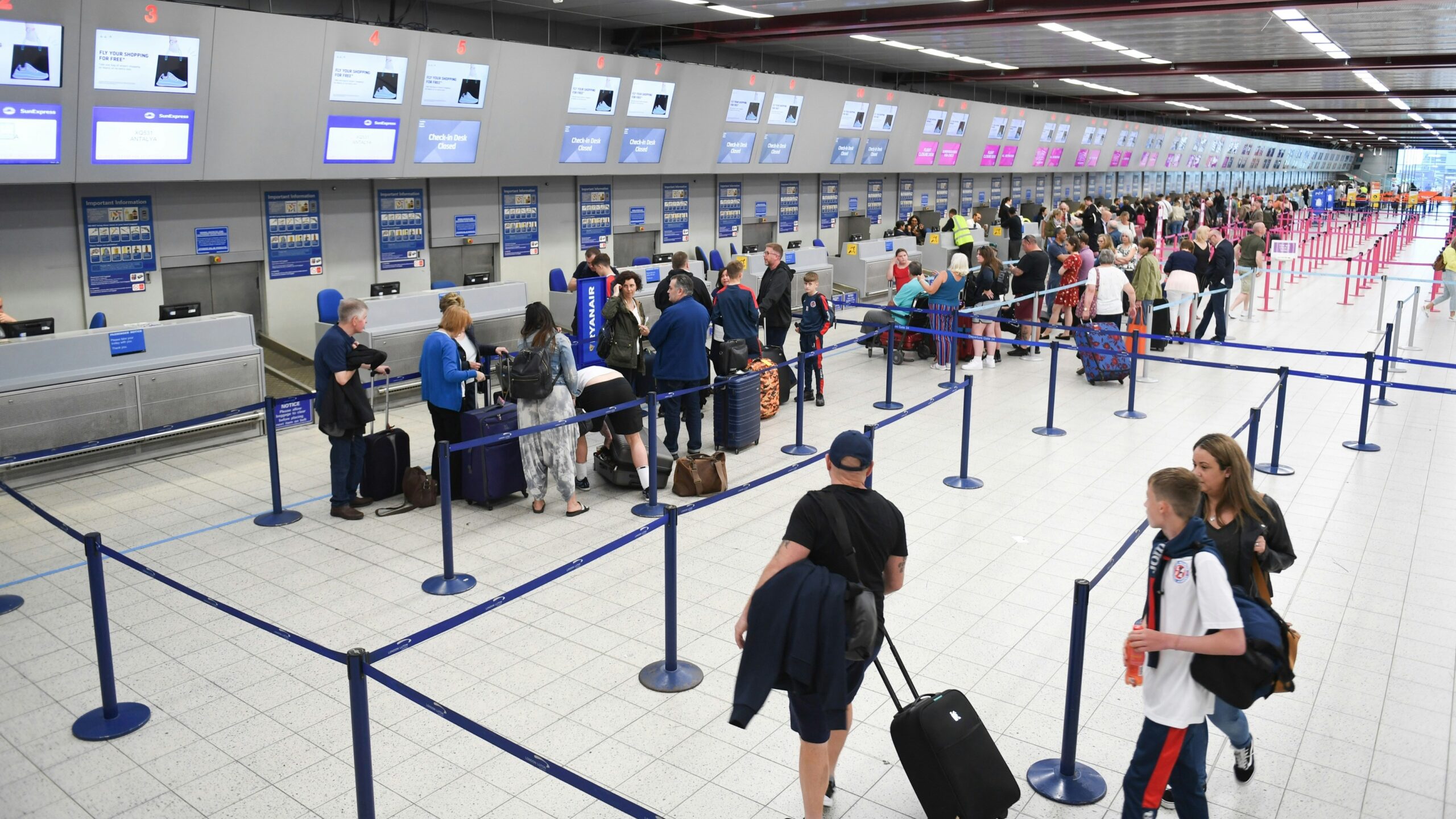
Airfare was one of the standout increases in the government’s most recent inflation report, and it lands hardest on retirees who fly to see grandchildren rather than business travelers on expense accounts. The Bureau of Labor Statistics’ Consumer Price Index for July 2026, released August 12, listed airline fares among the largest year-over-year increases in the entire report, alongside a smaller but still real jump within the month itself.
The BLS Numbers, Read Directly From the Release
According to the Bureau of Labor Statistics’ July 2026 CPI summary, airline fares rose 25.5 percent over the 12 months ending in July, on an unadjusted basis, making it one of the report’s most-cited notable increases alongside medical care, recreation and household furnishings. Within the month, the seasonally adjusted airline fares index climbed 2.2 percent in July after a smaller 0.2 percent rise in June, meaning the acceleration is recent, not just a stale year-old spike still showing up in the annual comparison.
For context, the broader all-items CPI-U rose 3.4 percent over the same 12 months, and the “core” index excluding food and energy rose 2.5 percent. Airline fares climbing roughly 7.5 times faster than overall inflation is what pushed the category into the report’s list of standout movers rather than an ordinary line in a 400-item table.
Free retirement updates: A quiet rule change can shrink your Social Security or Medicare check, and no one warns you. The free Retirement Shield newsletter catches these early and tells you what to do. Get it free.
Why Retirees Feel This More Than the Headline Number Suggests
Airfare is not weighted heavily in the overall CPI basket, but it looms much larger in a retired household’s actual annual budget than in the government’s statistical average, because retirees are more likely to fly for family visits, holidays and once-a-year trips rather than routine commuting. A retired couple who books two or three round trips a year to see children or grandchildren, or to attend a family event, can see that spending line move by hundreds of dollars even when the rest of their monthly costs barely shift. Unlike gasoline or groceries, airfare is also a cost households can defer or skip, which means a sustained 25.5 percent increase functions less like an unavoidable expense and more like a decision retirees increasingly have to weigh against other spending.
The Department of Transportation’s Bureau of Transportation Statistics puts an actual dollar figure behind that squeeze: the average U.S. domestic air fare reached $428 in the first quarter of 2026, up 5.7 percent from the fourth quarter of 2025 and the highest first-quarter average the agency has on record, with the average round-trip itinerary running $522. A retired couple booking two round trips a year at that average fare would spend roughly $2,088 on tickets alone, before baggage fees or seat selection, a real line item against a fixed monthly income even when it is not a bill that arrives every month.
Fares Climbed in Every Month of 2026
The July jump was not an isolated monthly spike. The U.S. Travel Association’s Travel Price Index, which tracks the same underlying CPI data monthly, reports that airline ticket prices rose in every month of 2026 and are up 19.9 percent since December, a steady seven-month climb rather than a single bad month. The association’s July release also puts fares 19.2 percent above their 2019 level, which is actually a smaller gain than the 30.1 percent rise in overall consumer prices over that same seven-year stretch, meaning even after this year’s run-up airfare has still not caught up to broader inflation since before the pandemic.
What’s Driving the Jump, According to the Report
The BLS release does not assign a single cause to the airline fares increase; it simply reports the price change alongside other categories that moved in the same direction, including medical care services, communication and education. What is verifiable is the pattern within 2026: airline fares rose only 0.2 percent in June before jumping 2.2 percent in July, a month-over-month acceleration that outpaced nearly every other major category tracked in the same release. The U.S. Travel Association’s tracking points to a specific mechanical driver behind the July acceleration: jet fuel, priced by the Argus US Jet Fuel Index, dipped below $3 a gallon in early July before reversing and closing the month at $3.83 a gallon, a swing that lines up with the timing of the fare increase even though BLS itself does not draw that causal link. Gasoline told a similar story for drivers rather than flyers: pump prices were roughly 25 percent higher than a year earlier even as they fell for a second straight month in July, showing energy costs moved unevenly across categories rather than in one uniform direction.
What to Watch in the Next Report
The BLS has already scheduled its next release, covering August 2026 data, for Friday, September 11. That report will show whether the July acceleration was a one-month spike tied to peak summer travel or the start of a longer run higher. Because airline fares are one of the more volatile lines in the CPI from month to month, a single month’s 2.2 percent jump is worth watching for confirmation rather than treating as a permanent new baseline. Anyone budgeting travel for the fall or for the holiday season may want to book with the expectation that fares have moved meaningfully higher than a year ago, rather than assuming the market will simply revert.
This article was produced with AI assistance and reviewed by a human editor. Figures are linked to their primary sources; where a claim could not be verified from the public record, we say so.
More Financial Reading