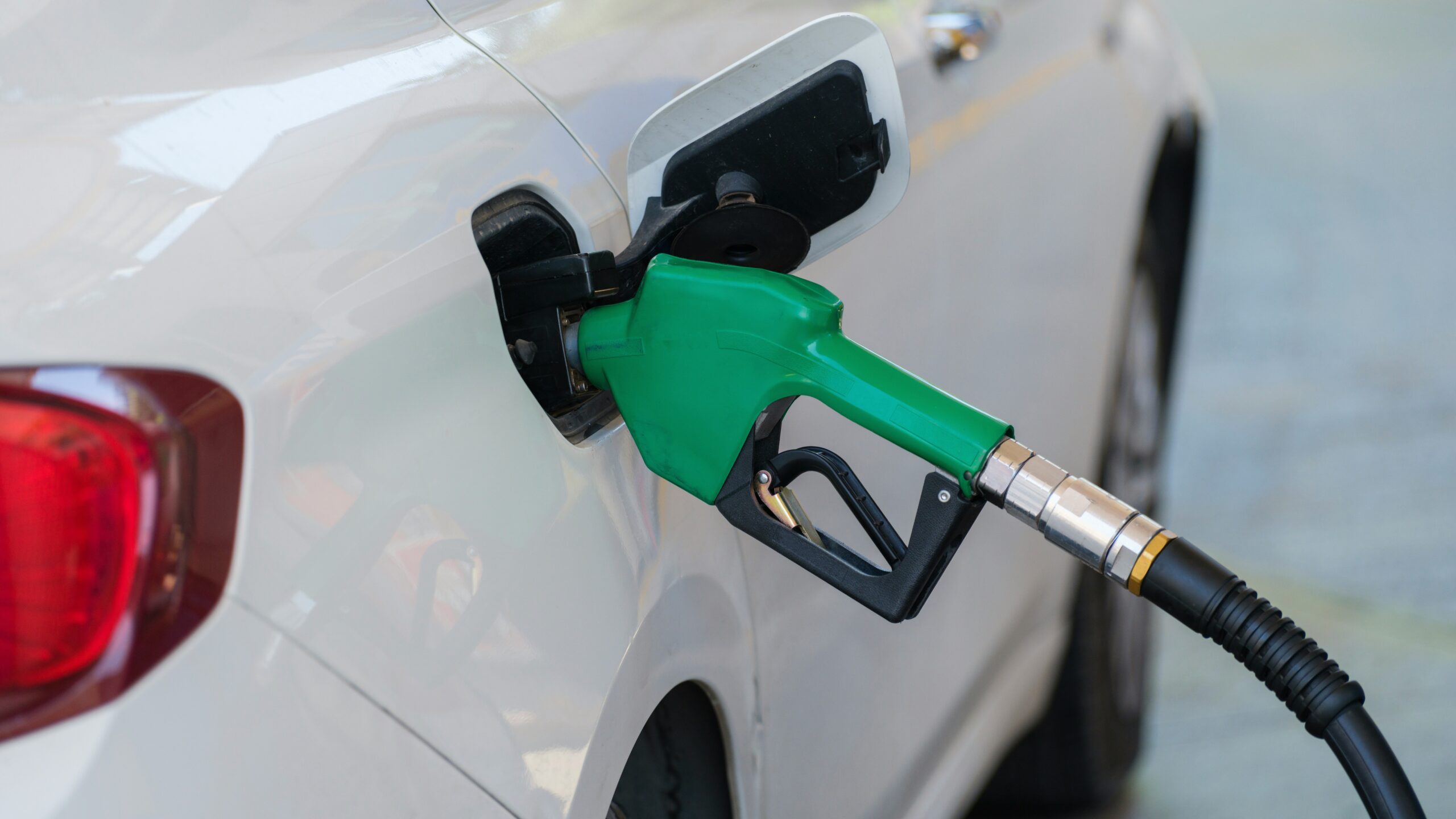
The average price of diesel fuel in the United States hit $5.6046 a gallon this week, according to AAA’s daily national survey, up from $3.7072 a gallon a year ago — a gap of about $1.90. Almost nobody drives a diesel-powered car to the grocery store, so that number rarely shows up on a household’s own fuel receipt. It shows up somewhere else instead: on the invoice a trucking company sends the distributor that stocked the cereal aisle, the invoice that distributor sends the store, and eventually the price sticker on the shelf.
The gap at the pump: $5.60 versus $3.71 a year ago
AAA’s fuel-price tracker updates the national average daily, and this week’s diesel number sits well above where it was a year ago, a month ago and even a week ago. The current average is also creeping toward AAA’s own all-time high for diesel, $5.8159 a gallon, recorded in June 2022, though it hasn’t reached that mark.
The increase isn’t only an AAA read. The U.S. Energy Information Administration runs its own weekly survey of on-highway diesel prices and put the national average at $5.652 a gallon for the week ending August 24, up from $5.454 the week before. The two surveys use different methods, but they tell the same story: diesel kept climbing through August, and it now costs roughly a dollar ninety more than it did a year ago, based on AAA’s own current-versus-year-ago comparison.
Free retirement updates: Want plain-English help keeping more of your money in retirement? The free Retirement Shield newsletter covers the benefits, deadlines, and money mistakes that cost retirees, a couple times a week. Subscribe free.
Why a diesel price shows up in the cereal aisle
Trucks move the overwhelming majority of America’s food before it reaches a store shelf. A 2025 research summary published by the U.S. Department of Agriculture’s Agricultural Marketing Service states that trucks carry 83 percent of agricultural products and 92 percent of dairy, fruit, vegetables and nuts shipped domestically. Diesel is the fuel nearly every one of those trucks burns, and the same USDA-funded research, citing separate industry cost data, found that fuel accounted for 28.5 percent of a trucking company’s marginal cost per mile in 2022, second only to driver wages and benefits at 40.3 percent.
Diesel isn’t only a highway fuel, either. Refrigerated trailers, the kind that keep dairy, meat and produce cold in transit, typically run their cooling units off a second diesel engine mounted on the trailer itself, so a load of perishables burns diesel twice over: once to move the truck and once to keep the cargo cold. Rail freight, which carries some grain and packaged goods over long distances, still finishes almost every trip with a truck for the final leg from a rail yard or distribution center to an actual store.
What a USDA-funded study found at the register
The USDA research team, based at the New Jersey Institute of Technology, tracked shipments of four widely purchased items — apples, onions, potatoes and tomatoes — from 16 states to nine terminal markets between 2017 and 2022, isolating how much of the price difference between the shipping point and the store was attributable to diesel costs and truck-driver availability rather than the food itself. They found that rising diesel prices raised the price of potatoes by an estimated 10.3 cents a pound, apples by 7.2 cents a pound and tomatoes by 3.3 cents a pound; onions were the one item where the effect wasn’t statistically significant. Averaged across all four commodities, a diesel price increase translated into about 1.8 cents more per pound at the register.
That study’s data ended in 2022, so it can’t tell us exactly what today’s $1.90 gap is doing to this month’s receipt. What it does offer is the clearest primary evidence available for the mechanism itself, and it points the same direction every time: when diesel rises, the households buying those particular items eventually pay more for them, with a root vegetable like potatoes affected earliest and most, and a quick-turnaround import like tomatoes affected least.
The grocery receipt hasn’t caught up — at least not yet
Diesel’s roughly 51 percent year-over-year increase, from $3.7072 to $5.6046, is far larger than anything currently showing up in the government’s own measure of grocery inflation. The Bureau of Labor Statistics reported that its food-at-home index actually fell 0.1 percent in July and was up only 2.7 percent over the prior 12 months, with the broader food index up 3.0 percent. That gap between a near-doubling diesel line and a 2.7 percent grocery-inflation reading isn’t a contradiction; it’s a sign of how partial and lagged the pass-through actually is. Freight is one input among many in a grocery price, most large carriers rebase their fuel surcharges against the government’s own diesel index on a weekly or monthly cycle rather than in real time, and retailers absorb some of the swing rather than repricing shelves immediately.
The clearest verified number in any of this is still the spread AAA and the EIA both publish on their own schedules: diesel remains close to a dollar ninety more expensive than it was in August 2025. That spread is wide enough that the fuel-surcharge formulas built into most trucking contracts, tied directly to the government’s own weekly diesel index, will keep passing at least part of the increase along — not as a single price jump a shopper can point to, but as a few more cents added, freight invoice by freight invoice, to whatever reaches the shelf next.
This article was produced with AI assistance and reviewed by a human editor. Figures are linked to their primary sources; where a claim could not be verified from the public record, we say so.
More Financial Reading