Three dates govern this story, and only one of them is on a paycheck. January 1, 2027 is when Michigan’s hourly floor moves to $15.00. September 30, 2026 is the deadline several states have set for publishing the rate that takes effect on that same January morning. And late August is when the price data those calculations depend on gets locked in, without any announcement at all.
Michigan: $13.73 now, $15.00 on January 1
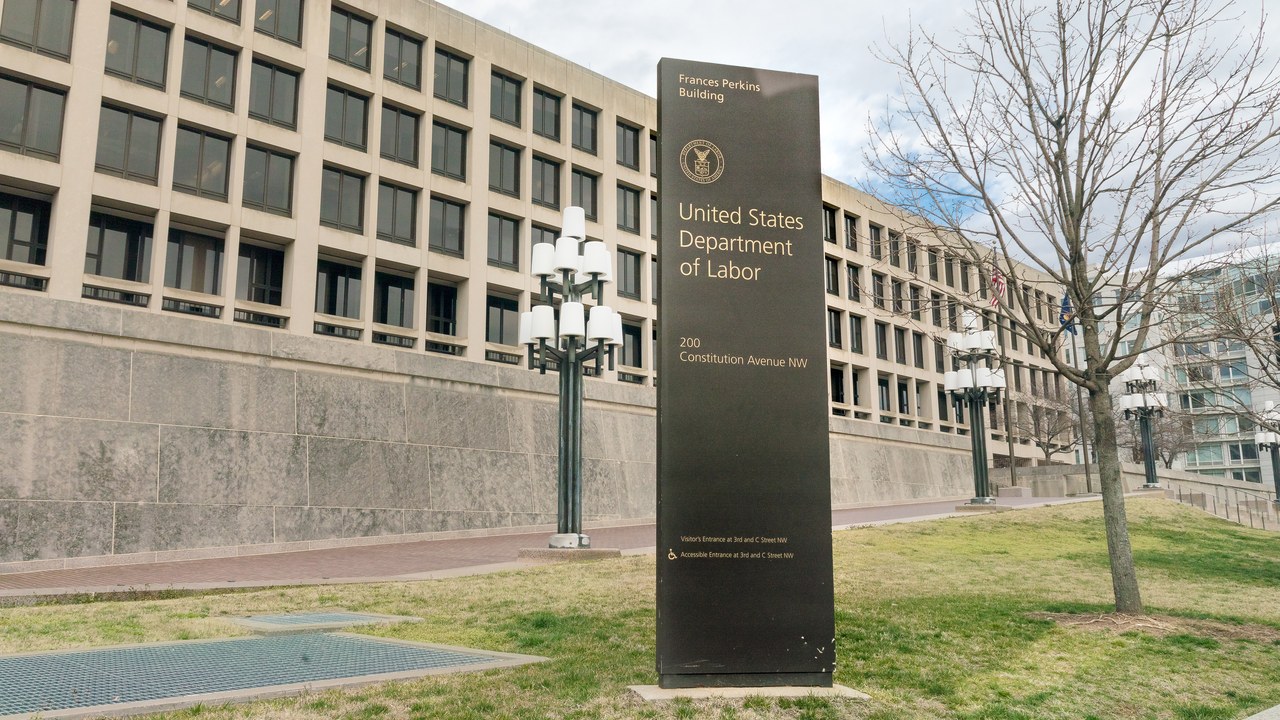
The Labor Department’s table of state minimum wage laws currently lists Michigan’s basic minimum rate at $13.73 per hour, applicable to employers of two or more employees. The same entry states that the rate is scheduled to increase on January 1, 2027 to $15.00 per hour, and that it will be adjusted annually based on a set formula after that.
Michigan’s own labor agency says the same thing in its own words, listing $13.73 effective January 1, 2026 and $15.00 effective January 1, 2027. For a full-time schedule of 40 hours a week, the step from $13.73 to $15.00 is $1.27 an hour, which works out to roughly $50.80 in a week and about $2,642 across a 52-week year before taxes. That is the size of the change, stated plainly, for the workers actually standing on the floor.
Free retirement updates: Miss an enrollment or claim deadline and it may be gone. Our free Retirement Shield newsletter keeps readers ahead of the ones that matter. Get the free newsletter.
Senate Bill 8 and the formula that takes over afterward
The Michigan increases are not administrative. They were written into statute: key changes to the state’s minimum wage law took effect on February 21, 2025 under Senate Bill 8, which set the schedule of incremental increases carrying the rate to $15 per hour by 2027. Because the dollar figure sits in law rather than in a formula output, it is knowable this far in advance, which is exactly why Michigan is the one state whose 2027 rate can be quoted today.
After 2027, Michigan joins the indexing states. The federal table notes that the rate will then be adjusted annually based on a set formula, which converts the question from what the legislature decided to what inflation did. The published dollar figure stops being available a year ahead and starts being available a few months ahead.
The August price reading that decides next year’s rates
The states that raise their minimum wage by formula each year mostly run the same arithmetic, and it hinges on a single price series: the Consumer Price Index for Urban Wage Earners and Clerical Workers, known as CPI-W, measured through August. That reading is published in September, which is what pushes the whole calendar of announcements into that month. Nothing is voted on and nothing is negotiated. An index number is released, a percentage is applied, and a new hourly rate falls out of it.
The mechanics are visible in the last round. Ohio’s Department of Commerce explained that its increase was tied to the CPI-W for the twelve-month period ending in August, and that the 2.8 percent adjustment corresponded to the change from September 1, 2024 through August 31, 2025. Washington’s Department of Labor and Industries described its own method the same way, comparing the CPI-W from August of the previous year to August of the current year.
Washington and Ohio publish on the same seasonal clock
Washington announced its current rate on September 30 of last year, setting the wage at $17.13 an hour effective January 1, 2026, an increase of 2.8 percent. That announcement also reset three other numbers that ride on the same index: the minimum salary an employee must earn to be exempt from overtime, the hourly rate for exempt computer professionals, and the salary threshold above which a non-compete agreement is enforceable in the state.
Ohio’s announcement moved more than the wage as well. Along with the increase to $11.00 for non-tipped employees and $5.50 for tipped employees, the threshold determining which businesses the state minimum applies to rose from $394,000 to $405,000 in annual gross receipts. Workers at Ohio businesses below that line remain tied to the federal minimum of $7.25, a figure that only Congress can change.
Why California’s $16.90 is not a 2027 number
Lists of next year’s minimum wages circulate early, and they are unreliable at this point in the calendar for a specific reason: the underlying index reading does not exist yet. One widely shared 2027 list checked for this article presented California’s $16.90 as a 2027 rate. It is not. The federal table shows $16.90 as California’s basic minimum rate currently in effect, with a note that the wage will be adjusted annually based on a set formula.
The distinction is worth holding onto for anyone budgeting on an hourly wage. As of this writing, Michigan’s $15.00 is the 2027 figure that appears in a government source, and it appears there because a statute put it there. Every other number for next January is still waiting on an index reading that has not been released.
This article was produced with AI assistance and reviewed by a human editor. Figures are linked to their primary sources; where a claim could not be verified from the public record, we say so.
More Financial Reading