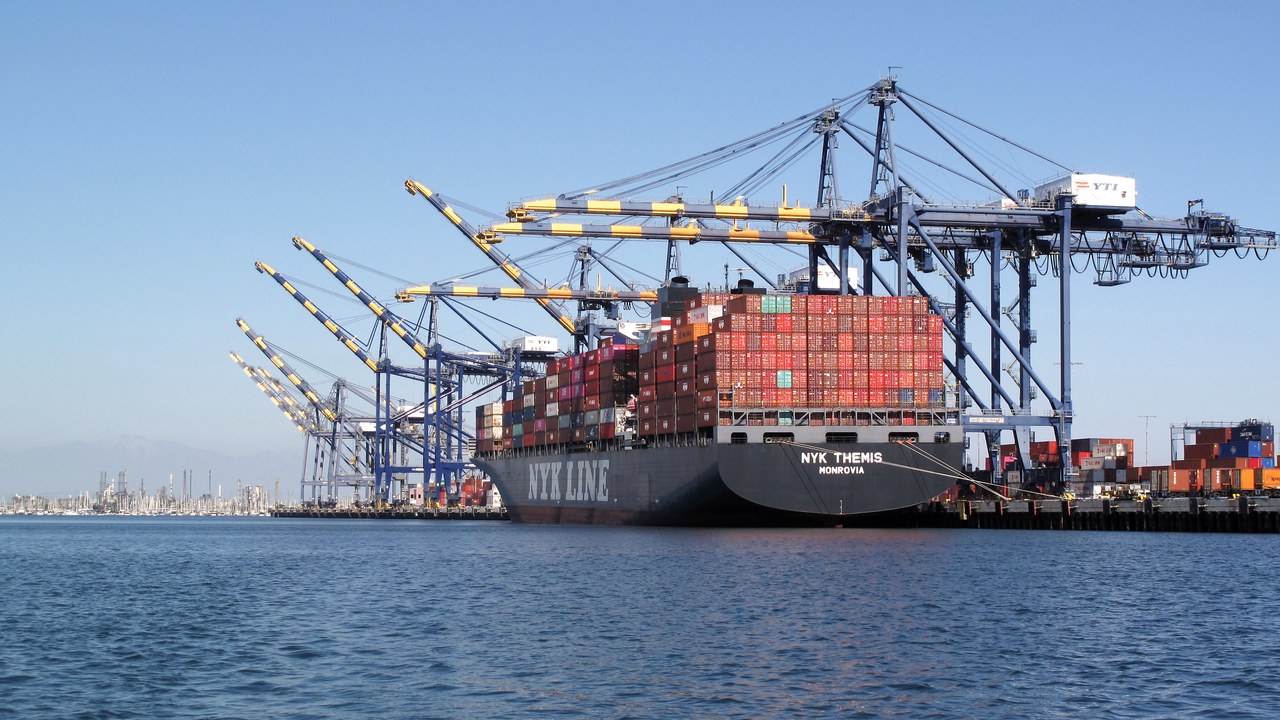
On April 30, 2026, the federal government’s customs-duty receipts for the fiscal year stood at $188.6 billion. Three months later the same line in the Treasury’s books read $154.5 billion. That roughly $34 billion swing is not a collapse in imports or a bookkeeping quirk. It is a refund program running in reverse through the customs account, and none of it is routed to the households that paid higher prices at the register.
What CBP’s Refund Notice Puts at $166 Billion
U.S. Customs and Border Protection published a notice in the Federal Register on July 8, 2026 laying out the size of what the agency has to unwind. Tariffs assessed under the International Emergency Economic Powers Act between February 3, 2025 and February 24, 2026 come to an estimated $166 billion, spread across more than 53 million entry summaries. Each of those summaries has to be examined before an accurate refund can be issued, because a single entry can carry a mix of duties, some refundable and some not.
The refund exists because the Supreme Court held on February 20, 2026, in Learning Resources, Inc. v. Trump, that IEEPA does not authorize the President to impose tariffs. An executive order signed the same day, Executive Order 14389, directed that those tariffs “shall no longer be in effect and, as soon as practicable, shall no longer be collected.” A series of orders from the Court of International Trade then told the agency to reliquidate the affected entries without the IEEPA duties and to pay the money back with interest.
Free retirement updates: Want plain-English help keeping more of your money in retirement? The free Retirement Shield newsletter covers the benefits, deadlines, and money mistakes that cost retirees, a couple times a week. Subscribe free.
Why the Importer of Record Is the Payee
A tariff is legally owed by the party that brings the goods across the border, known in customs paperwork as the importer of record. That party files the entry summary, that party pays the duty, and when a court voids the duty, that party is the one with a claim. The retailer’s shelf price may have moved because of the tariff, and the shopper may have absorbed it, but the shopper never filed an entry and never paid a duty to the government.
CBP built the mechanics around that fact. The agency’s Consolidated Administration and Processing of Entries tool, or CAPE, lets an importer bundle many entry summaries into one submission so that thousands of individual refund transactions become a single payment. That payment is deposited directly into the importer’s account on file, or into the account of a party the importer designates. The notice states the design goal plainly: the precise duty owed to the importer is refunded to the importer, with “no overpayments or payments to an erroneous party.”
Treasury’s Ledger Shows the Money Leaving
The refund is not a plan on paper. It shows up as negative numbers in the monthly accounting of federal receipts. In April 2026 the customs-duty line still ran a positive $22.1 billion for the month. In May it turned negative at roughly $42.3 million. In June it swung to negative $25.6 billion, and in July to negative $8.5 billion.
Those are net figures, meaning duties still coming in minus duties going back out, and for three consecutive months the outflow won. The Monthly Treasury Statement is where that arithmetic is published, and the July 2026 statement carries the fiscal-year-to-date total down to $154.47 billion from a peak of $188.62 billion at the end of April. For a household, that is the clearest available answer to whether the refunds are theoretical: about $34 billion has already left the account.
What a Refund Claim Actually Requires
The process is built for businesses, not individuals. Refund requests move through CBP’s Automated Commercial Environment portal, and only an account holder can file. An importer or its licensed customs broker uploads a spreadsheet of entry-summary numbers, capped at 9,999 entries per declaration, and CBP screens the file before accepting it. The agency estimates 330,000 filers and about 495,000 submissions a year, at roughly an hour of work per submission.
CBP also acknowledged in the notice that most small businesses do not hold their own portal accounts and are expected to keep relying on licensed brokers to file for them. There is no version of this process a consumer can enter. No form exists for a shopper who paid more for a tool set or a set of tires in 2025, and none is contemplated in the notice.
Section 232 and Section 301 Duties Are Still Being Collected
The refund also has a hard boundary that matters for anyone expecting import prices to fall back. Only the IEEPA tariffs were invalidated. Duties imposed under Section 232, Section 301 and Section 201, along with antidumping and countervailing duties, were never part of the Supreme Court’s ruling and remain in force.
CBP wrote that separation into the refund tool itself. The notice describes CAPE as letting agency personnel “determine with confidence which lines on an entry summary are eligible for an IEEPA refund while ensuring the remaining duties (including duties owed for antidumping/countervailing duty (AD/CVD) remedies and Section 232 tariffs), tax, and fees that are owed the U.S. government are retained and collected as usual.” The line item that gets refunded is the one the courts struck down. Everything else on the entry stays where it is, and so does its effect on what an American household pays for imported goods.
This article was produced with AI assistance and reviewed by a human editor. Figures are linked to their primary sources; where a claim could not be verified from the public record, we say so.
More Financial Reading