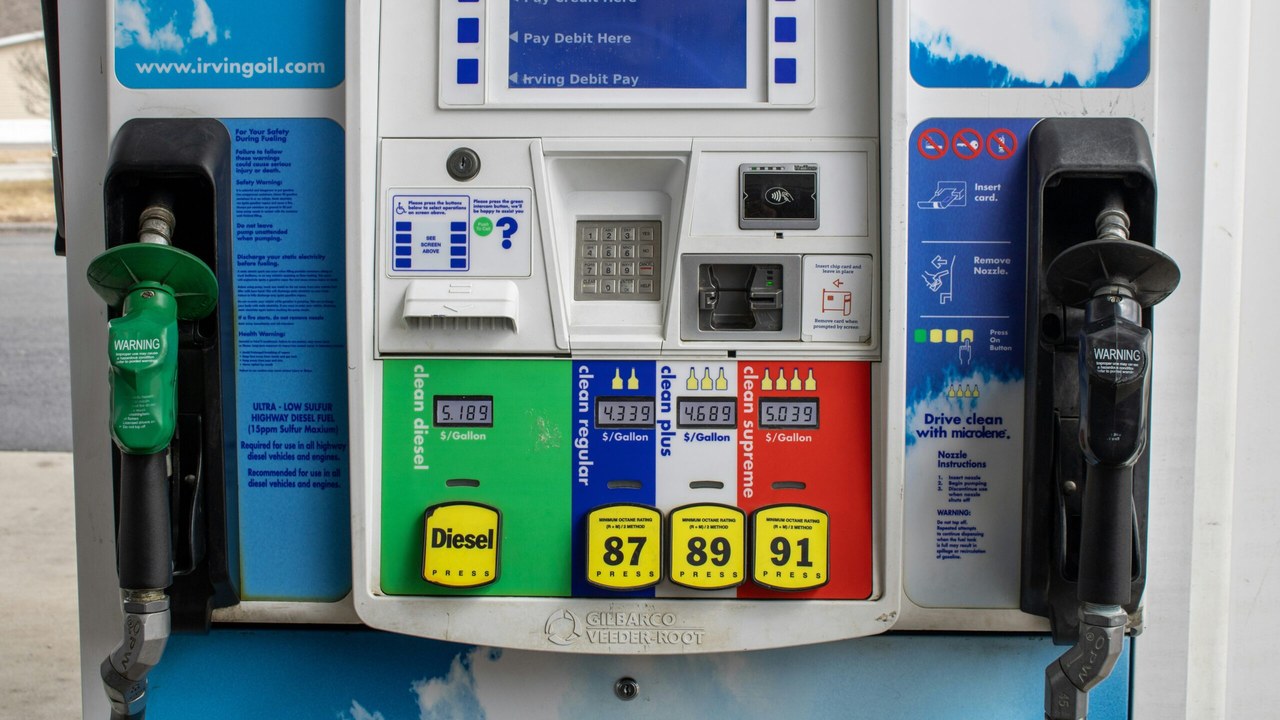
Here is a rare piece of good news about a household bill: the government expects gas prices to keep drifting lower. In its latest monthly energy outlook, the U.S. Energy Information Administration projects that gasoline will get cheaper this year and stay relatively low into 2027 as crude oil prices fall. For a fixed-income household that budgets around the pump, an easing gas price is one of the most visible forms of relief there is.
What the government’s forecast says
The Energy Information Administration, the federal agency that tracks and projects energy markets, released its August Short-Term Energy Outlook and titled its summary bluntly: it expects lower gasoline prices in 2026 and 2027 as crude oil prices fall. The agency projects that retail gasoline prices will be lower over the next two years than they were in 2025, with prices forecast to fall roughly 6% in 2026 before ticking up about 1% in 2027, still leaving them below 2025 levels in nearly every region of the country.
The full analysis appears in the agency’s Short-Term Energy Outlook, which it updates each month. Because these are forecasts, not guarantees, they can shift as conditions change, but they represent the government’s best current read on where pump prices are heading.
Free retirement updates: Miss an enrollment or claim deadline and it may be gone. Our free Retirement Shield newsletter keeps readers ahead of the ones that matter. Get the free newsletter.
Why cheaper crude drives the forecast
The reason gas is expected to ease comes down to the price of crude oil, the raw material that becomes gasoline. The EIA expects global oil supply to run ahead of demand, which puts downward pressure on crude prices, and lower crude generally feeds through to lower prices at the pump. When the cost of the underlying barrel falls, refiners and stations eventually pass some of that along to drivers, though the timing and size of the pass-through vary.
It is worth understanding that pump prices are only partly about oil; taxes, refining costs, seasonal blend changes, and regional supply all play a role. That is why the EIA notes gas prices are expected to fall in every region in 2026 but the size of the decline differs from place to place.
Seasonality is part of the near-term picture as well. Gasoline typically costs more in the summer, when demand peaks and stations sell a more expensive, cleaner-burning blend, and it tends to ease in the fall as that requirement lifts and driving slows. So some of the relief drivers see later in the year is the normal seasonal pattern layered on top of the longer-run decline the EIA is forecasting. Both work in the same direction heading into the cooler months.
The projection also lands against a wider household-cost backdrop. Energy is one of the categories that has swung the most in recent inflation reports, so a sustained move lower at the pump would take pressure off the overall cost of living, not just the fuel line in a family’s budget. Cheaper gas ripples outward, because it lowers the cost of moving goods to stores, which can eventually show up in the price of everything that has to be shipped.
How this squares with gas being up over the year
If you saw the latest inflation report, you may be puzzled, because it showed gasoline still running well above where it was a year ago. Both things are true at once. Gas prices climbed steeply earlier in 2026, which keeps the year-over-year comparison high, even as the more recent trend has turned lower and the forecast points down. A forecast for falling prices describes the direction ahead, while the annual inflation figure looks backward at how far prices rose from a low starting point last year.
For a household, the number that matters most going forward is the trend, and the government’s outlook says that trend is gently downward for the next couple of years.
What lower gas prices mean for a tight budget
Fuel is one of the least avoidable costs for anyone who drives to work, to the doctor, or to see family, and it is one of the few big expenses that can swing week to week. When it falls, the savings show up quickly and across the whole budget, freeing money for groceries, medicine, or bills. For retirees and working households alike, a sustained dip at the pump is the kind of relief that does not require any paperwork or eligibility, it simply lowers a bill everyone pays.
The sensible way to treat a favorable forecast is as a reason for cautious optimism, not a promise. Prices could rise again if oil markets are disrupted by conflict, hurricanes that knock out Gulf Coast refineries, or a sudden supply cut. But as of the government’s August outlook, the expectation is for pump prices to stay lower into 2027, and that is a welcome direction for household budgets after several years of sharp swings at the pump.
This article was produced with AI assistance and reviewed by a human editor. Figures are linked to their primary sources; where a claim could not be verified from the public record, we say so.
More Financial Reading