
The first year of self-employment usually includes one genuinely unpleasant surprise, and it isn’t the income tax. It’s the extra 15.3 percent line that shows up on the return, labeled self-employment tax, applied to profits the freelancer thought they’d already accounted for. If you drive for an app, sell at weekend markets, freelance, or run any one-person business on the side, this tax belongs to you, and it’s far less mysterious than it feels at 11 p.m. with tax software open.

Here’s the whole thing, start to finish: what it is, who owes it, how the math works, and the two features that make it sting less than the headline rate suggests.
It’s not a penalty. It’s your payroll tax, both halves.
Every W-2 employee pays 7.65 percent of wages toward Social Security and Medicare through FICA withholding, and their employer quietly pays a matching 7.65 percent. When you work for yourself, you are both the worker and the employer, so you pay both halves: 12.4 percent for Social Security plus 2.9 percent for Medicare, totaling 15.3 percent, per the IRS self-employment tax rules.
That reframe matters, because this money isn’t vanishing into the general treasury. Paying self-employment tax is how gig workers and business owners earn Social Security credits toward retirement and disability benefits and build their Medicare eligibility. Skip it (by not reporting cash income, say) and you’re not just risking an audit; you’re erasing your own benefit record.
The $400 trigger

You owe self-employment tax for a year in which your net earnings from self-employment reach $400. Not $400 in sales; $400 in profit after business expenses. Below that, no SE tax (though the income can still be taxable as ordinary income). One niche exception: church employees hit the threshold at just $108.28 of church-employee income.
Notice what the trigger doesn’t care about: whether you have an LLC, whether the work is a “real business” or a side thing, whether anyone sent you a 1099. If your dog-sitting cleared $400 profit this year, the tax applies, forms or no forms.
The math, with a real example
The calculation lives on Schedule SE, which rides along with your Form 1040, and it has one famous quirk: you don’t apply 15.3 percent to your full profit. You first multiply the profit by 92.35 percent. That adjustment exists to mimic the employee world, where the employer’s share of payroll tax isn’t part of the wages being taxed.
Walk through a side business that netted $20,000 this year. Multiply by 0.9235 to get $18,470 of taxable self-employment earnings. Apply 15.3 percent, and the self-employment tax comes to about $2,826. That’s on top of whatever regular income tax the $20,000 generates, which is exactly why seasoned freelancers talk about setting aside 25 to 30 percent of every payment.
Two ceilings and one surtax
The two pieces of the 15.3 percent behave differently at high incomes. The 12.4 percent Social Security portion stops at the annual wage-base limit, which is $184,500 in 2026, and if you also have W-2 wages, those wages use up the cap first. The 2.9 percent Medicare portion has no ceiling at all; it applies to every dollar of net earnings forever.
High earners pick up one more piece: an Additional Medicare Tax of 0.9 percent on earnings above $200,000 for single filers or $250,000 for married couples filing jointly, described in IRS Topic 560. Most side hustlers never touch it, but it surprises well-paid employees whose freelance income stacks on top of a salary.
The half-off consolation prize
Here’s the feature that softens the blow: you get to deduct the employer-equivalent half of your self-employment tax (one-half of the total) as an adjustment to income on your 1040. In the $20,000 example, that’s roughly a $1,413 deduction, and it works even if you take the standard deduction, because it’s an above-the-line adjustment rather than an itemized one. It doesn’t reduce the SE tax itself, but it shrinks the income your regular tax is computed on, exactly the way an employee never pays income tax on the payroll taxes their employer remits.
Self-employed people also commonly qualify to deduct health insurance premiums and retirement-plan contributions above the line, which is a reminder that the SE tax math rewards actually tracking your expenses. Every legitimate business expense you record cuts both your income tax and your self-employment tax.
When to pay: four times a year, not one
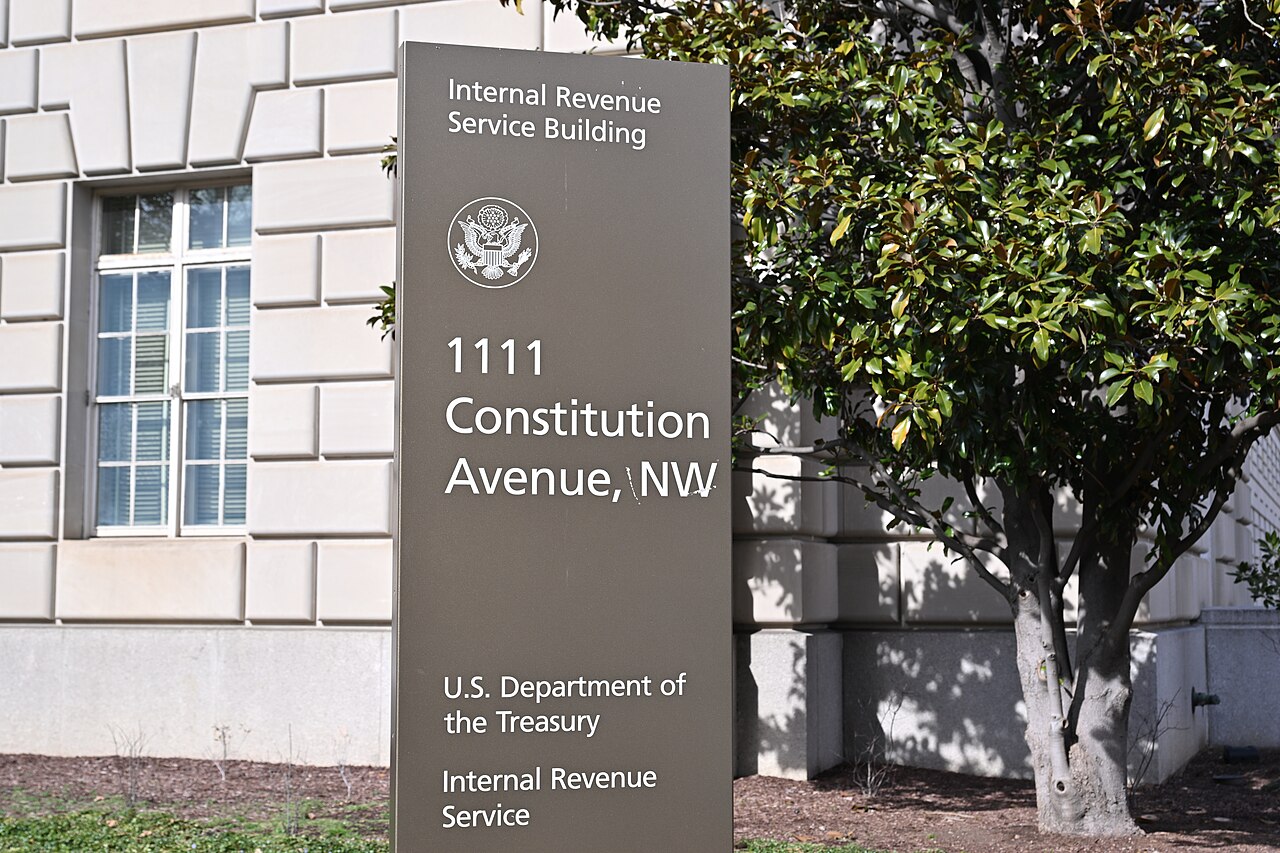
Because nobody withholds taxes from your invoices, the IRS expects payment as you earn, through quarterly estimated tax payments on Form 1040-ES. The due dates fall in April, June, September, and January. Underpay all year and you can owe a penalty on top of the tax, even if you settle the full bill at filing time.
A workable rhythm for a first-year freelancer: open a separate savings account, move a fixed percentage of every payment into it the day the money arrives, and pay estimates from that account each quarter. The 15.3 percent never feels good, but it stops feeling like an ambush, and unlike most taxes, this one is buying your own name a retirement benefit.
This article was produced with AI assistance and reviewed by a human editor. Figures are linked to their primary sources; where a claim could not be verified from the public record, we say so.