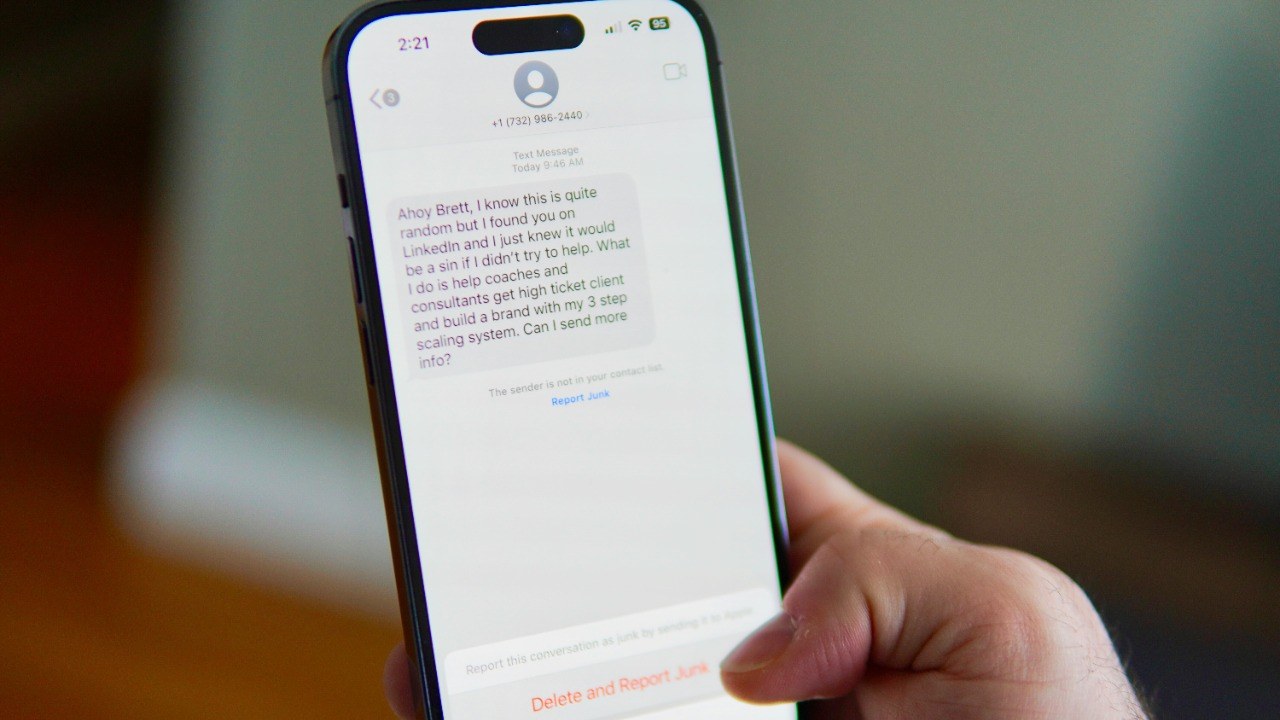
The subject line reads “Your MyChart Medicare Kit Awaits!” and it lands as a text or an email that looks like it came from a patient’s own hospital. It did not. Health systems across the country have spent the last two months telling patients to delete it.
The timing is not an accident. Medicare’s open enrollment period is the stretch when people expect to hear about plans, and the phone is already busy. A 10News consumer report says more than 40 health systems have warned patients about the MyChart Medicare Kit message, and that seniors are fielding up to 15 Medicare calls a day.
So what should a patient do when one of these texts arrives, and where is the safe place to check whether a hospital really sent something? The answer from the hospitals themselves is the same in every notice: do not click, and look inside the official portal instead.
Stay ahead of scam news: Miss an enrollment or claim deadline and the money can be gone. Join the Retirement Money Brief and we’ll send you our Scam & Identity-Theft Action Card as a welcome gift.
Get the Brief + the scam action card →
We may earn a commission from links on this page.
What the fake kit message says
ECU Health, the Greenville, North Carolina system, says some of its patients received phishing emails with the subject “Your MyChart Medicare Kit Awaits.” Its notice states plainly that “these emails are not from ECU Health or MyChart” and that they are meant to push people toward malicious links or to share personal or financial information.
Penn Medicine describes a nationwide scam of emails and text messages advertising a free MyChart Medicare Kit or Senior Health Package. Penn’s patient-safety page, dated August 25, says there is no evidence the messages involve real MyChart systems, only that the scammers borrow the MyChart name and logos.
Texas Health Resources, in Arlington, says its version of the scam offers a free Medicare kit, health package or gift and asks the recipient to click a link or hand over personal details. Its notice says the messages “are fake and are not from Texas Health or MyChart.”
Which hospitals have spoken up
The count was large by the end of August. Becker’s Hospital Review, a trade publication for hospital executives, published a running list on August 27 that counted 41 systems warning patients. It includes Virtua Health, Avera Health, Cleveland Clinic, Mass General Brigham, Mount Sinai Health System, Emory Healthcare and MD Anderson Cancer Center, along with small community hospitals in Iowa, Minnesota and Oregon.
The warnings do not point to a breach. Epic, the company that makes MyChart, told Becker’s the rise in attempts comes from scammers exploiting the portal’s popularity and is not a security problem, and that patients can keep using MyChart as normal.
What the hospitals tell patients to do
The advice is consistent from system to system. Penn Medicine says to check the sender against the official MyChart address, to avoid clicking anything, including an “unsubscribe” button, and to mark the message as spam or junk without forwarding it.
Penn also says a patient who already clicked a link or shared information should reset the portal password as soon as possible. MyChart, the notice adds, does not give away items or prizes in exchange for health information and will not ask anyone to unlock or repair an account through a message.
Texas Health lists the same steps and gives a support line for patients who are unsure whether a message is real. ECU Health adds one more: report the email to the Federal Trade Commission, then delete it.
A dozen calls a day as open enrollment nears
The text is only one piece of the noise. In its consumer report, 10News describes a woman who gets more than a dozen Medicare-related calls in a single day even though her number is on the national Do Not Call registry, and the report puts the upper range at 15 calls a day.
Open enrollment is the reason. Medicare says the period runs October 15 to December 7, the window to join, switch or drop a Medicare Advantage or drug plan, and the plan must receive a request by December 7 for coverage to start January 1.
Medicare’s own fraud page sets the baseline for every one of those contacts. It says Medicare will never call to sell anything or visit a home, and it warns against joining a plan by phone unless the person made the call and asked for help.
Where reports go
For a suspected Medicare scam, the same Medicare page lists 1-800-MEDICARE (1-800-633-4227) and an online report form tied to the Office of Inspector General at the Department of Health and Human Services. People on a Medicare Advantage or drug plan can also reach the drug integrity contractor at 1-877-772-3379.
The 10News report also points to the AARP Fraud Watch Network helpline at 877-908-3360 for anyone who is unsure about a call or message. A text that asks for a Medicare number, a password or a verification code is a reason to hang up or delete, whatever logo it carries.
Hospitals that have posted notices say the same thing about the portal itself: real messages appear inside the official app or from the sender address the system publishes. Texas Health, for one, lists the two addresses its genuine MyChart emails come from, and Penn Medicine does the same for its own, so a patient can compare before touching anything. The Texas Health notice and ECU Health’s alert carry the same guidance.
Where should a patient look when a MyChart Medicare Kit text arrives before December 7?
A patient who taps the link in a fake MyChart text can hand over a Medicare number, a password or a verification code, and the same details can open the door to bank logins and tax accounts. With open enrollment running to December 7, the calls and texts keep coming while people are most likely to be answering them.
Scam-Proof Your Accounts in a Weekend is a step-by-step system that locks the ways scammers reach money. It promises how to freeze credit at all three bureaus, free by federal law, how to lock bank logins with two-step login, alerts and a verbal password, how to get an IRS Identity Protection PIN, and a family code word for fake grandchild-in-trouble calls. It is built as ten moves in weekend order, with a first-hour plan for when a scam gets through anyway.
Freeze credit and lock logins with the weekend scam-proofing system →
This article was produced with AI assistance and edited for accuracy against the sources linked above.