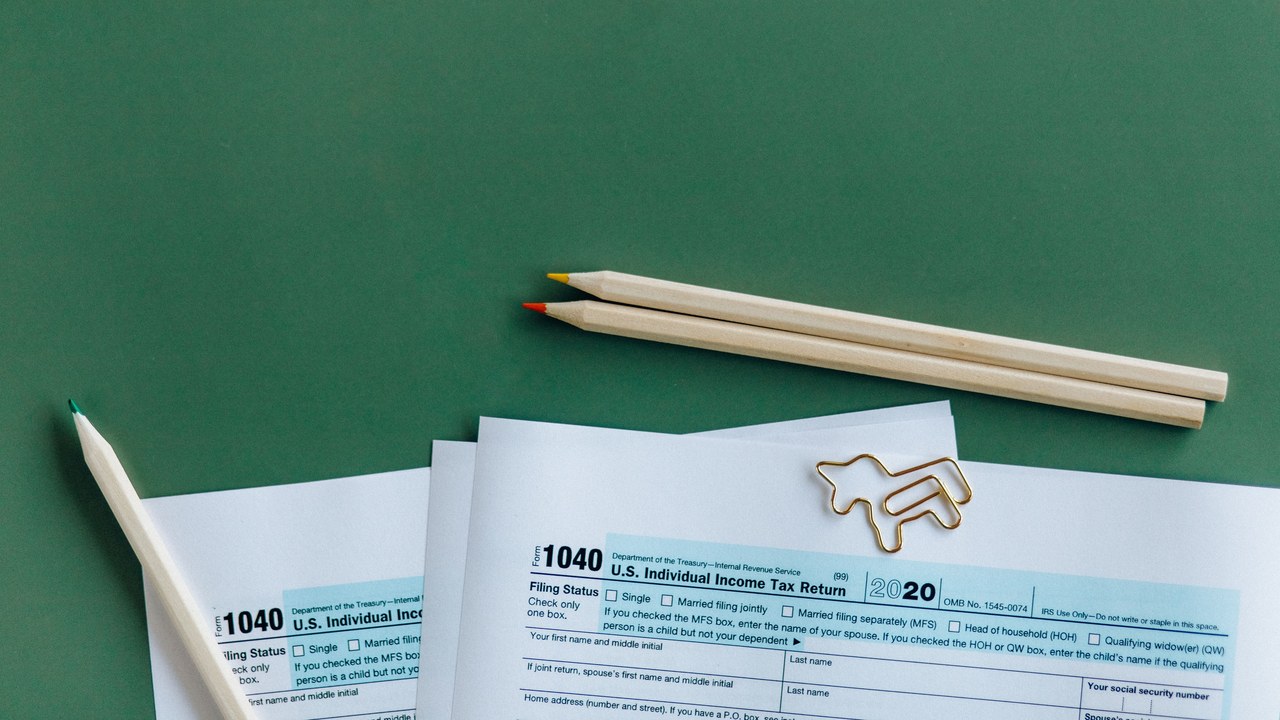
The phrase “no tax on Social Security” sounds like a change to how benefits are taxed. The law behind it does something different. It gives people 65 and older a bigger deduction on their tax return, and that deduction has an end date.
The difference matters to anyone who reads the slogan and assumes the Social Security rules changed. A retiree who gets a benefit statement each January and files a return has to know what the new deduction covers, what it leaves alone, and which tax years it applies to.
The question for a filer 65 or older is whether the deduction applies to the return in front of them, and what happens once the tax years it covers are over.
Retirement deadlines, in your inbox: Miss an enrollment or claim deadline and the money can be gone. Join the Retirement Money Brief and we’ll send you our Will My Social Security Be Taxed? Worksheet as a welcome gift.
Get the Brief + the tax worksheet →
We may earn a commission from links on this page.
What the White House calls it
A White House research post dated June 30, 2025, says the One Big Beautiful Bill “delivers on President Trump’s promise of No Tax on Social Security.” The same post calls the bill “the largest tax break in American history” for seniors.
It also claims that 88% of seniors who receive Social Security benefits will pay no tax on those benefits under the law, because their deductions exceed their taxable Social Security. That is the White House’s own estimate and its own wording. The post does not list the dollar amount of the deduction, the years it covers or the income limits.
What the IRS says the law does
The IRS describes something narrower. In its fact sheet on the new deductions, the agency says individuals age 65 and older may claim an additional deduction of $6,000. It is effective for tax years 2025 through 2028.
The amount is per person. For a married couple where both spouses qualify, the IRS puts the total at $12,000. A taxpayer must reach age 65 on or before the last day of the tax year, so someone who turns 65 on December 31 qualifies for that year.
The IRS calls it a deduction. It lowers taxable income. It is not an exemption that takes Social Security out of the tax calculation.
Why a deduction is not the same as no tax
The rules that decide whether benefits are taxed at all did not change in the IRS description of the new law. The Social Security Administration explains on its taxes page that federal income tax applies when combined income passes $25,000 for a person filing individually or $32,000 for a married couple filing jointly. Combined income counts half of the Social Security benefit plus other income.
So a retiree can still have part of a benefit counted as taxable income. The new deduction then reduces the taxable income on the return as a whole, benefit dollars included. Whether that wipes out the tax depends on the rest of the return: pensions, IRA withdrawals, interest, wages and the other deductions claimed.
Who gets the full amount and who loses it
The IRS says the deduction phases out for taxpayers with modified adjusted gross income over $75,000, or $150,000 for joint filers. Above those lines, the $6,000 shrinks. The phase-out is the reason the White House estimate is a share of seniors rather than all of them.
Two other conditions come with it. Married taxpayers must file jointly to claim it, and the return must include the Social Security number of each qualifying person. The IRS adds that the deduction is available to both itemizing and non-itemizing taxpayers, so it does not require giving up the standard deduction.
The deduction comes on top of the regular additional standard deduction that people 65 and older already get under existing law. The IRS’s eligibility page for seniors, published Feb. 27, 2026, says the new deduction is “in addition to the standard deduction for seniors available under existing law.”
The 2028 end date
The IRS lists the window as 2025 through 2028. After the 2028 tax year, the statute as the IRS describes it gives no further years. A return for tax year 2029 is outside the window.
That timing makes the “no tax” label hard to square with the law’s text. A deduction that ends does not change how Social Security is taxed for good. It cuts the taxable income of eligible filers for four returns, filed from 2026 through the spring of 2029. Whether Congress extends it is not something the IRS has announced.
The IRS fact sheet does not say the deduction changes how much of a benefit counts as taxable. Anyone who wants that number has to work it out for their own return from the Social Security statement and the other income on the form.
What happens to a retiree’s tax bill after the 2028 return?
A filer 65 or older has to claim the deduction on a return for one of the tax years 2025 through 2028, because it is gone after that. A retiree who takes it for granted can miss the income lines that still decide how much of a Social Security check is taxed, such as the $25,000 and $32,000 lines, and the lines that stay after the deduction ends.
Cut Your Retirement Tax Bill: 12 Moves shows each income line that sets a retiree’s tax bill in 2026 numbers. It promises a worksheet showing how much of Social Security is taxed, plus the new $6,000 senior deduction ($12,000 for a couple) for 2025 through 2028 and a state-by-state look at the eight states that tax some Social Security.
This article was produced with AI assistance and edited for accuracy against the sources linked above.