
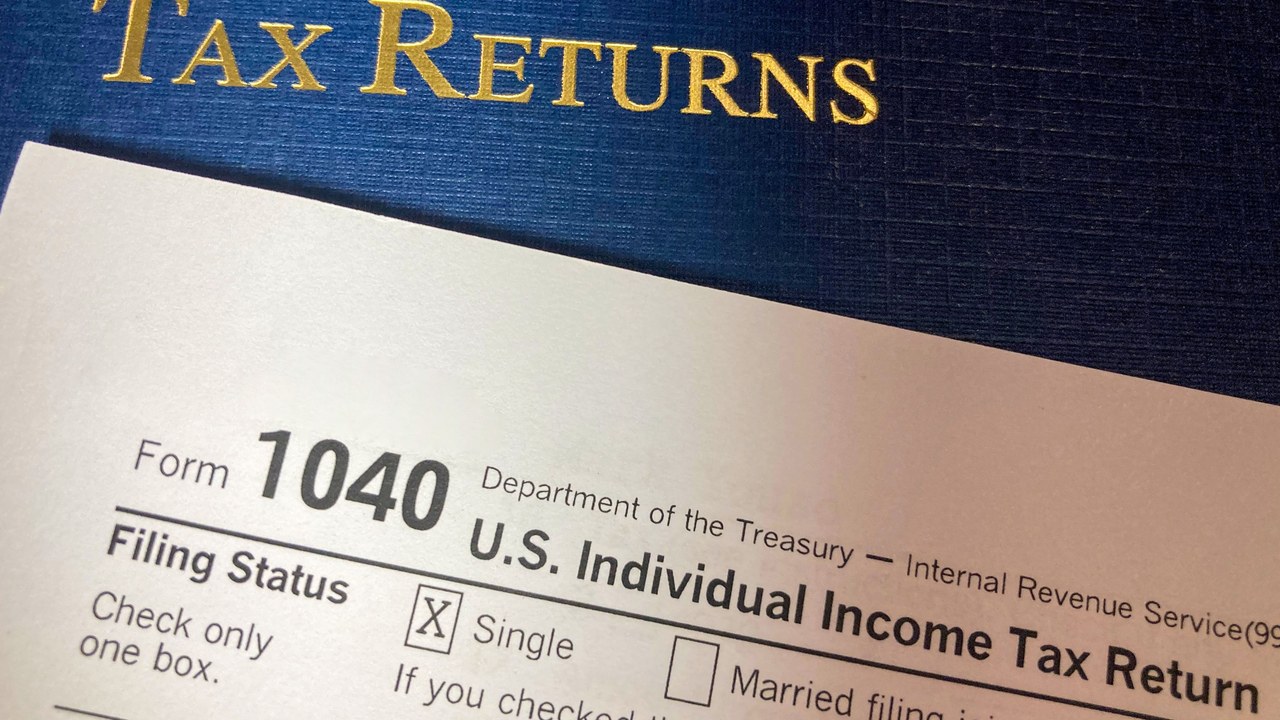
Taxpayers who itemize their deductions do not have to give up the new senior deduction. The IRS says the extra $6,000 for people 65 and older is available to both itemizers and people who take the standard deduction, and it applies for tax years 2025 through 2028.
That settles a question many older homeowners have been asking. Someone who writes off mortgage interest, property taxes and large medical bills on Schedule A can still add the senior deduction on top, according to IRS Publication 6142.
What the IRS says about itemizers
Publication 6142 is the IRS’s plain-language guide to the new deductions. It states: “The deduction is available for both itemizing and non-itemizing taxpayers.” The IRS did not attach any condition about which kind of return a senior files.
Does a 65-year-old who itemizes qualify?
A 65-year-old who pays mortgage interest and deducts big medical bills is exactly the taxpayer the IRS language covers. Itemizing does not turn the senior deduction off. It sits alongside whatever that person writes off on Schedule A, rather than replacing it.
The practical question for that taxpayer is whether income is low enough to keep the full amount. The IRS says the deduction begins to phase out once modified adjusted gross income, the figure on the tax return before most deductions with a few additions, passes $75,000 for single filers or $150,000 for joint filers.
What changed this year: Social Security and Medicare change every year, and nobody sends you a memo. The Retirement Money Brief breaks down what changed and what to do. Bonus when you subscribe: our Will My Social Security Be Taxed? Worksheet.
Get the Brief and the tax worksheet →
We may earn a commission from links on this page.
How much is it, and for which years?
The agency’s news release on the enhanced deduction for seniors, last updated September 21, 2026, says individuals age 65 and older may claim an additional $6,000 deduction. The IRS describes it as being in addition to the standard deduction for seniors already available under existing law.
The amount is up to $6,000 for each qualifying individual. For a married couple where both spouses qualify, that comes to $12,000. The IRS says the deduction runs for tax years 2025 through 2028, so it covers four returns.
Publication 6142 puts the start date this way: “Starting in 2025 and through 2028, individuals who are age 65 or older can claim a new additional deduction of $6,000.” The words “up to” matter, because the amount can shrink at higher incomes.
What paperwork does the deduction need?
Publication 6142 tells filers to complete Form 1040, Schedule 1-A, Additional Deductions, Part V. That amount carries forward to line 13b of Form 1040 or Form 1040-SR, the version of the return with larger print for seniors.
Two other rules appear in the same guide. The return must include the Social Security number of each qualifying individual, and married people have to file jointly to claim the deduction. A spouse who files separately cannot take it.
Who is left out?
The age test is the first filter. The IRS release describes the benefit as being for individuals age 65 and older, so a 62-year-old who itemizes does not get it, even with the same mortgage interest and medical bills.
The income phase-out is the second filter. The IRS pages give the $75,000 and $150,000 starting points but do not print the income at which the deduction disappears entirely. Anyone near those lines will want to see how the phase-out lands on their own return before counting on the full $6,000.
Where to confirm it for a specific return
The IRS keeps both the news release and Publication 6142 on IRS.gov, and the free IRS site is the place to confirm the rule before filing. Because the deduction covers 2025 through 2028, the same check applies to each of those four returns.
For itemizers, the open question is not whether the senior deduction is allowed. The IRS has answered that in Publication 6142. What remains is how much of the $6,000 survives at a given income, and how it interacts with the rest of a retiree’s tax picture, including how much Social Security is taxed.
Itemize and 65 or older? Check the $6,000 against your own return.
Itemizers are the taxpayers most likely to assume a deduction is off the table, and the IRS has said the senior deduction is not. The risk is leaving the $6,000 off a return, or misjudging how the income phase-out starting at $75,000 for single filers and $150,000 for joint filers cuts into it.
The Retirement Tax & Withdrawal Planner includes a part on the new $6,000 senior deduction, along with four calculators covering provisional income, IRMAA tier, RMD schedule and Roth bracket fill. It lays out how the senior deduction fits with the tax on Social Security and withdrawals, so an itemizer can see the whole picture in one place.
Get the senior-deduction guide for itemizers aged 65 and up →
More Financial Reading
- 21 Ways to Stretch a $2,087 Social Security Check
- 15 Places to Find Your Share of the $4.25 Billion States Give Back
- 15 Ways Retirees Are Tapping a Record $14.9 Trillion in Home Equity
This article was produced with AI assistance and edited for accuracy against the sources linked above.


