
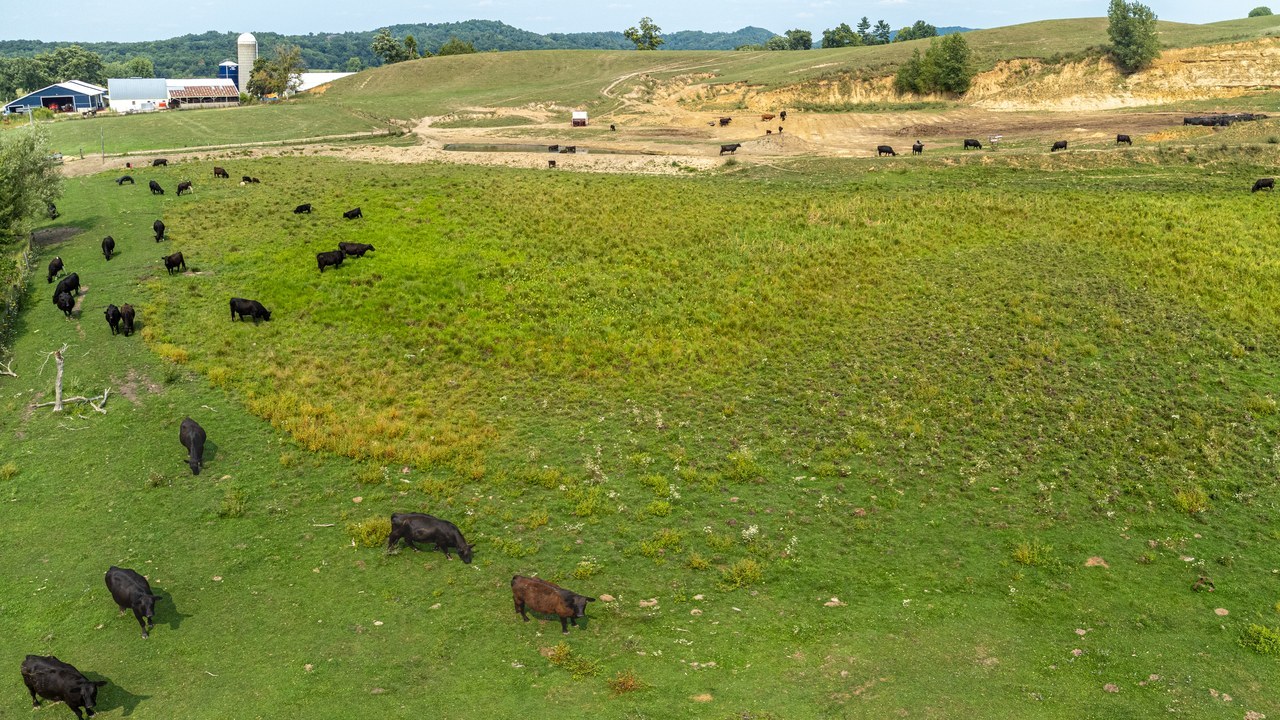
Farmers and ranchers who sold livestock because of drought now have more time to buy replacement animals and still put off the tax on the gain. The IRS announced the extension on September 15, 2026, for drought-listed areas of 49 states and the District of Columbia. Trade coverage of the announcement confirms Alaska is the only state left off the list.
The relief comes in IRS news release IR-2026-110, which says farmers and ranchers in most states and other regions who sold or exchanged livestock because of drought can defer tax on the gains and get more time to replace the animals. IRS Chief Executive Officer Frank J. Bisignano said the agency is providing “much needed support” to the people who feed the country.
Which areas and which animals are covered
The areas are set out in Notice 2026-54, which lists them by county or other jurisdiction. The list covers 49 states, the District of Columbia, Puerto Rico and other areas. The notice says Alaska is the only U.S. state not listed.
A place gets on the list if it was in exceptional, extreme or severe drought in any week from September 1, 2025, through August 31, 2026. The National Drought Mitigation Center makes that call. The affected area is the county that had the drought plus every county touching it, so a farm can qualify without being in the driest county.
The relief covers livestock held for draft, dairy or breeding purposes. Animals raised for slaughter, held for sporting purposes and poultry do not qualify. The seller also has to show the drought forced the sale and that the area received a federal drought designation.
Anyone whose herd was sold in a listed county, and whose replacement window was due to close at the end of 2026, is the reader this extension is for. The first thing to check is whether the county, or a county next to it, appears in the notice’s appendix. The second is the date the replacement period was originally set to end.
What changed this year: Social Security and Medicare change every year, and nobody sends you a memo. The Retirement Money Brief breaks down what changed and what to do. Bonus when you subscribe: our IRS Refund Delay Tracker.
Get the Brief and the refund tracker →
We may earn a commission from links on this page.
How much more time the extension gives
The usual replacement period for livestock is two years. For drought sales the IRS release says it is generally four years. Under the new extension, the deadline moves to the end of the first tax year after the first drought-free year that follows that four-year period.
The practical change is for farmers whose replacement period was set to run out at the end of 2026. The IRS says they now have until the end of their next tax year. The release adds that the IRS can extend the period further if the drought persists.
A drought-free year, in the notice’s terms, is a 12-month period ending August 31 with no week of exceptional, extreme or severe drought in the region. Until a region gets one, the clock keeps moving. Notice 2006-82, the older guidance the new notice builds on, says the IRS publishes its list of drought counties each September.
That older notice works through an example. A Nebraska cattle producer sold breeding cattle in 2002, and the original replacement period ended December 31, 2006. Because the 12-month periods ending August 31, 2006 and 2007 were not drought-free, the first drought-free year ended in 2008 and the replacement period ran through December 31, 2008.
What a farm household has to do to use it
The release does not describe filing steps. It points readers to Notice 2006-82 for details and an example, and to Publication 225, the Farmer’s Tax Guide, for how to report drought sales. The extension does not make the gain disappear. It only pushes back the date by which replacement animals have to be bought.
The Farmer’s Tax Guide says sales of animals kept for breeding, dairy, draft or sport that qualify as involuntary conversions generally go on Form 4797, not on Schedule F. Livestock raised or bought for sale goes on Schedule F instead. The guide also says a statement has to be attached in the year the gain is realized and again in the year the livestock is replaced.
Notice 2026-54 describes the rule behind the extension. Under section 1033(e), a sale of livestock other than poultry held for draft, breeding or dairy purposes is treated as an involuntary conversion if it is sold solely on account of drought, flood or other weather-related conditions and exceeds the number that would be sold under usual business practices.
The notice says the replacement period ends four years after the close of the first taxable year in which gain is first realized when federal assistance applies. The extension applies if the region includes a listed area, so a taxpayer in an unlisted county next to a listed one can still be covered.
The risk if the new date is missed
Notice 2006-82 states the general rule that gain is recognized only to the extent the amount realized from the sale is more than the cost of replacement property bought during the replacement period. Animals bought after the extended date do not count toward that offset, which is why the date matters more than the county list.
A farm household that has already filed with an election to defer should keep the sale records, the herd numbers and the replacement purchase dates in one place. Those are the papers an IRS letter about the deferral would ask for, and they are easier to gather before a notice arrives than after.
Tax preparers who work with farm returns can say which of the two rules applies to a particular herd. The IRS pages give the rule, but they do not decide which animals count as held for breeding, dairy or draft use on a given farm.
Selling cattle in a drought and deferring the gain?
A replacement date that is missed or misread does not end quietly. The deferred gain is taxed, and the paperwork that follows can include an IRS letter that is hard to tell apart from a routine one. Farm households that rely on a deferral are the readers most likely to be reading IRS mail about it.
The IRS Refund Recovery Kit does not cover livestock rules. It covers what comes after: a notice decoder that explains the IRS letters, and a refund status tracker spreadsheet for following any refund or adjustment the IRS owes. It also walks through the steps to trace a refund that never arrived, and the 3-year refund deadline.
Get the IRS notice decoder and refund tracker for farm households deferring a drought sale →
More Financial Reading
- 21 Ways to Stretch a $2,087 Social Security Check
- 15 Places to Find Your Share of the $4.25 Billion States Give Back
- 17 Medicare Money Moves Now That Part D Caps at $2,400
This article was produced with AI assistance and edited for accuracy against the sources linked above.


