
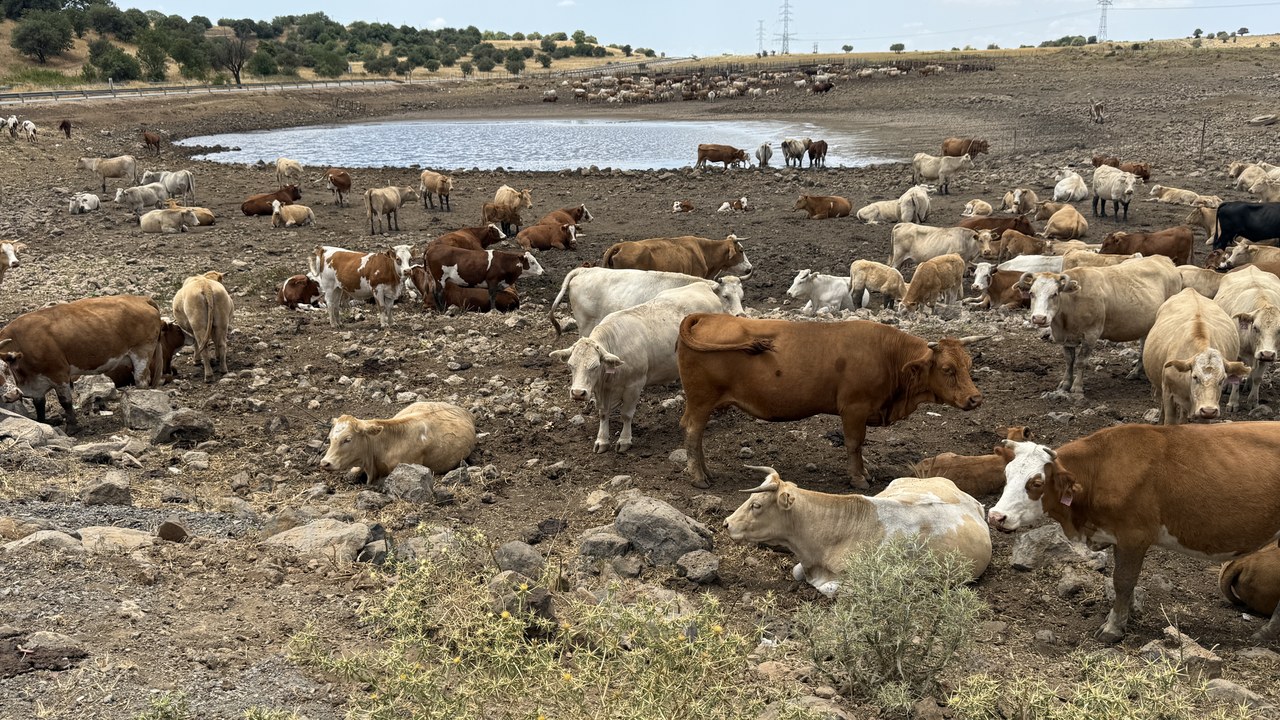
Farmers and ranchers who sold livestock because of drought now have four years, not the usual two, to replace the animals and put off paying tax on the gain. The Internal Revenue Service announced the extended relief on September 15, 2026, in release IR-2026-110, covering qualifying areas in 49 states, the District of Columbia, Puerto Rico and other areas.
What the extension changes
When a farm or ranch sells livestock in a forced sale and replaces it within a set period, the tax on the gain can be deferred. The usual replacement period is two years. Under the IRS announcement, livestock “must be replaced within a four-year period, instead of the usual two-year period” for people in affected areas.
IRS Chief Executive Officer Frank J. Bisignano said the agency “is providing much needed support to those who feed our nation.”
Which areas and which animals
The 49 states in the announcement are not covered in full. Notice 2026-54 lists the qualifying areas “by county or other jurisdiction,” so eligibility is decided at the county level. The notice relies on a drought measurement period of the 12 months ending August 31, 2026: an area has to have had exceptional, extreme or severe drought during that stretch, and the IRS says the extension test looks at any week from September 1, 2025, through August 31, 2026.
The animals are limited too. Livestock held for “draft, dairy or breeding purposes” qualify. Poultry does not, and neither do livestock raised for slaughter or held for sporting purposes.
For farm and ranch households, the questions are whether the county is on the list and how much longer there is to replace the animals. The announcement ties the answer to two things: the county named in Notice 2026-54, and a sale that drought caused. Taxpayers “must show that drought prompted the sales or exchanges,” and the area must have received a federal drought designation. A sale for another reason does not qualify.
A farm that defers the gain on a drought sale still has to report it correctly, and IRS letters about a return are easier to answer when their codes can be read. The IRS Refund Recovery Kit includes a notice decoder and a refund status tracker spreadsheet for keeping track of what the IRS has said about a return.
Decode an IRS notice about a livestock sale with the Refund Recovery Kit →
How long the relief can run
The relief can last longer than four years. The IRS says it runs “until the end of their first tax year after the first drought-free year after the four-year replacement period.” There is no fixed calendar end date. The end of the window depends on when an area has a drought-free year, so a household’s deadline is tied to local conditions rather than a date printed in the notice.
A deferral, not a payment
The relief postpones tax; it does not cancel it and it does not pay anyone. The gain from the sale is deferred as long as the livestock is replaced within the extended period, and nothing in the announcement describes a credit, a refund or a grant. The money question for a household is timing: how long the tax on a forced sale can stay unpaid while the herd is rebuilt.
The announcement points to two documents for the mechanics. Notice 2006-82 “gives details and an example” of how the replacement rules work, and Publication 225, the IRS farmer’s tax guide, covers reporting drought sales and other farm tax issues. The announcement itself does not explain how to report the election.
Checking the county list and the replacement rules
The free starting point is the IRS newsroom, where the announcement and its links to Notice 2026-54 are posted. The county list in that notice is the first thing to check; a household in an unlisted county would not use this relief.
Records matter once a county is confirmed. A farm that sold animals can gather the dates of each sale, the number and type of animals, and proof that they were held for draft, dairy or breeding purposes. Records tying the sale to drought support the requirement that drought prompted it. A tax preparer familiar with farm returns can apply the Notice 2006-82 mechanics.
The IRS release, IR-2026-110, dated September 15, 2026, is the source for the four-year replacement period and the 49-state figure.
A four-year replacement clock on a drought sale
A livestock sale that goes unreported or is reported wrong can bring an IRS letter that is hard to read, and the four-year replacement clock keeps running. The IRS Refund Recovery Kit includes a notice decoder for reading IRS letters and a refund status tracker spreadsheet for following what the agency has said about a return.
Track IRS letters on a livestock sale with the Refund Recovery Kit →
This article was produced with AI assistance and edited for accuracy against the sources linked above.


