
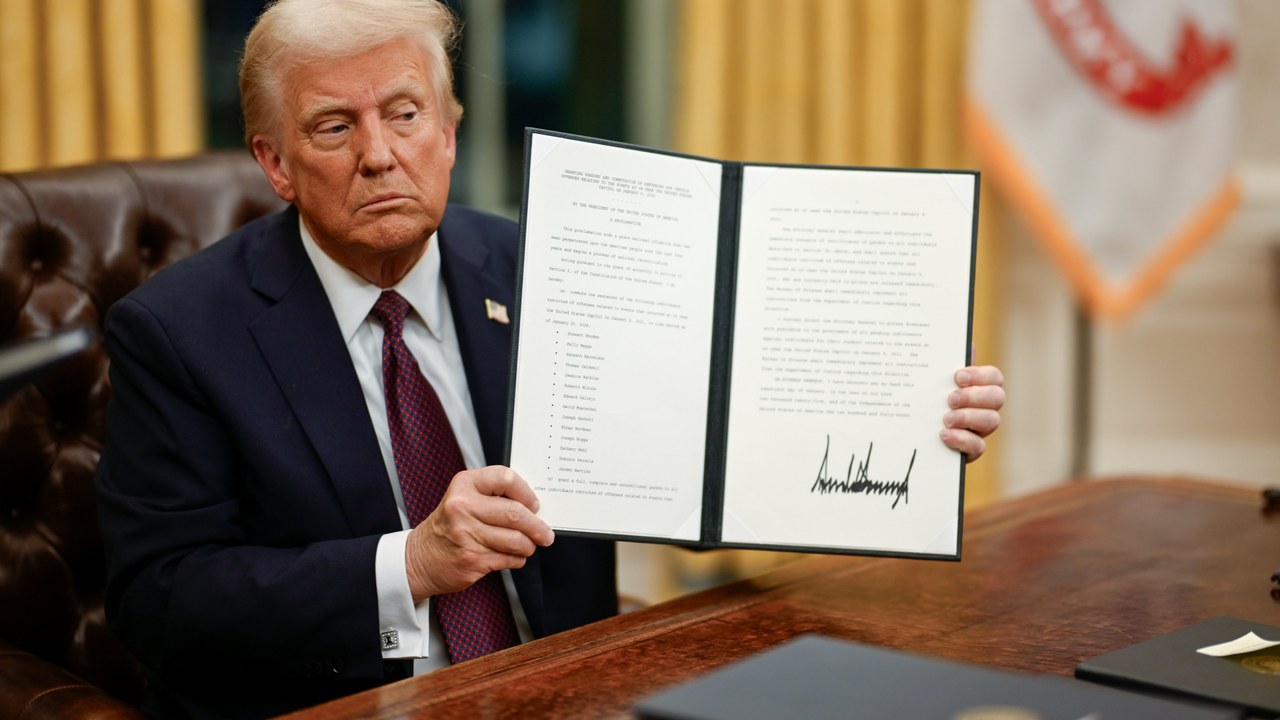
President Trump’s Executive Order 14435, signed October 5, 2026, sets up a deferral of the federal diesel fuel excise tax, not a cut. Treasury is told to postpone payment of the tax on diesel incurred from October 5 through December 31, 2026, with no penalties or interest, if it finds it has the legal authority, and the amount stays owed until a due date Treasury is to set. Section 4 of the order separately tells the Treasury secretary to explore ways, including legislation, to eliminate the deferred obligation. The order does not cancel anything itself.
What the order tells Treasury to do
The text, published in the Federal Register on October 9 at 91 FR 64747, gives the Treasury secretary five days to decide whether relief is authorized under section 7508A of the tax code, the law that lets the government postpone tax deadlines after a qualifying event. If it is, Treasury must defer payment of taxes imposed by sections 4041(a)(1)(A) and 4041(b)(1)(B) of the code that are incurred in the October 5 to December 31 window. The order says the deferral applies without penalties, interest, additional amounts or additions to tax, to the extent the law allows. The White House version carries the same sections.
The order also covers dyed diesel, the red-dyed fuel normally meant for farm and off-road use. It tells the IRS to announce that it will not impose penalties under section 6715 for dyed diesel sold for or used on the highway from October 5 through December 31, and to address relief for missed semimonthly tax deposits.
Will any of this show up at the pump? The order gives no dollar figure, no per-gallon amount and no cut in the tax rate, so it does not by itself change what a gallon costs. The Federal Register text describes a postponement of payment by the taxpayers who owe the tax. Todd Spencer, president and CEO of the Owner-Operator Independent Drivers Association, told CCJ the order “will provide minimal relief,” and said each $1 per gallon increase costs his members about $400 more a week.
For a household or a small fuel buyer, a deferral moves a tax bill to a later date; it does not lower the price of diesel or heating fuel today. The Benefits Checklist scans 11 benefit programs, including heating help, with the 2026 income limits and a 50-state phone directory, so the programs that do cover energy costs are in one place.
Scan the Benefits Checklist for the 11 programs that include heating help →
When the deferred tax comes due
Section 3 requires Treasury guidance spelling out the relief, any conditions, the legal basis, who is covered, and the start and end dates of each period. It also requires the guidance to state the date by which postponed taxes must be paid. The order itself sets no repayment date. That date, and any conditions on the deferral, will come from Treasury.
As of CCJ’s October 10 update, no Treasury or IRS guidance implementing the order had been reported, and the outlet described the effect on truckers’ tax bills as unclear until more guidance arrives. The five-day clock in the order ran out around that date.
The cancellation language in Section 4
Section 4 is the part that points toward forgiveness. It says the secretary “shall explore avenues, including legislation, to eliminate the obligation to pay the amounts deferred.” That is a direction to look, not a decision. The order lists legislation as one avenue, names no bill, and sets no deadline for Treasury to report back.
The practical result is that anyone who owes the tax should plan for a bill that is merely postponed. The order tells Treasury to defer and to look for a way to cancel, and only the first has a defined start and end date.
What a deferral does and does not do to a fuel bill
The free route is the order itself. The Federal Register text is short, and sections 2, 3 and 4 answer most questions: what is deferred, when the window runs, who sets the repayment date, and what Treasury was told about cancellation.
A trucker, farmer or fuel buyer should watch for three things: Treasury’s guidance naming the payment date and any conditions, the IRS announcement on dyed diesel penalties, and any bill in Congress to eliminate the deferred amounts. A tax preparer or the company that sells the fuel can say how the deferral will be handled in practice, since the order leaves those mechanics to the guidance.
For everyone else, the price at the pump is not covered by the order. The Federal Register text states what is deferred and for which dates, and it states nothing about retail diesel prices.
A postponed diesel tax leaves fuel and energy costs where they were
The order moves a tax payment from the fall to a date Treasury has yet to announce, and the cost of fuel and home energy stays the same in the meantime. The Benefits Checklist covers 11 benefit programs retirees often miss, including heating help, with the 2026 income limits and a 50-state phone directory, plus a printable application tracker that comes with the download.
Look up heating and energy help in the Benefits Checklist’s 50-state phone directory →
This article was produced with AI assistance and edited for accuracy against the sources linked above.


