A man who ran tax preparation offices in Yonkers, New York, has pleaded guilty to helping file false returns that cost the Internal Revenue Service more than $5 million. Joseph Clay, 52, of Lodi, New Jersey, entered the plea on October 1, and the same conduct cost New York State close to $900,000 more.
What Clay admitted
The U.S. Attorney’s Office for the Southern District of New York announced the plea in a press release. Clay operated Premier Tax and Professional Services LLC and Prime Tax & Professional Services LLC in Yonkers. He pleaded guilty before U.S. District Judge Cathy Seibel to one count of aiding and assisting in the preparation of a false and fraudulent individual income tax return. The charge was brought by information.
The maximum sentence for that count is three years in prison, and the judge decides any actual sentence. No sentencing date has been announced. As part of the plea, Clay agreed to pay the IRS more than $5 million in restitution.
Deductions and credits that were not real
According to the U.S. Attorney’s Office, Clay filed more than 3,500 individual income tax returns with the IRS and New York State. He routinely put false information on them, it says, including inflated and fictitious itemized deductions and fraudulent residential energy credits, to lower his customers’ tax and increase their refunds. The scheme ran from 2019 through 2024 and covered tax years 2018 through 2023. The release adds that he kept filing fraudulent returns even after a guilty plea to state tax fraud.
Taken together, the office says, his conduct deprived the IRS of more than $5 million and New York State of close to $900,000, which comes to nearly $6 million.
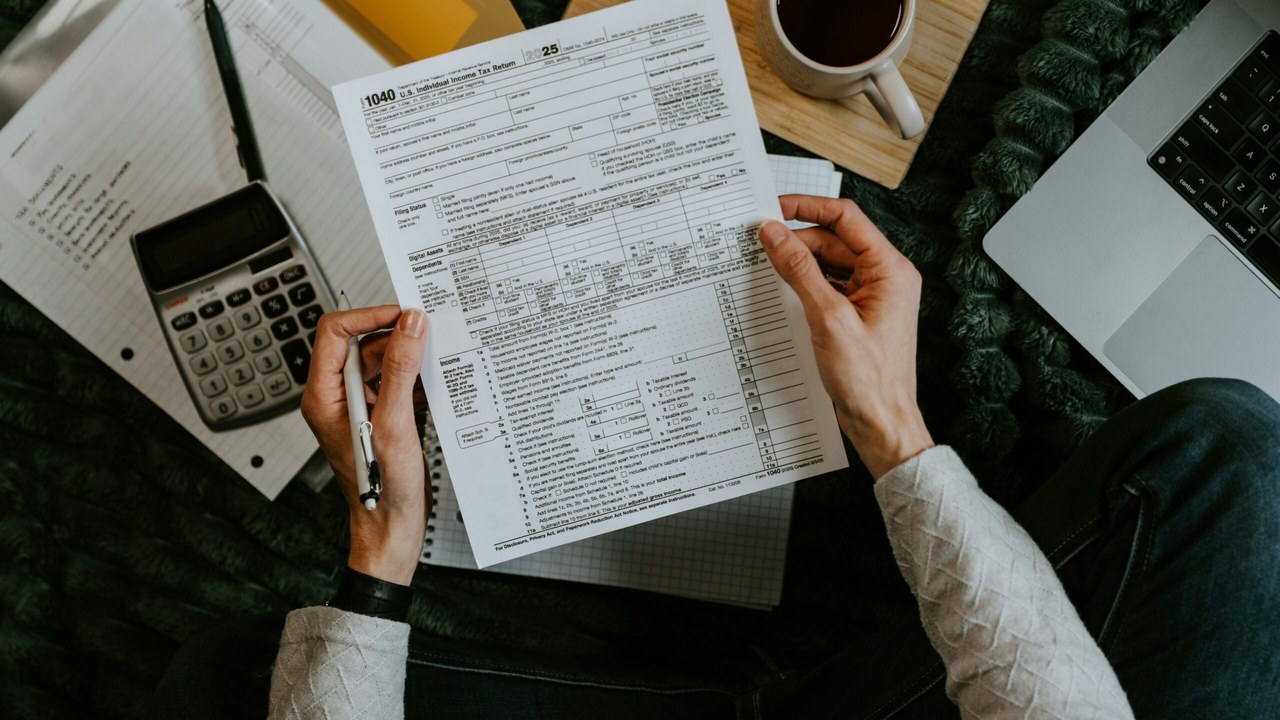
Anyone whose return Clay’s offices prepared between 2019 and 2024 has an obvious next step: pull the copies of those returns and look at the itemized deductions and any Form 5695, the form for residential energy credits. An itemized deduction the client cannot explain, or a Form 5695 for solar panels or a heat pump that was never installed, would be the kind of entry the release describes.
The U.S. Attorney’s Office has not announced a sentencing date for Joseph Clay, so the date that closes this case, built on more than 3,500 returns, is still ahead.
Get the deadline alerts before they pass →
The residential energy credit is a real one, which is part of why a false claim can look routine. The IRS says the residential clean energy credit equals 30 percent of the cost of qualified property such as solar panels, solar water heaters or geothermal heat pumps for a person’s home, and it is claimed on Form 5695 for the year the property was installed.
What officials said
Jamie McDonald, the U.S. Attorney for the Southern District of New York, said, “Tax preparers are entrusted with helping their clients follow the law.” McDonald added that Clay “turned tax preparation into a years-long fraud scheme.”
Harry T. Chavis, Jr., the Executive Special Agent in Charge of the IRS Criminal Investigation New York Field Office, said, “This case is a stark reminder that tax fraud is not a victimless crime.” Chavis also said the guilty plea “sends a clear message: we will aggressively pursue those who exploit the tax system for personal gain.” IRS Criminal Investigation investigated the case, and Assistant U.S. Attorney Carmi Schickler of the office’s White Plains Division is in charge of the prosecution.
Warning signs the IRS lists
The IRS has a short list of red flags for a tax preparer. They include a preparer who promises bigger refunds than others, charges a fee based on a percentage of the refund, offers to deposit all or part of the refund into the preparer’s own account, asks for a signature on a blank form or has no preparer tax identification number. The IRS says a client should never sign a blank form, and that every taxpayer is accountable for each item on a return, whoever prepared it.
The agency also warns about ghost preparers, who do not sign the returns they prepare, and says a preparer who refuses to sign is a warning sign by itself.
Checking a return and reporting a preparer
The free first step is on the IRS site. Its page on choosing a tax professional says anyone can be a paid preparer as long as they have a PTIN, and that the IRS keeps a directory of preparers with recognized credentials. It also says that only attorneys, certified public accountants and enrolled agents can represent a taxpayer before the IRS in all matters.
A taxpayer who thinks a preparer filed or changed a return without consent can use the IRS forms for it. Form 14157 is the complaint form for tax return preparers, and Form 14157-A is the affidavit for preparer fraud or misconduct if a return was filed or changed without the taxpayer’s consent. Before filing either, gather the copy of the return, the preparer’s name and PTIN, the fee paid and any messages that show what was said about deductions or credits.
Those who want a second pair of eyes without paying anyone can use free help. The IRS lists VITA and TCE sites in its tips for choosing a preparer, and its Free File program offers guided software for people with adjusted gross income of $89,000 or less. For Clay himself, the next public step is a sentencing date from Judge Seibel, which the U.S. Attorney’s Office has not yet given.
More Financial Reading
- 24 Ways to Stretch a $2,087 Social Security Check
- 17 Places to Find Your Share of the $4.25 Billion States Give Back
- 20 Medicare Money Moves Now That Part D Caps at $2,400
This article was produced with AI assistance and edited for accuracy against the sources linked above.