
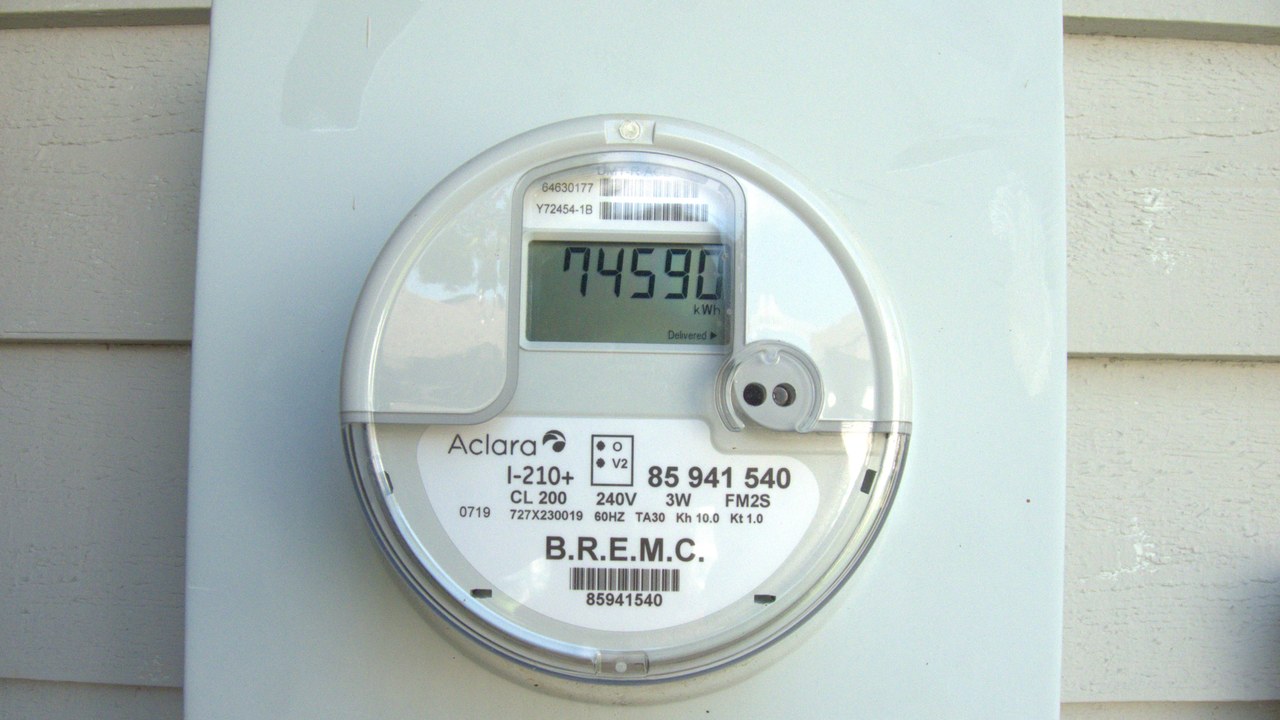
The price of a kilowatt-hour at home has been climbing for three years, and the Energy Information Administration expects it to keep going. Its October 6 outlook forecasts that U.S. residential electricity will average 18.7 cents per kilowatt-hour in 2027, up from 18.2 cents in 2026 and 17.3 cents in 2025. In 2024 the figure was 16.5 cents.
Put together, that is a rise of 1.4 cents, or about 8 percent, between 2025 and 2027. The half-cent step from 2026 to 2027 looks small, but it lands on every kilowatt-hour a household uses, and a home that runs air conditioning in summer or electric heat in winter uses a lot of them. For every 1,000 kilowatt-hours, half a cent adds $5 to a bill. Households on fixed incomes want to know whether the rise stops or continues.
For households watching an electric bill that keeps climbing, The Senior Property Tax & Home-Cost Relief Kit lays out heating, cooling and home-repair help, plus an application log and renewal calendar.
See the cooling and bill-help options in the electric bill kit →
Three years of the same direction
The agency’s table shows a steady line: 16.5 cents in 2024, 17.3 cents in 2025, 18.2 cents in 2026 and 18.7 cents in 2027. The 2026 and 2027 numbers are forecasts, not final prices. The 2027 average is a national figure, so a family’s own rate depends on the utility and state.
The EIA’s explainer on electricity prices gives a sense of the spread. In 2025, Hawaii had the highest average retail rate at 35.72 cents per kilowatt-hour, while North Dakota had the lowest at 8.20 cents. Prices vary “based on the availability of power plants and fuels, local fuel costs, and pricing regulations,” the agency says.
Wholesale prices point to a pause in 2027
The outlook also tracks what power plants get paid before electricity reaches a meter. Wholesale electricity prices are forecast to average $52 per megawatt-hour in 2026, which the agency says is 11 percent more than in 2025. For 2027, it expects them to ease to $49 per megawatt-hour on average.
The PJM region is forecast to see the biggest increase, 41 percent above 2025. The Northwest’s Mid-Columbia hub is expected to see the biggest decline, 23 percent. A drop in wholesale prices does not always reach home bills quickly, since the retail price also covers wires, poles and other costs. The EIA states that the cost of generating electricity is the largest component of the price.
Data centers and demand
Demand is part of the story. The EIA says electricity use rose 4 percent in the third quarter of 2026 compared with a year earlier, with residential use up 6 percent after a hot summer. Looking ahead, it expects commercial demand, which includes data centers, to grow 2.8 percent in 2027 and industrial demand to grow 2.7 percent.
Residential use is expected to hold about level with 2026. That means the forecast rise in the home price is not being driven by households using more power next year. The agency does not break down how much of the retail increase comes from each cost.
Help with bills if the rate keeps rising
Low-income households can get help with electric bills through the federal Low Income Home Energy Assistance Program, which the Administration for Children and Families describes as covering heating and cooling needs through state, tribal and local offices. The Energy Department’s Weatherization Assistance Program works on the other side of the bill by cutting energy use, with average savings of $372 or more a year, according to a national evaluation.
Checking the rate on an electric bill against the forecast
The free first step is on the bill itself. Most utilities list the price per kilowatt-hour or give enough detail to work it out: divide the energy charge by the kilowatt-hours used. Comparing that number with the national forecast of 18.7 cents for 2027 shows whether a household pays above or below the average. A rate that sits near 18 cents is in line with the EIA’s 2026 forecast of 18.2 cents; one near 12 cents or 25 cents points to a very different local price.
A bill that runs well above average is worth a call to the utility about rate plans and payment options, and state utility regulators publish the approved rates. Keep the last twelve bills together in one place. They show the seasonal swings, make it easier to apply for help when a bill spikes, and give a baseline when the EIA updates its forecast in its next outlook on November 10.
The Senior Property Tax & Home-Cost Relief Kit includes the circuit-breaker credit that includes renters and heating, cooling and home-repair help, so a household can line up utility and home-cost help before rates move again.
Get the kit for tracking electric bill help and renewals →
This article was produced with AI assistance and edited for accuracy against the EIA and Energy Department pages linked above.


