
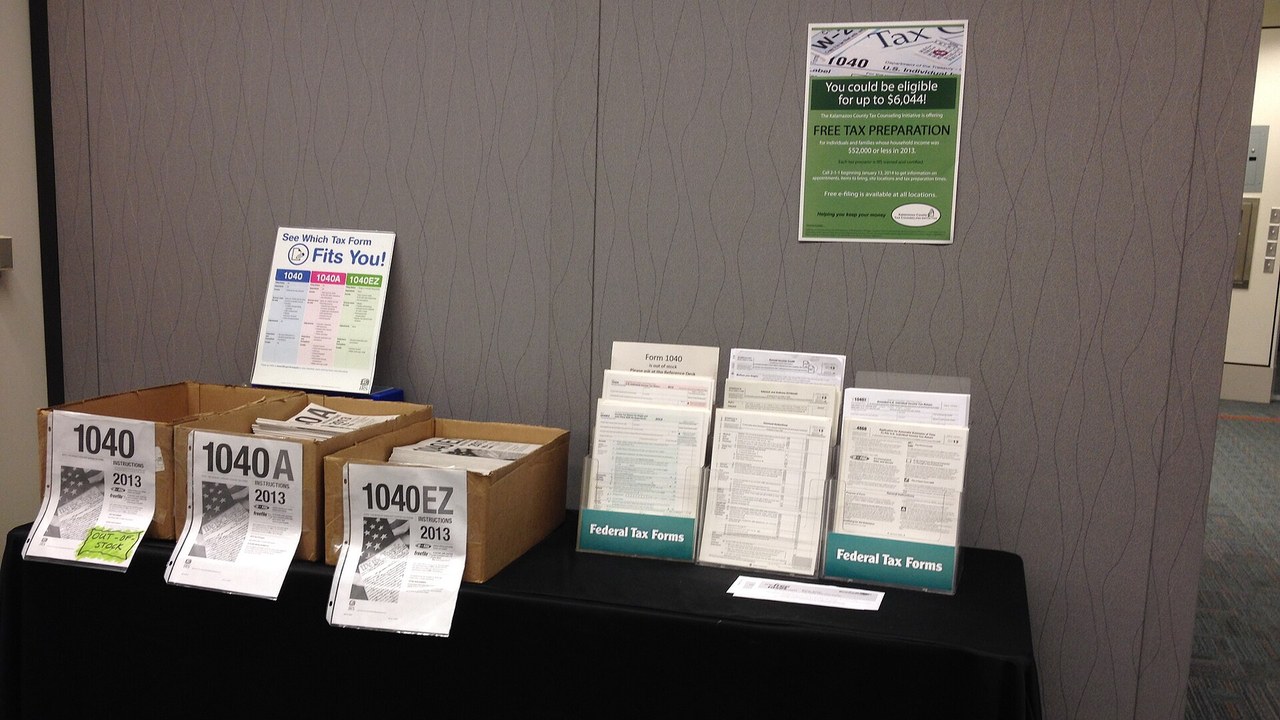
Every January, Social Security mails beneficiaries a Form SSA-1099 reporting exactly how much the agency paid them the previous year, the figure used to work out how much of that money, if any, counts as taxable income. “Effective systems and clear guidance are important to ensuring payments are processed correctly,” Michelle L. Anderson, the Social Security Administration’s Assistant Inspector General for Audit, said when her office released a new audit of how the agency handles emergency benefit payments. The audit’s most striking finding has little to do with the emergency payments themselves: it found SSA sent an estimated 10,540 people a Form SSA-1099 with the wrong benefit total, off by a combined $13.7 million.
How a Critical Payment Is Supposed to Work
SSA issues what it calls a critical payment whenever a beneficiary or representative payee flags an emergency: a monthly check that never arrived, a benefit increase never applied, a household in what the agency’s own manual calls “dire need” of food, shelter or medical care. A field office employee reviews the beneficiary’s file, calculates what is owed, subtracts anything that should come out first, such as Medicare premiums, voluntary tax withholding, court-ordered garnishments or an existing overpayment recovery, and issues the payment under a two-employee sign-off system. A separate processing-center employee is then supposed to double-check the payment afterward and manually update the beneficiary’s permanent payment history, the same record Social Security’s computers pull from every January to generate that year’s Form SSA-1099. Skip that manual update, and the tax form generated months or years later carries the wrong number.
Inside the planner: Four calculators covering provisional income, IRMAA tier, the RMD schedule and Roth bracket fill, plus the senior deduction and the IRMAA appeal route. Open The Retirement Tax & Withdrawal Planner.
10,540 Wrong Tax Forms, $13.7 Million Off
That is exactly what auditors from the Social Security Administration’s Office of the Inspector General found happening at scale. Reviewing a sample of critical payments issued in Fiscal Year 2023, investigators estimated SSA issued about 10,540 beneficiaries a Form SSA-1099 with a total benefit figure that was either overstated or understated, by a combined $13,698,560. The form is not a minor mailer — it is the document beneficiaries and their tax preparers use to figure out how much of their Social Security income counts toward federal taxes, under rules that phase in taxation once a household’s combined income crosses set thresholds. An SSA-1099 that shows too much can push a beneficiary into reporting, and potentially paying tax on, benefit income never actually received that year; one that shows too little understates a beneficiary’s income to the IRS, a mismatch that can trigger its own correspondence later.
175 Payments Sampled, 70 Errors Found
The 10,540 figure is a projection built from a narrow, randomly selected sample. Auditors pulled 3,549 critical payments SSA issued in Fiscal Year 2023 from one of the 20 equal segments the agency uses to divide its beneficiary file, then reviewed 175 of those payments in detail. Employees processed 109 of them correctly. On the other 66, employees made 70 separate processing errors, sometimes more than one on a single payment. Twenty of those errors caused SSA to pay a beneficiary the wrong amount outright, totaling $78,442 in improper payments in the sample alone. Projected across the estimated 70,980 critical payments SSA issued nationwide that fiscal year, auditors calculated the agency processed about 44,000 of them correctly, 62 percent, and got roughly 27,000, or 38 percent, wrong in some way, more than 28,000 individual errors in total.
The $238 Premium Nobody Deducted
One example from the audit shows how a single missed step compounds. In November 2022, a beneficiary enrolled in Medicare Part B visited a field office while waiting for benefits to be reinstated. An employee determined the beneficiary was owed a $2,972 critical payment covering two months of missed benefits, but never deducted the $238 Medicare Part B premium SSA is required to subtract from every monthly payment for an enrolled beneficiary. The beneficiary received a payment $238 too large. A processing-center employee caught the error during a later post-payment review and adjusted the beneficiary’s future benefits to make up the difference. Auditors found 18 similar cases in their sample where field office employees skipped a required deduction or missed a special circumstance, projecting the pattern affects roughly 6,900 beneficiaries nationwide.
8,120 Beneficiaries Improperly Paid $11.6 Million
Not every error gets caught before the money is spent. Separate from the 6,900 cases processing centers flagged in time, auditors estimated about 8,120 beneficiaries were improperly paid a combined $11,649,640 because employees never went back and accurately adjusted the underlying beneficiary record after a critical payment went out. In one example, a processing-center employee was supposed to increase a beneficiary’s existing overpayment balance by about $2,700 to reflect a critical payment issued to cover benefits withheld over the prior two months, and instead entered $0. SSA never recovered the $2,700 from the beneficiary’s future benefits, because its system had no way to flag a manually entered value that simply didn’t match what the case required.
When a Replacement Check Confuses the Tax Form
A separate slice of the sample traces directly back to the SSA-1099 problem. When a beneficiary reports never receiving a payment, SSA is supposed to record that missing payment as a formal “non-receipt” before issuing a replacement critical payment, a flag that tells the system to tax the replacement rather than the original and to reflect both correctly on the beneficiary’s payment history. Auditors found employees failed to record that flag correctly for 23 beneficiaries. In one case, SSA had withheld a beneficiary’s $2,395 monthly payment to recover an old overpayment; the beneficiary reported never receiving it, and a field office employee issued a matching $2,395 critical payment, but recorded the original payment as a non-receipt instead of correctly linking it to the withholding. The result: SSA’s system counted only one of the two payments as taxable that year, understating the beneficiary’s Form SSA-1099 by $2,395.
Seven Recommendations, All Accepted
The inspector general made seven recommendations, aimed at controls rather than individual case fixes: flagging mismatched manual entries in SSA’s Critical Payment System before a payment goes out, alerting processing-center employees when a beneficiary already has an unresolved overpayment on file, and rewriting national procedures so employees know exactly when to update a beneficiary’s tax record after a replacement payment. SSA agreed to implement all seven, and auditors logged $10,342,340 in questioned costs and $1,357,184 in identified funds for better use tied to the findings. The fixes remain system and policy changes still to be built, which leaves the 10,540 people whose Form SSA-1099 already went out with the wrong number on it checking their own math against old pay stubs and bank deposits in the meantime.
Checking a Number the IRS Will Also See
Nothing mails alongside a Form SSA-1099 that helps a household check the total against its own bank deposits before it goes on a tax return, and a beneficiary who spots a mismatch is left guessing which calculation the number is even supposed to feed into.
The Retirement Tax & Withdrawal Planner is a 12-page planner with a provisional-income calculator and an IRMAA-tier calculator for sorting out how benefit income interacts with the rest of a household’s retirement withdrawals.
Compare the provisional-income and IRMAA-tier calculators in The Retirement Tax & Withdrawal Planner.
This article was produced with AI assistance and reviewed by a human editor. Figures are linked to their primary sources.


