
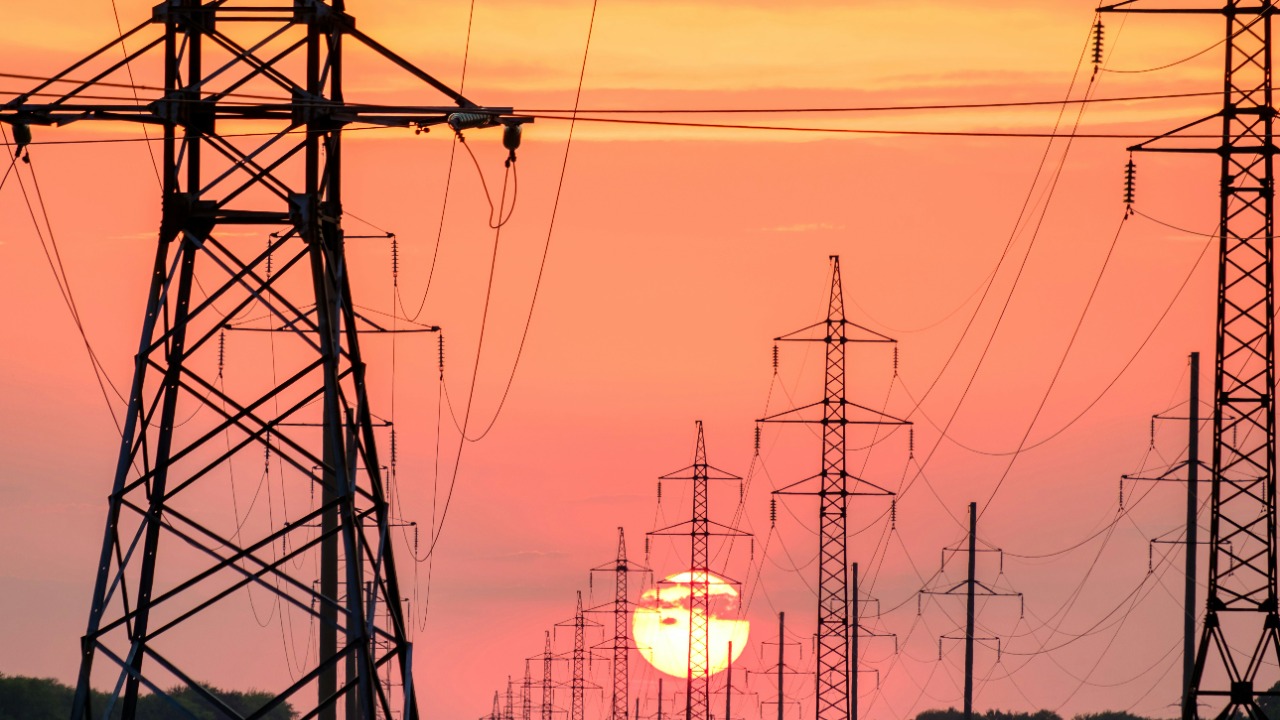
Green Mountain Power spent months defending a rate request that state regulators ultimately cut down before signing off on it. The fight over how much of the company’s storm-hardening budget belongs on customer bills is now settled, and the resulting increase reaches every residential and business account the company serves just as other Vermont energy costs are also climbing.
Regulators Approve 5.5% Instead of the 7.5% GMP Requested
The Vermont Public Utility Commission ordered on Aug. 28 that Green Mountain Power, described in that reporting as the state’s largest electric utility, may raise electricity rates by 5.5% for its more than 275,000 Vermont customers, a smaller increase than the 7.5% hike the company originally sought. The billing change takes effect Oct. 1, meaning the new rate applies to bills issued from that date forward.
Green Mountain Power’s original filing was docketed with the commission as Case No. 26-0096-TF, described on the commission’s own case page as a tariff filing “for a 7.5% rate increase effective with bills rendered on or after October 1, 2026.” That record shows the case went through a public hearing, hosted jointly with the Vermont Department of Public Service, before the three-member commission narrowed the company’s ask.
Regulators did not take Green Mountain Power’s numbers at face value. The Department of Public Service, which represents the public interest in rate cases, opposed parts of the company’s spending plan, and the commission opened a separate investigation into Green Mountain Power’s overall financial circumstances back in March, months before the rate case reached its public hearing stage. That earlier inquiry fed directly into how closely regulators scrutinized the 7.5% request once it was formally filed.
Relief that waits to be asked for: Property-tax freezes, exemptions and utility help are rarely applied automatically, and each has its own filing window. See the five kinds of relief in The Senior Property Tax & Home-Cost Relief Kit.
Storm-Hardening Spending Cut to a Third of GMP’s Ask
Green Mountain Power wanted to set aside roughly $341 million over four years for what it calls resilience work: burying and reinforcing power lines to cut down on weather-related outages. The commission approved about $113 million instead, aimed specifically at the company’s ten worst-performing circuits. Commission spokesperson comments included in the case record found that most of the underlying cost pressure was “largely outside GMP’s control,” pointing to region-wide increases in electricity supply and transmission costs on top of general inflation.
Kristin Carlson, a spokesperson for Green Mountain Power, said the company’s storm work has already lowered outage counts and restoration costs, telling reporters that “storms are increasing in frequency and severity” and that the goal is projects that “keep customers with their lights on” while lowering costs over time. The company received approval in 2024 for a separate $150 million, two-year hardening effort before filing this year’s larger request.
The commission’s written order was direct about the underlying premise even as it capped the spending: “There is no dispute that Vermont’s climate is changing,” the decision stated, while stressing that affordability concerns for residents were “central to our analysis” of how much of the four-year plan to allow. Regulators said the approved $113 million should be enough to cover upgrades to the ten worst-performing circuits over that period while limiting the immediate impact on customer bills as much as practical.
Regulators Heard From More Than 50 Vermonters Before Ruling
The commission’s public comment record ran overwhelmingly critical of the original 7.5% proposal. Janice McCann told the panel in a written statement that she could not “afford taxes, utilities, insurance and food anymore,” asking regulators to “consider the less fortunate people in Vermont.” John Tatro raised a different complaint common among GMP’s customers: there is no competing electric company to switch to in most of the utility’s service territory. The commission’s decision repeatedly cited affordability as “central” to its analysis of how much of the company’s spending plan to allow.
No Monthly Dollar Figure Has Been Published
Green Mountain Power’s filings and the commission’s order describe the increase only as a percentage applied to the company’s overall revenue requirement, not as a projected dollar change on a typical household bill. Neither the commission’s case record nor the company’s public statements around the decision include a stated monthly or annual dollar figure for an average residential customer, and none appears anywhere in the reporting on this case. Vermont’s rate-setting process approves an overall percentage change to a utility’s revenue requirement rather than a single cents-per-kilowatt-hour figure announced up front to every account, so a household’s actual change will depend on usage, rate class and the specific tariff schedule that applies once the new rates take effect. Anyone wanting a personal number will not find it in the commission’s order; it will only show up once the new tariff is applied to that household’s own October usage.
The Commission’s Own Standard Is “Minimum Reasonable Costs”
The Public Utility Commission describes its mission as ensuring “high-quality public utility services in Vermont at minimum reasonable costs, consistent with the long-term public good of the state,” carried out through a three-member quasi-judicial process that resolves utility disputes and sets policy under Title 30 of Vermont statute. That mandate is why the commission opened a separate financial investigation into Green Mountain Power in March, ahead of this rate case, and why the final order split the difference between the company’s infrastructure spending plans and the immediate cost impact on ratepayers. Green Mountain Power is not the only Vermont utility pressing for higher rates this year: electric departments in Swanton, Hyde Park and Jacksonville have separately filed for increases of roughly 30%, 15% and 18%, respectively, for the coming months.
What an Approved Increase Leaves Out
An approved rate case sets a percentage and a start date, but it does not tell a household which existing property-tax break, exemption or energy-assistance program might already apply to their address. Vermont and most states run several such programs side by side, and none of them show up automatically on a utility bill or a commission order. The gap between an approved increase and the relief a household might already qualify for is where paperwork, deadlines and eligibility rules tend to get lost.
The Senior Property Tax & Home-Cost Relief Kit is an 11-page kit covering the 5 kinds of property-tax relief, the circuit-breaker credit that includes renters, and heating, cooling and home-repair help.
Review the application log and renewal calendar in The Senior Property Tax & Home-Cost Relief Kit.
AI-assisted research and drafting; reviewed by an editor.


