
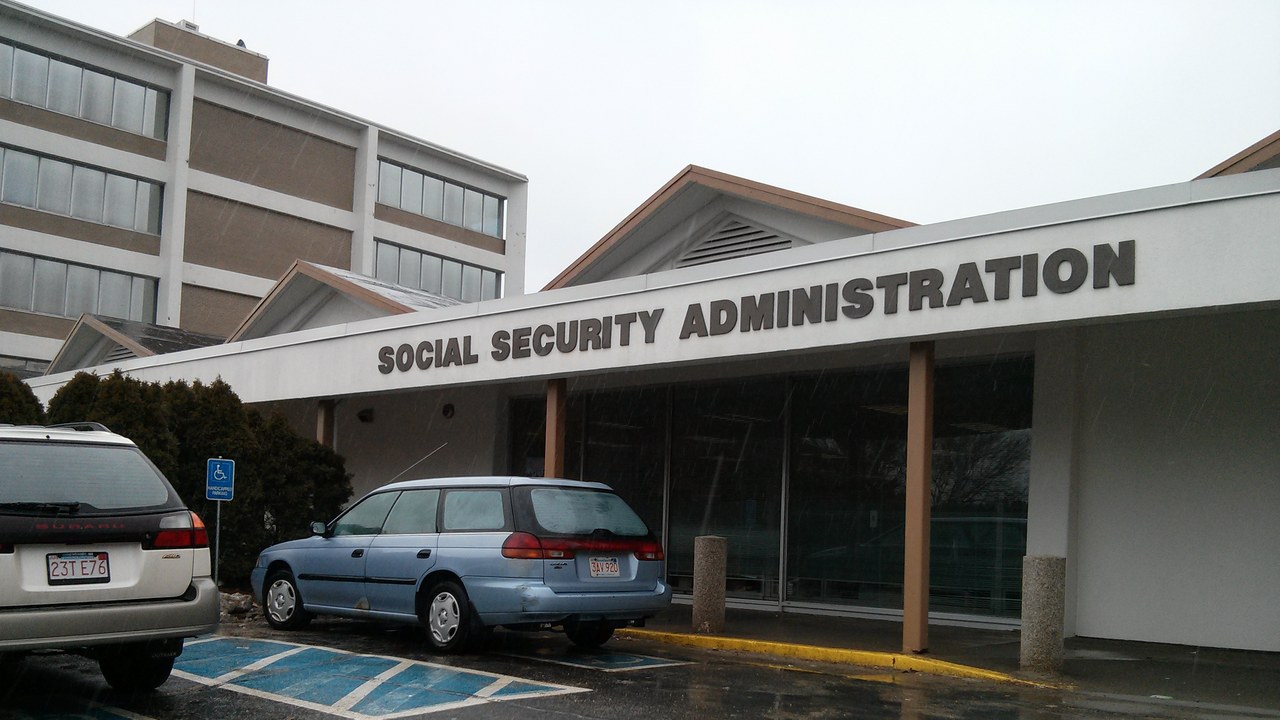
The Social Security Administration’s Office of the Inspector General spent more than a year combing agency files on beneficiaries who died still owing money, and singled out one category of case that slipped past review more than any other: survivors who kept a payment the agency was supposed to hold back. The audit lays out a fixed order Social Security is required to follow before writing off a debt, then tests whether staff actually followed it. The gap between two numbers in the results tells much of the story on its own — $1,020 already paid out to survivors the agency says it should have withheld, against a $106 million total the inspector general believes is still recoverable.
The Order Social Security Must Follow Before Writing Off a Debt
When a Social Security beneficiary dies with money still owed to the agency, policy does not let the debt disappear with them. According to the inspector general’s report, Recovery Efforts for Deceased Beneficiaries’ Overpayments (032406), employees must pursue recovery in a fixed sequence: first withhold any underpayment still due the deceased person, then withhold any lump-sum death payment payable on the same earnings record, then propose adjustments against the benefits of anyone “contingently liable” on that record, and only after that attempt to collect from the deceased person’s estate.
The population behind that rule is large. Between December 2022 and December 2024, 17,979 adult beneficiaries died with outstanding overpayments — debts the agency had already flagged before their deaths — totaling about $240 million. Investigators narrowed that group to wage earners and their spouses or widowers with at least $2,000 still outstanding, then pulled a random sample of 125 cases split into two groups: 108 beneficiaries deceased roughly two months to two years, whose overpayments remained open to every collection tool in the four-step list, and 17 beneficiaries deceased longer than two years, whose overpayments may no longer be eligible for estate recovery at all.
Inside the kit: The 2026 payment calendar, the three SSA forms that stop or pause collection, and a first-24-hours plan for a payment that never arrives. Open The Social Security Check Protection Kit.
The $255 Lump-Sum Payment at the Center of the Case
The payment at issue in the audit’s most direct finding is small by Social Security’s own standards. A one-time payment of $255 goes to a surviving spouse who was living with the beneficiary at the time of death, and in some circumstances to a spouse living apart, according to Social Security’s current guidance on the benefit. If there is no eligible spouse, a qualifying child can receive it instead, and survivors have two years from the date of death to apply.
That $255 is precisely the payment SSA’s priority order places second, ahead of any adjustment against a relative’s own benefits and ahead of any attempt to collect from an estate. It should also be one of the easier amounts for the agency to intercept, since Social Security is usually calculating and issuing it around the same time it is processing the beneficiary’s death and any outstanding balance on the account.
Four Survivors, $1,020, and No Explanation Anyone Could Give
Of the 125 sampled cases, Social Security employees followed the required recovery order for 66, or 53%, and did not for 59, or 47%, the inspector general found. Inside that second group is a specific, named failure on the lump-sum benefit: the agency did not, in the audit’s own language, “withhold lump-sum death payments from the eligible survivors of four beneficiaries to offset overpayments,” paying out $1,020 to those survivors instead.
Investigators could not pin down why. SSA’s own subject-matter experts offered no explanation for the missed withholding when asked, the report states. The finding sits inside an audit signed by Michelle L. Anderson, the OIG’s Assistant Inspector General for Audit as First Assistant, in a memorandum addressed directly to Commissioner Frank Bisignano.
Estates and Contingently Liable Relatives Absorb the Rest
The lump-sum payment is the narrowest category in the audit; the other two recovery paths involve far more money and more relatives. Social Security did not attempt to recover $751,395 from the estates of 40 deceased beneficiaries, even after its own alert system flagged the accounts, because staff routed the pending actions into a workload backlog where they sat unresolved. A separate $320,624 went uncollected from 15 deceased beneficiaries’ overpayments because the agency never finished pursuing the “contingently liable” relatives tied to those earnings records — typically a household member who lived with the beneficiary when the overpayment occurred, or who is judged to share responsibility for causing it.
Projected across the full 17,979-person population, the inspector general estimates Social Security could still pursue roughly $106 million owed by 8,486 deceased beneficiaries by consistently applying its own priority list. A parallel entry with the Council of the Inspectors General on Integrity and Efficiency, which catalogs the audit, records the recoverable amount as $105,968,705 in “funds for better use” tied to two open recommendations. Social Security agreed to implement both, including tighter controls on estate, contingently-liable and lump-sum recovery, and owed the inspector general a corrective action plan within 60 days of the report’s Aug. 5, 2026 issue date. The oversight catalog separately lists $157,319 in “questioned costs” tied to the ten contingently-liable cases the audit referred back to the agency by name — a smaller, more immediate bill sitting alongside the much larger projected total.
The Paperwork a Survivor Inherits
The audit describes what Social Security is required to do internally after a beneficiary dies with an overpayment on the books, not what shows up next in a survivor’s mailbox once that process starts. A relative asked to give back a lump-sum payment, or named as contingently liable on a demand letter, gets no separate map of the specific forms available to pause, dispute or manage that collection. That gap between the agency’s internal recovery order and a household’s next move is exactly where confusion tends to compound.
The Social Security Check Protection Kit is an 18-page kit built around the three SSA forms that stop or pause collection (SSA-561, SSA-632, SSA-634) and an overpayment response worksheet for tracking deadlines and documents.
See the three SSA forms and the overpayment response worksheet in The Social Security Check Protection Kit.
AI-assisted research and drafting; reviewed by an editor.


