
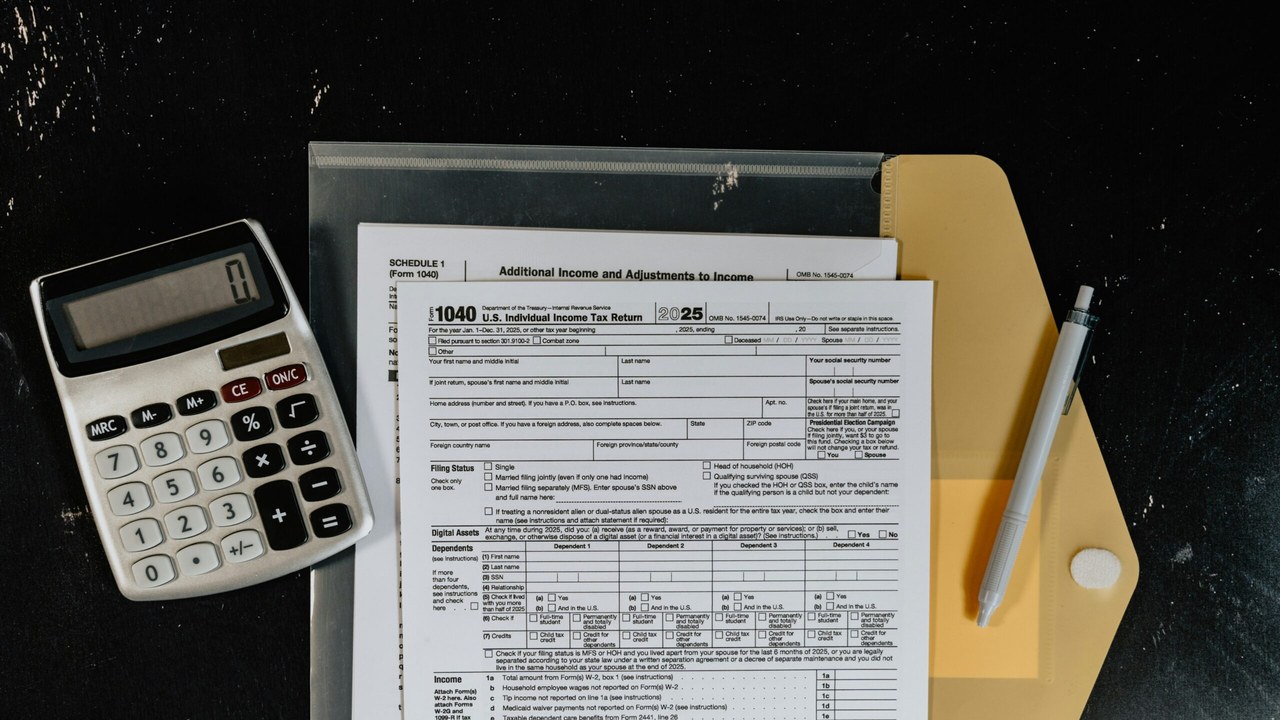
The IRS’s program for building a tax return on someone else’s behalf closed 592,800 cases in fiscal year 2025, more than double the 252,100 it closed two years earlier. The jump reflects a pandemic-era program coming back online rather than a new crackdown, but the mechanics matter to anyone who has gone a year or more without filing. When the IRS builds that return, it only works from the numbers it already has, and those numbers are almost never in the taxpayer’s favor.
A Program Built To Assess Tax For People Who Won’t File
The Automated Substitute for Return program exists for taxpayers who have not filed but appear to owe real tax based on income already reported to the IRS by employers and banks. Rather than wait indefinitely, the agency builds and files that substitute return itself, computing a proposed tax bill from the third-party data alone and moving it toward an assessment; the IRS’s own consumer guidance describes the process plainly as “we may file a substitute return for you.” The inspector general’s own internal glossary describes the mechanism the same way: a system built to assess tax on wage earners who have not filed, using only the information already submitted to the agency and whatever historical return data is on file, not the deductions, dependents or credits a taxpayer would otherwise be entitled to claim.
That process is authorized under Internal Revenue Code Section 6020 and is described in detail in the inspector general’s report on IRS compliance trends. Because the computation only sees income, not expenses, it typically skips the deductions, exemptions and credits a taxpayer would otherwise be entitled to claim, which usually means a bigger bill than a self-prepared return would produce.
Before any of that becomes final, the IRS is required to send a Notice of Deficiency, known as a CP3219N or “90-day letter,” proposing the assessment. That starts a 90-day clock in which the taxpayer can either file the missing return or petition U.S. Tax Court to dispute the proposed number. If neither happens within the window, the IRS proceeds with the assessment it calculated on its own, and the case moves into the closure totals that make up this year’s 592,800 figure.
Free retirement updates: A quiet rule change can shrink your Social Security or Medicare check, and no one warns you. The free Retirement Shield newsletter catches these early and tells you what to do. Get it free.
From 252,100 Cases To 592,800 In Two Years
The numbers moved fast once the pause ended. The program closed 252,100 cases in fiscal 2023, jumped to 442,700 in fiscal 2024, then rose again to 592,800 in fiscal 2025, a 135 percent increase over the two-year span. This data is compiled from the IRS’s own annual Data Book, which the agency publishes every year alongside these enforcement totals. Additional tax assessed through the program climbed even faster, from $1.1 billion in fiscal 2023 to $2.9 billion in fiscal 2025. The biggest shift came in cases where the IRS actually made contact with the taxpayer before closing the case: those rose from 1,169 in fiscal 2024 to 161,908 in fiscal 2025, as cases opened after the program’s restart worked their way to completion. The substitute-return program is part of a broader pattern inside IRS enforcement: revenue collected through the Collection function, which includes this program alongside routine balance-due notices, grew 17 percent from fiscal 2023 to fiscal 2025, even as revenue from in-person examinations fell in the same period. Spread across all 592,800 cases closed in fiscal 2025, the $2.9 billion in additional assessments works out to roughly $4,900 per case on average, though that computation cannot account for a taxpayer’s actual deductions, dependents or filing status — only the raw third-party income data the IRS already had on file.
Most Of The Growth Was Automatic, Not Personal
The two ways a case can close moved in almost opposite directions. Cases closed automatically, without any contact with the taxpayer, climbed from 208,500 in fiscal 2023 to 441,500 in fiscal 2024 and 430,900 in fiscal 2025, a 107 percent increase over the three years that accounts for the bulk of the total. Cases closed after actual contact with the taxpayer told nearly the opposite story: they fell to just 1,200 in fiscal 2024, a 97 percent drop from the 43,600 closed with contact in fiscal 2023, before rebounding sharply to 161,900 in fiscal 2025. The IRS attributed the fiscal 2024 dip to timing — the program had already worked through most of its pre-pandemic backlog by then, while the fresh cases opened after the May 2024 restart had not yet had the seven to nine months they typically take to close.
Why The Program Went Quiet, Then Loud Again
IRS processing centers shut down in 2020, and the substitute-return program was paused intermittently from April 2020 until it was fully restarted in May 2024. Cases in this program typically take seven to nine months to close, so the ones opened right after the restart did not show up in the closure numbers until well into fiscal 2025. That timing lag explains much of why the jump looks so sudden: it is not that the IRS suddenly found hundreds of thousands of new nonfilers, it is that a backlog of work finally started moving through the pipeline at once.
What To Do Before The IRS Computes A Return
Nothing in the substitute-return process stops a taxpayer from filing an original return instead, and the IRS actively recommends it. Filing that return, even a late one, lets someone claim the deductions, exemptions and credits an IRS-computed substitute assessment leaves out entirely, and it can lower the final bill significantly, according to the agency’s own guidance on filing past due returns. The agency also warns that an unresolved substitute assessment can escalate into a levy on wages or a bank account, or the filing of a federal tax lien, if it goes unanswered, so the window to self-correct narrows the longer a case sits open. Even after the IRS closes a case using its own numbers, filing the real return afterward is still worthwhile in most situations, since the agency says it will generally adjust the account once the accurate figures are on file.
Inside the kit
A notice decoder, the refund-trace steps for Form 3911, a refund status tracker spreadsheet and the 3-year refund deadline.
The IRS Refund Recovery Kit includes a 13-page kit, a notice decoder and the refund-trace steps (Form 3911).
Open The IRS Refund Recovery Kit.
This article was produced with AI assistance and reviewed by a human editor. Figures are linked to their primary sources; where a claim could not be verified from the public record, we say so.


