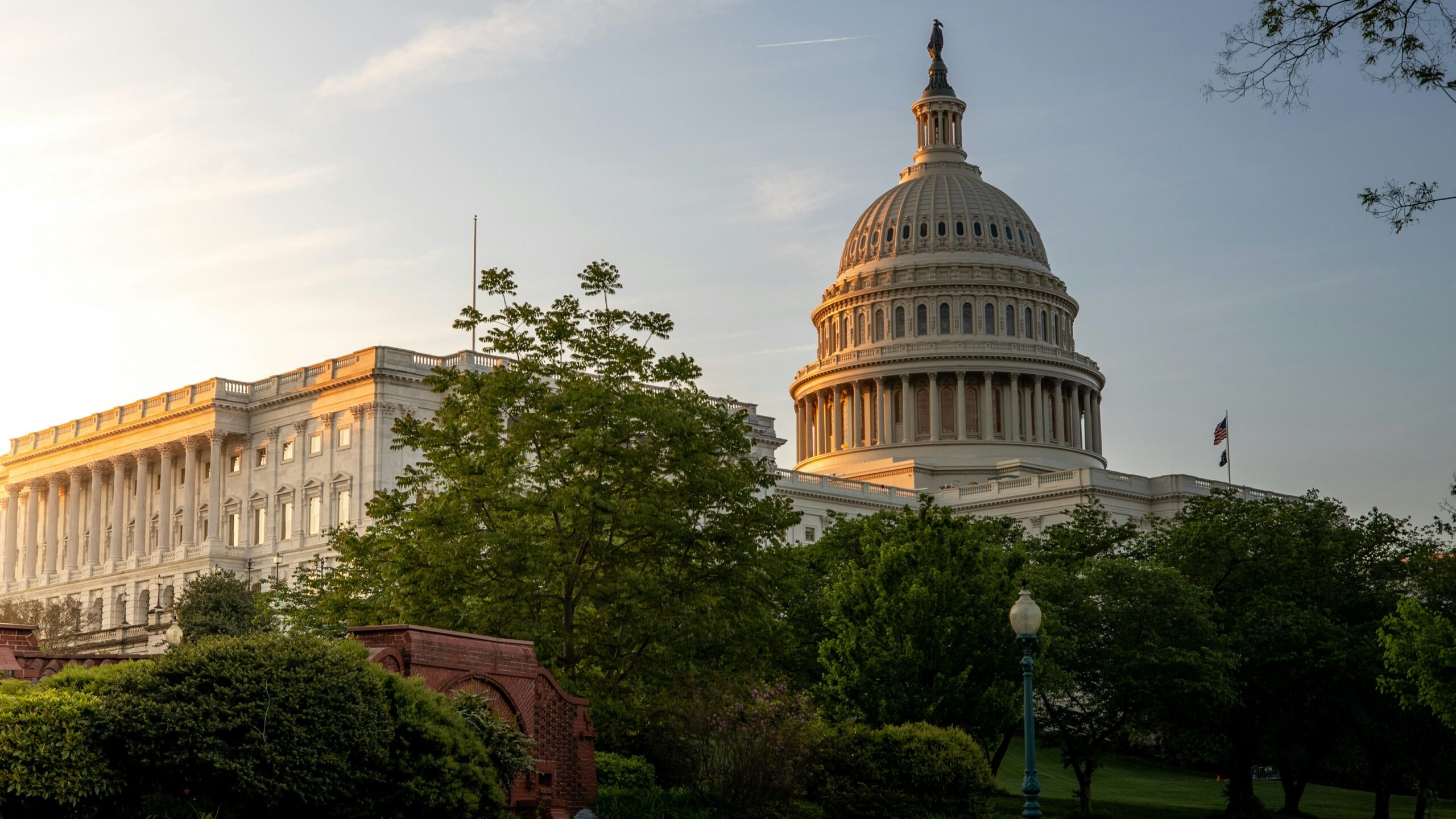
The federal government will keep running past its usual September 30 funding deadline after Congress passed, and President Trump signed, a short-term spending law that carries agencies through December 11. Lawmakers timed the bill so the next funding fight lands roughly a month after the November midterm elections rather than before them. The measure passed with wide, unusual margins in both chambers, a rare moment of agreement in an otherwise divided Congress.
What H.R. 6500 Actually Funds Through December 11
The bill, H.R. 6500, the Continuing Appropriations and Extensions Act, 2027, holds federal agency funding generally at current levels through December 11 rather than setting new spending totals. That is what a continuing resolution, or CR, does by design: it does not create new programs, raise or cut any agency’s budget, or change policy on its own — it simply carries forward whatever funding levels were already in place so that agencies can keep issuing paychecks, processing claims and answering phones without interruption while Congress keeps negotiating a full-year budget. The enrolled bill on file with the Government Publishing Office’s official govinfo.gov record carries the full title “An Act Making continuing appropriations and extensions for fiscal year 2027, and for other purposes,” and beyond the core funding patch it also extends the legal authority behind a range of unrelated programs that would otherwise lapse alongside the money, including surface transportation funding and several veterans’ benefit authorities, so those programs keep running on their existing rules through the same window rather than expiring on their own separate deadlines. The same govinfo.gov filing lists 28 separate public laws the bill touches in order to keep those extensions valid, a reminder that a stopgap this size is rarely just about the calendar-year number everyone quotes.
House Speaker Mike Johnson told reporters ahead of the vote that the measure “simply holds funding steady at current levels through Dec. 11th,” as Republicans work to finish the full-year appropriations process. Because the bill passed nearly a month before funding would have otherwise lapsed on September 30, it counts as an unusually early resolution to a fight that in recent years has routinely run past the deadline.
Free retirement updates: Want plain-English help keeping more of your money in retirement? The free Retirement Shield newsletter covers the benefits, deadlines, and money mistakes that cost retirees, a couple times a week. Subscribe free.
The Votes And The Signature Behind The Law
The Senate passed its version 90-6 in July before leaving for summer recess, and the House followed with a 370-48 vote on September 1. The White House’s own record of the signing states that on Wednesday, September 2, 2026, the President signed into law H.R. 6500, formally averting the shutdown that would otherwise have begun at the start of the new fiscal year. Margins that lopsided are rare on spending bills, and they reflect how little appetite either party had for a shutdown fight heading into a midterm election year.
The Riders Inside The Bill, And What Recent Shutdowns Have Cost Households
The stopgap is not a blank extension of old spending levels. According to Government Executive’s reporting, it temporarily blocks a proposed Office of Management and Budget rule that would have put federal grant funding under review by political appointees, and it separately blocks the administration from shifting money out of other programs to fund Border Patrol. House Appropriations Committee ranking member Rosa DeLauro called the measure a “marked improvement” over an earlier version that would have funded the government only through December 4 and lacked the grant-review restriction, while cautioning it “is in no way a substitute for the full-year funding process.” That caution carries weight for households: the same reporting noted that federal employees have already lived through the longest full government shutdown in U.S. history, a 43-day closure last fall that broke the previous 35-day record from 2018-2019, followed by a separate 75-day partial shutdown that hit the Homeland Security Department alone, and that both episodes left federal workers missing paychecks for weeks at a stretch.
Why December 11, Not January, Is The Real Deadline
The timing was deliberate. House Appropriations Committee Chairman Tom Cole said the current fiscal year deadline was “outpacing the work that remains” on the dozen annual spending bills Congress is supposed to pass, and that the stopgap “will allow Congress time to get past the November elections” before returning to finish the job in November and December. In his own committee’s account of the vote, Cole framed the bill as a deliberate break from recent fights: “The bill is simple by design — no poison pills, no divisive wish lists, and no political gimmicks. Just a clean, straightforward measure that keeps the government working, provides more time to address full-year bills, and trades the familiar cycle of Senate Democrat brinkmanship for something far more useful: certainty.” As of this month, the House had passed only three of those twelve bills and the Senate had passed none, meaning the full appropriations process remains largely undone even with the shutdown risk pushed back. Whichever party gains ground in the midterms will carry that leverage directly into the December 11 negotiations, with federal paychecks, and the everyday government services households rely on, sitting on the other side of the deadline. That gives households a concrete date to watch on the calendar: if the twelve annual spending bills still are not finished by then, Congress either passes another stopgap, reaches a full-year deal, or lets funding lapse into a shutdown — the same three choices lawmakers faced this month, just with a different political map behind them.
The Programs A Statement Never Shows
A funding fight in Washington is about keeping federal agencies running, not about any single household’s finances, and the programs that actually stretch a fixed income never appear anywhere in the coverage of a spending bill. Those programs still exist and still have their own limits and rules whether or not Congress is in session.
A separate download tracks Extra Help for prescription costs, free home weatherization, and VA Pension with Aid & Attendance alongside the rest of the list.
See the full list of programs and their current limits in The Benefits Checklist.
This article was produced with AI assistance and reviewed by a human editor. Figures are linked to their primary sources; where a claim could not be verified from the public record, we say so.