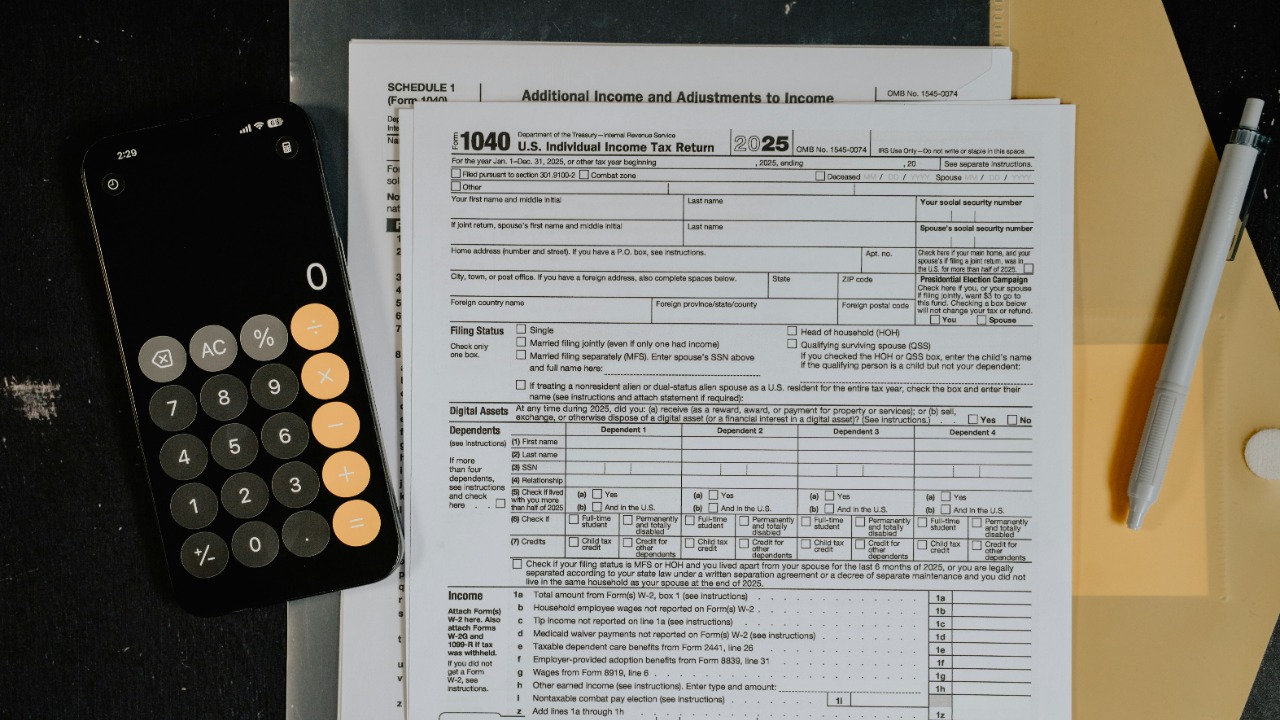
Treasury’s own math on the government’s free federal e-filing tool comes down to one blunt fraction: fewer than one in every 200 tax returns filed for tax year 2024 went through Direct File. That single number, buried in a report Treasury sent Congress last October, is the central justification the department gives for suspending the program rather than expanding it. A newer federal audit, released this March, breaks that fraction down further and finds the same pattern repeating at every stage: a lot of people were technically eligible, a small fraction signed up, and an even smaller fraction finished. Put together, the two documents tell a more specific story than “not enough people used it” — they show almost exactly where each round of interested taxpayers dropped off, and why the number kept shrinking at every step between eligibility and a filed return.
What “Fewer Than One in 200” Actually Counts
The denominator behind the fraction is every individual federal income tax return filed for tax year 2024, not just the returns from taxpayers who happened to live in a state where Direct File was even offered. That distinction matters, because it means the headline number measures Direct File against the entire universe of American tax filers, most of whom were never eligible to use it in the first place.
The number comes directly from Treasury’s October 2, 2025 report to Congress, which states that for tax year 2024, “returns submitted using Direct File constituted less than 0.5 percent of the approximately 146 million returns filed” as of August 1, 2025. Do the arithmetic and 0.5 percent is exactly 1 in 200, meaning the real participation rate, measured only against the returns Direct File could plausibly have served, was almost certainly higher than that headline figure, even though it was still low.
Free retirement updates: One number can cost or save hundreds a month in retirement. The free Retirement Shield newsletter surfaces the ones worth knowing. Sign up free.
A Bigger, Still Small Number Up Close
Zoom in on just the people who could have used the tool and the picture doesn’t improve much. The Treasury Inspector General for Tax Administration’s March 19, 2026 audit reports that for the 2025 filing season, the IRS estimated roughly 32 million taxpayers across 25 participating states were potentially eligible to use Direct File. Only 751,000 of them actually registered for an account. That was a 78 percent jump from the 423,000 who registered during the smaller 2024 pilot, which covered just 12 states, but 751,000 out of 32 million eligible taxpayers still works out to a little over 2 percent of the pool Direct File was actually built to serve, let alone the full 146 million returns filed nationwide.
Most Who Signed Up Didn’t Finish
The drop-off didn’t stop at registration. TIGTA found that 59 percent of the 751,000 taxpayers who created or signed into a Direct File account during the 2025 filing season never went on to submit a tax return through the system, a pattern the audit says repeated from the year before. Direct File’s own management, per the audit, attributed the shortfall partly to confusion in media coverage that had reported the tool was already being eliminated even as it remained available, and partly to insufficient outreach explaining who could use it. The audit also notes practical reasons some registrants dropped off, including taxpayers who signed in only to discover their state didn’t participate, or that their specific mix of income and deductions fell outside what the tool supported that year.
The Free Option Treasury Wants to Grow Has the Same Problem
The number that should worry anyone hoping IRS Free File simply absorbs the demand Direct File leaves behind is buried in the same TIGTA audit: for tax year 2024, Treasury estimates that only about 2.8 percent of eligible tax units filed their returns through Free File as of August 2025, even though that program has existed since 2003. TIGTA’s own prior work, cited again in this audit, found that many taxpayers eligible for Free File either don’t know it exists or can’t figure out how to access it, and that some participating companies have in the past made their Free File landing pages hard to find through ordinary search. Treasury’s plan leans on fixing exactly that awareness gap, not on building something new.
What the Low Number Cost Per User
The participation numbers connect directly to cost. TIGTA reports the IRS had budgeted $61.2 million for Direct File in fiscal year 2025 but actually spent $16.2 million, a gap the audit attributes mainly to the agency overestimating how many users and support staff it would need. Treasury’s separate calculation, based on the smaller tax-year-2024 pilot data, put the cost at a minimum of $138 for every return Direct File actually processed. That’s the figure the agency is now measuring against the cost of steering more filers toward the free options it already runs, which cost far less per user precisely because they rely on existing private-sector software rather than a government-built system. Both figures describe different slices of the program’s life span, but they land on the same conclusion from two different directions: a tool built to serve millions of taxpayers ended up serving a rounding error’s worth of them, at a cost per completed return that Treasury judged too high to keep funding at pilot scale. Whether that math would have looked different with more advertising and a longer runway is the counterfactual Direct File’s supporters are left arguing; the fewer-than-one-in-200 figure is the one that made it into Treasury’s report instead.
This article was produced with AI assistance and reviewed by a human editor. Figures are linked to their primary sources; where a claim could not be verified from the public record, we say so.
More Financial Reading