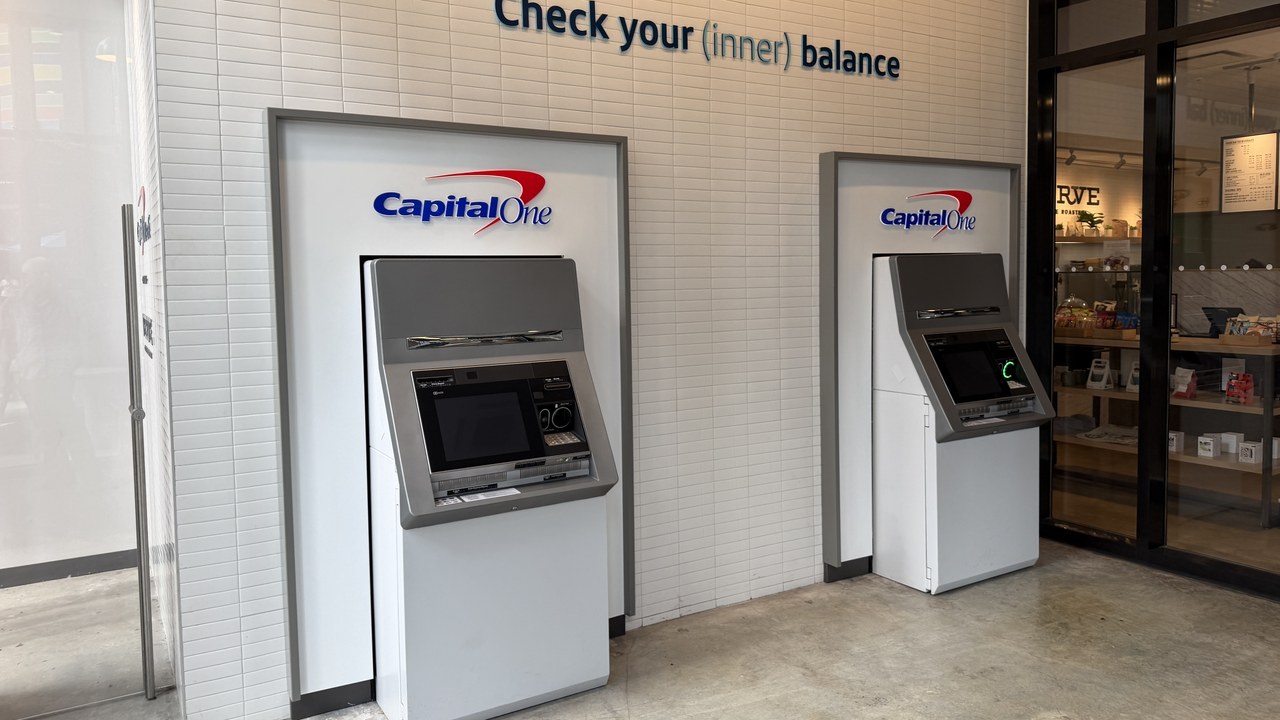
Four of the country’s biggest consumer banks charged their customers nothing at all for overdrawing an account in 2025, even as banks and credit unions nationwide collected more than $12 billion in overdraft and non-sufficient-funds fees for the year. The gap between those two facts is not an accident of size or region: it’s a business decision each institution made on its own. For a household living close to the edge of its checking balance, knowing which banks made that decision, and which didn’t, matters more than another lecture about budgeting.
Four National Banks Charge Nothing for an Overdraft
The National Consumer Law Center’s June 2026 review of 2025 bank-reported overdraft and NSF revenue names four national players that stand apart from the rest of the industry: Capital One, Citibank, American Express and Ally Bank. None of the four charged a dime in overdraft fees during 2025, and the report notes that none of the 20 largest consumer banks currently charges a separate NSF fee either, so the zero-fee distinction for these four is specific to overdrafts, the fee triggered when a debit or check clears against a negative balance.
That puts real money on the table for a household that overdraws even occasionally. The National Consumer Law Center’s analysis found that about a quarter of people live in households that pay an overdraft fee in a typical year, and those fees land hardest on Black households, people with lower incomes and people with limited formal education. A checking account at one of the four fee-free banks removes that specific cost entirely, regardless of how the rest of a household’s budget behaves that month.
Free retirement updates: Want plain-English help keeping more of your money in retirement? The free Retirement Shield newsletter covers the benefits, deadlines, and money mistakes that cost retirees, a couple times a week. Subscribe free.
The Industry Still Collected Over $12 Billion in 2025
The four fee-free banks are the exception, not the trend. Banks and credit unions collectively pulled in more than $12 billion in overdraft and NSF fees in 2025, according to the same NCLC analysis of bank-reported data. JPMorgan Chase alone took in about $1.1 billion in overdraft fees for the year, and Wells Fargo collected roughly $924 million, together accounting for a meaningful share of the industry total even though both were down slightly or flat compared with two years earlier. The 20 largest consumer banks alone brought in about $4 billion of the $12 billion total, which means smaller banks and credit unions, taken together, account for the rest.
The NCLC’s companion issue brief on 2025 overdraft revenue attributes the size of that total partly to how concentrated the fees are: banks draw most of their overdraft income from a relatively small share of accounts that overdraw repeatedly, which is also why the fee-free alternative matters disproportionately to the households that would otherwise pay the most.
A $5 Federal Cap Was Reversed Before It Took Effect
Part of why the total climbed in 2025 traces back to Washington rather than any single bank’s fee schedule. The Consumer Financial Protection Bureau finalized a rule in 2024 that would have capped most large-bank overdraft fees at $5, a change the bureau projected would save households roughly $5 billion a year, or about $225 annually for the families that pay overdraft fees most often. Congress voted to overturn that rule in 2025 under the Congressional Review Act, and it never took effect, a reversal the National Consumer Law Center tracked at the time as preserving banks’ ability to charge up to $35 per overdraft.
With that federal pressure removed, the NCLC’s June report says several banks have begun raising overdraft revenue again after years of voluntary cuts made in anticipation of the rule. Capital One, Citibank, American Express and Ally didn’t follow that path; their zero-fee policies predate the 2024 rule and don’t depend on federal enforcement to stay in place, which is part of why the National Consumer Law Center highlighted them as a durable option rather than a temporary one.
Not Every Bank Is Moving in the Same Direction
The picture even among fee-charging banks isn’t uniform. BMO Bank cut its overdraft revenue from $27 million in 2023 to just $2 million in 2025 after dropping its fee from $36 to $15, according to the NCLC’s issue brief, though the bank raised its fee back to $20 in 2026 and shrank the balance cushion that avoids a fee. Truist posted a 10% drop in overdraft revenue over the same two-year stretch. Those moves show that a bank’s fee policy can change in either direction from one year to the next, which is one more reason a household can’t assume its current bank’s practice will hold just because it was favorable last year.
What to Check Before You Assume Your Bank Is Fee-Free
A bank not appearing on the zero-fee list doesn’t automatically mean it charges a high fee; it just means it wasn’t one of the four the NCLC identified as charging nothing at all. The reliable way to know is to pull up the account’s official fee schedule or deposit agreement, since those disclosures are what banks report to federal regulators and what the NCLC’s figures are built from in the first place. Two details are worth checking specifically: whether the bank still charges a separate fee for insufficient funds even if it waived the overdraft fee, and whether “overdraft protection,” a linked transfer from savings, carries its own transfer fee even when the overdraft fee itself is zero.
A checking account with no overdraft fee written into its terms, not a bank’s marketing page, is the only version of “no fee” that will hold up the next time a paycheck lands a day late.
This article was produced with AI assistance and reviewed by a human editor. Figures are linked to their primary sources; where a claim could not be verified from the public record, we say so.
More Financial Reading