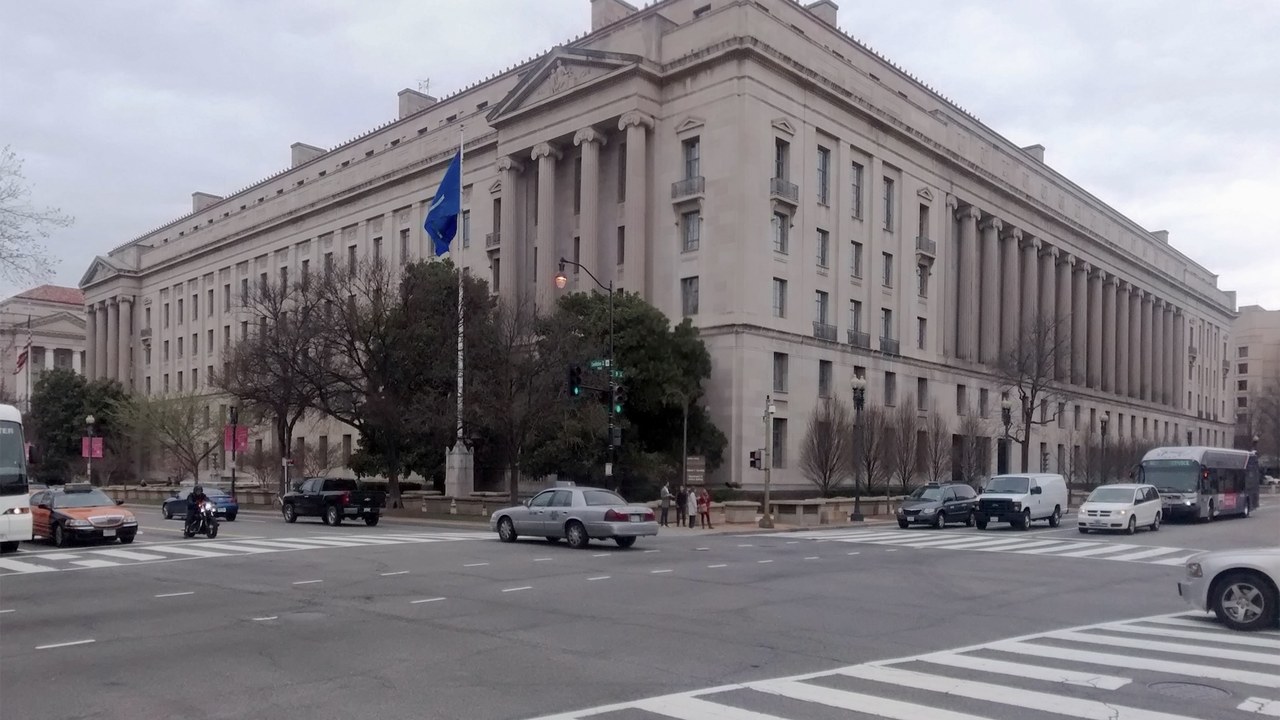
A federal grand jury in Boston has indicted a Georgian national on a money-laundering conspiracy charge connected to a durable-medical-equipment company that prosecutors say billed Medicare and other health insurers $1.3 billion in fraudulent claims over five months. The claims relied, prosecutors say, on the stolen identities of elderly and disabled Americans, many of whom first learned something was wrong when a routine Medicare notice arrived listing equipment they never ordered. For any household on Medicare, the case is a reminder that the paperwork insurers mail out every few months is one of the only places an ordinary person can catch this kind of fraud themselves.
What Prosecutors Say ND Medical Solutions Did
According to the charging documents, Erekle Gugava, 33, purportedly owned ND Medical Solutions LLC, a durable-medical-equipment company based in Pennsylvania, between February and July 2025. Prosecutors say that during those five months, ND Medical submitted at least $1.3 billion in fraudulent equipment claims to Medicare, to private insurers that sell Medicare supplemental policies, and to employer-sponsored and union health plans. A federal grand jury in the District of Massachusetts returned the indictment on September 3, 2026, charging Gugava with one count of conspiracy to launder the proceeds of that scheme.
Prosecutors describe Gugava as a money launderer working for a foreign-based organization, tied to Russia, that the Justice Department says orchestrated the fraud using stolen identities and shell ownership of U.S. medical supply companies. He allegedly opened several bank accounts in ND Medical’s name, deposited insurance reimbursement checks into them, and then moved the funds to accounts overseas, according to the U.S. Attorney’s Office for the District of Massachusetts.
Free retirement updates: Social Security and Medicare change every year, and nobody sends you a memo. Our free Retirement Shield newsletter breaks down what changed and what to do. Get it free in your inbox.
The Explanation-of-Benefits Form That Tipped Off Victims
The fraud didn’t stay hidden because of a whistleblower or a routine audit. Prosecutors say many of the elderly and disabled Americans whose identities were used only found out when a Medicare summary notice or an insurer’s explanation-of-benefits form showed up listing equipment they never received, prescribed by a doctor they had never seen, and shipped by a company, ND Medical, they had never heard of.
Those individuals reported their concerns directly to Medicare and its contractors, which is one of the mechanisms the government relies on to catch fraud that automated screening misses. Assistant Attorney General Colin M. McDonald, who leads the Justice Department’s National Fraud Enforcement Division, said the indictment “reflects our resolve to hold all participants in fraud networks accountable for their conduct,” according to the department’s Office of Public Affairs.
Operation Gold Rush: The Largest Health Care Fraud Case DOJ Has Charged
The ND Medical case sits inside Operation Gold Rush, which the Justice Department calls the largest health care fraud case it has ever prosecuted. In a nationwide takedown announced in June 2025, federal prosecutors charged 19 defendants tied to the same Russia-based organization with submitting $10.6 billion in fraudulent Medicare claims nationwide for urinary catheters and other durable medical equipment, using the stolen identities of more than one million Americans spanning all 50 states.
Investigators say they caught most of that broader fraud before it paid out. The Health Care Fraud Unit’s data analytics team flagged the anomalous billing early enough that Medicare and HHS’s inspector general blocked all but about $41 million of the roughly $4.45 billion in claims that had been scheduled for payment. The wider scheme still produced about $900 million in payments from Medicare supplemental insurers before the takedown, and law enforcement says it has seized approximately $27.7 million in fraud proceeds across the investigation so far.
Why Elderly and Disabled Beneficiaries Were the Target
Durable-medical-equipment fraud depends on billing that doesn’t get noticed right away, and prosecutors say that’s precisely why the scheme relied on the stolen identities of older and disabled Americans rather than manufactured patients. Someone who receives many Medicare-covered services in a given year may not catch one extra brace or supply item buried in a summary notice; someone managing a serious health condition, with less time to scrutinize every line of paperwork, is even less likely to catch it quickly.
HHS Office of Inspector General Special Agent in Charge Roberto Coviello is among the officials named in the September 4 announcement of the Gugava indictment. HHS-OIG investigates health care fraud in part because Medicare beneficiaries are frequently the last line of defense against billing schemes run in their name without their knowledge, and their reports to the agency are what first surface cases like this one.
What an Indictment Does — and Doesn’t — Prove
Gugava has been charged, not convicted, and the Justice Department states plainly in its own announcement that “the details contained in the charging document are allegations” and that he “is presumed to be innocent unless and until proven guilty beyond a reasonable doubt in a court of law.” The single count against him, conspiracy to launder money, carries a maximum sentence of 20 years in prison, three years of supervised release, and a fine of up to $500,000 or twice the laundered amount, whichever is greater, if he is convicted.
According to the Justice Department, Gugava left the United States in July 2025, which prosecutors characterize as fleeing the country after the alleged conduct. No trial date has been set. The case is being prosecuted by the department’s Health Care Fraud Section within the National Fraud Enforcement Division, alongside the U.S. Attorney’s Office in Boston.
How to Check Your Own Medicare Summary Notice
Anyone with Original Medicare gets a Medicare Summary Notice by mail, or by email if they’ve opted in, at least every three months, listing every Part A and Part B service billed in their name, what Medicare paid, and what they owe, according to the Centers for Medicare & Medicaid Services. The document exists so beneficiaries can compare what’s billed against what they actually received.
A claim for equipment never delivered, a provider never seen, or a company never contacted is the exact pattern prosecutors describe in the ND Medical case, and it’s the pattern CMS asks beneficiaries to watch for on every notice. Anyone who spots it can report it directly to 1-800-MEDICARE or through Medicare.gov’s fraud-reporting page, and the agency says a beneficiary doesn’t need proof to file a report, only a claim that doesn’t match what actually happened.
This article was produced with AI assistance and reviewed by a human editor. Figures are linked to their primary sources; where a claim could not be verified from the public record, we say so.
More Financial Reading