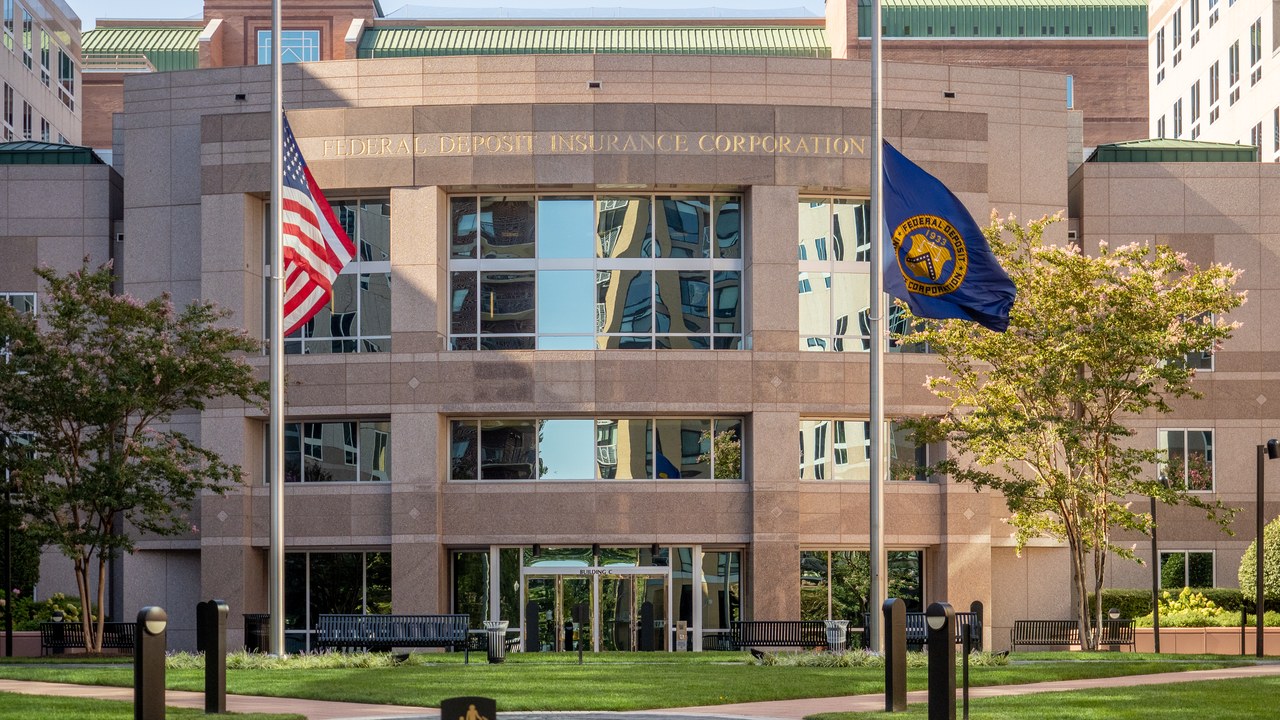
The last bank to close its doors in the United States was Tioga-Franklin Savings Bank, a single-branch lender in Philadelphia holding $68 million in deposits. Pennsylvania regulators shut it down on August 21, 2026, and every account moved overnight to a nearby institution with no interruption in service. That was more than two weeks ago. Only four other banks failed all year before it, and the running total for 2026 hasn’t moved since. A quiet year for bank failures is good news, but it says nothing about whether your own balance would be made whole if your bank were the sixth.
Five Failures, Same Ending Each Time
The five 2026 failures span the calendar and the country: Metropolitan Capital Bank and Trust in Chicago on January 30, Community Bank and Trust West Georgia on May 1, Kentland Federal Savings and Loan in Indiana on July 10, Small Business Bank in Lenexa, Kansas, on July 17, and Tioga-Franklin Savings Bank in Philadelphia on August 21. In each case the FDIC was named receiver and arranged for a healthy bank to absorb the deposits, usually announced the same weekend the failing bank closed. Tioga-Franklin’s depositors woke up Monday morning as customers of Second Federal Savings and Loan Association, according to the FDIC’s press release, with every dollar transferred regardless of the account balance and an estimated $5.5 million cost to the Deposit Insurance Fund.
That pattern is worth noticing because it’s the opposite of a bank run. Nobody stood in a parking lot waiting for a check. The FDIC’s own failed bank list shows the same weekend-close, next-business-day-reopen sequence going back decades, and five failures in eight months is a slow year by that history, not an alarming one. All five of this year’s failures were also small — the largest, Metropolitan Capital Bank and Trust, held $261.1 million in assets, a fraction of the size of the regional banks that made headlines in 2023. Smaller, closely held banks with concentrated loan books tend to be the ones examiners flag first when a local industry or borrower runs into trouble, which is a different story than the systemic stress that hits large, widely held institutions.
Free retirement updates: One number can cost or save hundreds a month in retirement. The free Retirement Shield newsletter surfaces the ones worth knowing. Sign up free.
The $250,000 Line Runs Per Category, Not Per Account
Standard FDIC coverage is $250,000 per depositor, per insured bank, for each ownership category you hold there, according to the agency’s own deposit insurance FAQ. That distinction matters more than the headline number. A single checking account and a single savings account at the same bank, both titled only in your name, share one $250,000 bucket — they don’t stack. But a single account, a joint account with your spouse, and an IRA at that same bank are three separate categories, each with its own $250,000 ceiling, which is how a retired couple can legitimately hold well over half a million dollars at one bank and still be fully insured.
Joint accounts work differently from single ones. Each co-owner’s share of a joint account is insured up to $250,000, and that coverage combines across all the joint accounts you hold at the same bank with the same set of co-owners — so two people on one joint account are covered up to $500,000 between them, not $250,000 twice over on top of whatever else they own separately. If you and a sibling keep a joint account for a parent’s care costs, and you also keep your own single-name checking account at the same bank, both are insured, but you’d want to know where the lines actually sit before assuming everything above $250,000 is automatically covered.
Revocable trust accounts add another layer that catches a lot of households by surprise. A living trust or a payable-on-death account with named beneficiaries can be insured for up to $250,000 per unique beneficiary, which is how someone naming three children on one account can end up with $750,000 in coverage at a single bank without opening three separate accounts. The rule cuts the other way too — a trust naming only one beneficiary doesn’t multiply anything, and adding a beneficiary’s name to paperwork after a bank has already failed does nothing. The ownership category has to be set up correctly before trouble ever starts, which is exactly why it’s worth checking now rather than during a weekend closure.
What Your Bank Sells That the FDIC Doesn’t Touch
The FDIC insures deposits — checking, savings, money market deposit accounts, and CDs. It does not insure stocks, bonds, mutual funds, exchange-traded funds, annuities, life insurance, or municipal securities, even when you bought them at a teller window or through your bank’s investment desk. A retail brokerage account can lose value the same week a bank fails, and that loss isn’t an FDIC event at all — it’s a market outcome covered, if at all, by SIPC rules that work on a completely different basis. Cryptocurrency held through a bank-affiliated app also falls outside deposit insurance. The safest habit is asking a plain question before you sign anything at a bank: is this a deposit, or is this a product the bank happens to sell?
Checking Your Own Coverage Before You Need To
You don’t have to wait for a failure to find out where you stand. The FDIC’s Electronic Deposit Insurance Estimator lets you enter your actual account balances and ownership types and get a straight answer on what’s covered and what isn’t at a given bank. If you’re unsure whether an institution is FDIC-insured at all — which matters more than it sounds, since some financial apps and fintech platforms only route deposits through a partner bank and aren’t insured themselves — the FDIC’s BankFind Suite lets you search by name, address, or certificate number to confirm. Both tools are free and take a few minutes, and both are more reliable than assuming a familiar bank name means every account there is automatically covered.
This article was produced with AI assistance and reviewed by a human editor. Figures are linked to their primary sources; where a claim could not be verified from the public record, we say so.
More Financial Reading