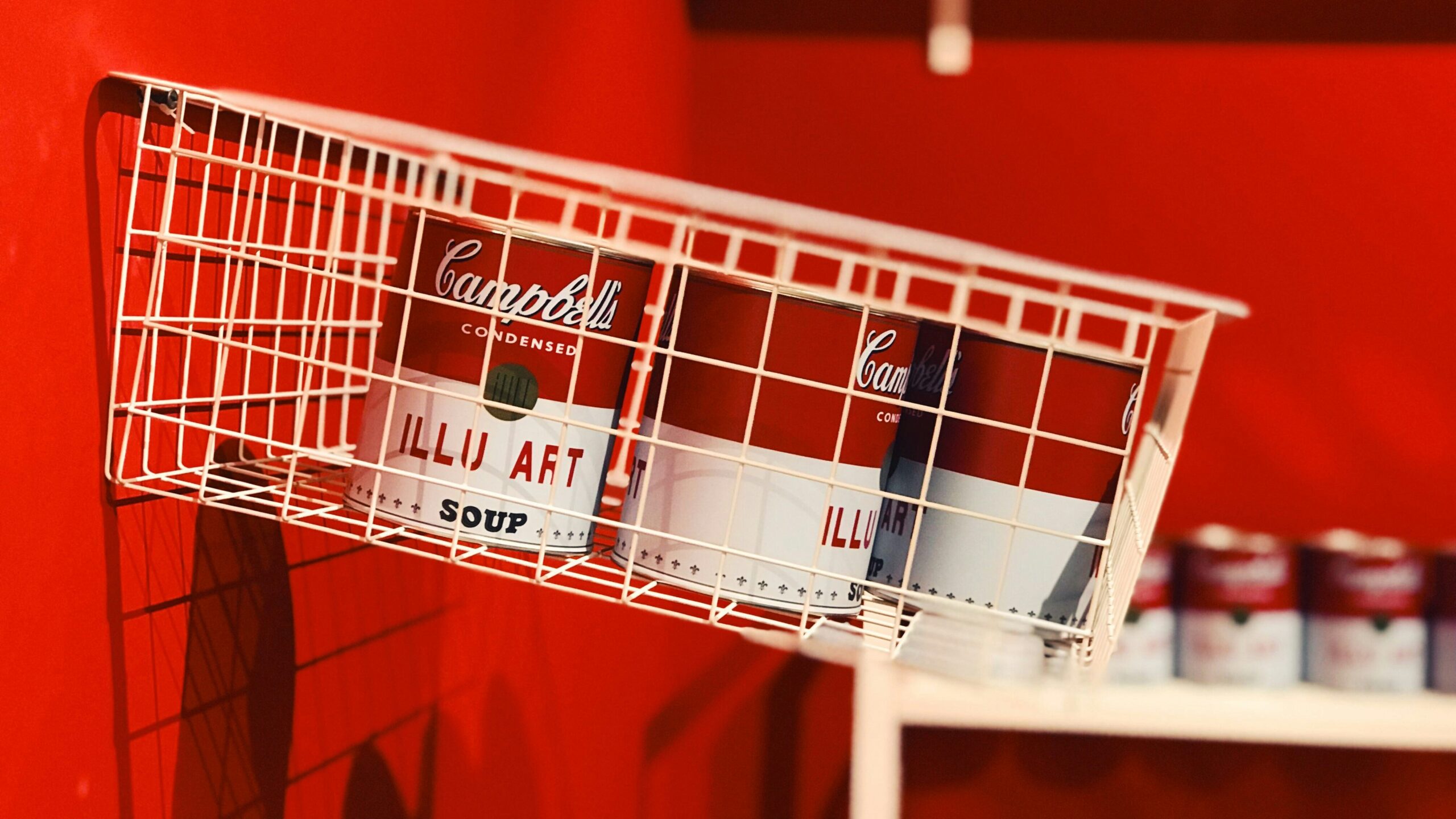
The Campbell’s Company told investors this week that it is cutting its quarterly dividend by more than a third and pushing ahead with plant closures as part of a new, multiyear savings plan. Camden, New Jersey-based Campbell’s, in business for more than 150 years, has products in millions of pantries, including soup, Goldfish crackers and V8 juice, and its stock has long been a staple income holding in retirement accounts. The dividend cut lands first on retirees holding the stock for income; the cost-cutting plan lands, over time, on the supply chain behind familiar grocery brands.
The Quarterly Payout Drops From 39 Cents to a Quarter
Campbell’s board of directors approved a new quarterly dividend of $0.25 per share, down from the $0.39 per share the company had been paying — a reduction of 36 percent, according to the company’s fourth-quarter fiscal 2026 earnings release. On an annualized basis, the payout falls from $1.56 to $1.00 per share. The lower dividend is payable November 2, 2026, to shareholders of record as of October 1, 2026. As an illustration only, not a figure the company published, a retiree holding 1,000 shares would see the quarterly dividend check fall from about $390 to $250 under the new rate.
Campbell’s framed the move as a debt-reduction step, not a one-quarter reaction. “We are increasing our focus on the consumer, sharpening execution, reducing costs to support investment in our brands, and strengthening our balance sheet, including resetting our dividend,” said Mick Beekhuizen, the company’s president and chief executive officer, in the release. For shareholders who hold Campbell’s stock specifically for its dividend — a common strategy among retirees looking for steady income — the cut is a real, immediate drop in cash paid per share, not an accounting adjustment that reverses itself next quarter.
Free retirement updates: One number can cost or save hundreds a month in retirement. The free Retirement Shield newsletter surfaces the ones worth knowing. Sign up free.
A New $500 Million Savings Plan Includes Plant Closures Through Fiscal 2030
Alongside the dividend reset, Campbell’s announced a new enterprise-wide cost savings program targeting $500 million in total savings by fiscal 2030, beginning in fiscal 2027. The plan absorbs what remains of an earlier $375 million savings effort — of which the company says it has already banked roughly $225 million, including about $25 million in the fourth quarter alone — along with a newer overhead-savings initiative and a planned overhaul of how Campbell’s manages spending on suppliers and services, according to the exhibit filed with the company’s fourth-quarter results.
The company was specific about what that means in practice: “Several actions are already underway, including plant closures and recently completed workforce reductions,” the filing states. Campbell’s did not itemize every closed facility or every job eliminated in this announcement, so it is worth being precise about what is confirmed: the company has confirmed that closures and completed workforce cuts are already happening as part of this savings program, without naming every site or headcount figure tied to it.
Soup and Snack Sales Both Slid in a Costly Year
The cuts follow a rough fiscal year. Full-year net sales fell 5 percent to $9.7 billion, and fourth-quarter net sales fell 8 percent to $2.1 billion, figures that also appear on Campbell’s own investor relations site, which lists $9.7 billion in net sales, $2.17 in adjusted earnings per share and $1.0 billion in operating cash flow for the year. Adjusted earnings per share fell 37 percent in the fourth quarter, to $0.39, and 27 percent for the full year, to $2.17.
The two halves of the business moved in different directions. In Meals & Beverages — home to Campbell’s soup, Swanson broth, Prego sauces and V8 — fourth-quarter net sales fell 4 percent to $1.187 billion, though organic sales, which strip out an extra week counted in the prior year, actually rose 3 percent. Snacks, which includes Goldfish, Pepperidge Farm, Kettle Brand and Snyder’s of Hanover, fared worse: fourth-quarter net sales dropped 12 percent to $950 million, with organic sales down 6 percent, driven mainly by weaker sales of salty snacks. Operating earnings in Snacks fell 34 percent in the quarter to $101 million, more than double the 12 percent decline to $181 million in Meals & Beverages, as cost inflation and higher supply chain costs, including the impact of tariffs, ate into margins faster than savings could offset them. Corporate expenses also widened, to $226 million from $83 million a year earlier, mostly reflecting impairment charges rather than day-to-day operations.
Fiscal 2027 Guidance Points to Another Step Down
Campbell’s own guidance suggests the pressure isn’t over. For fiscal 2027, the company is projecting net sales to decline another 2 percent to 4 percent, adjusted operating earnings to fall 7 percent to 12 percent, and adjusted earnings per share to drop 17 percent to 24 percent, landing in a range of $1.65 to $1.80 per share — down from the $2.17 per share it actually earned in fiscal 2026. The company notes that guidance assumes no new tariffs beyond what is already in place.
Campbell’s is pulling back elsewhere to protect cash, too: capital expenditures fell to $361 million in fiscal 2026 from $426 million a year earlier, even as the company still returned $496 million to shareholders over the year, primarily through the dividends it paid before this cut took effect. For the retirement and income funds that hold Campbell’s stock for its payout, the company’s own numbers make the picture plain: a board that just cut that payout by 36 percent is guiding toward lower earnings for at least another year before it expects the business to turn.
This article was produced with AI assistance and reviewed by a human editor. Figures are linked to their primary sources; where a claim could not be verified from the public record, we say so.
More Financial Reading