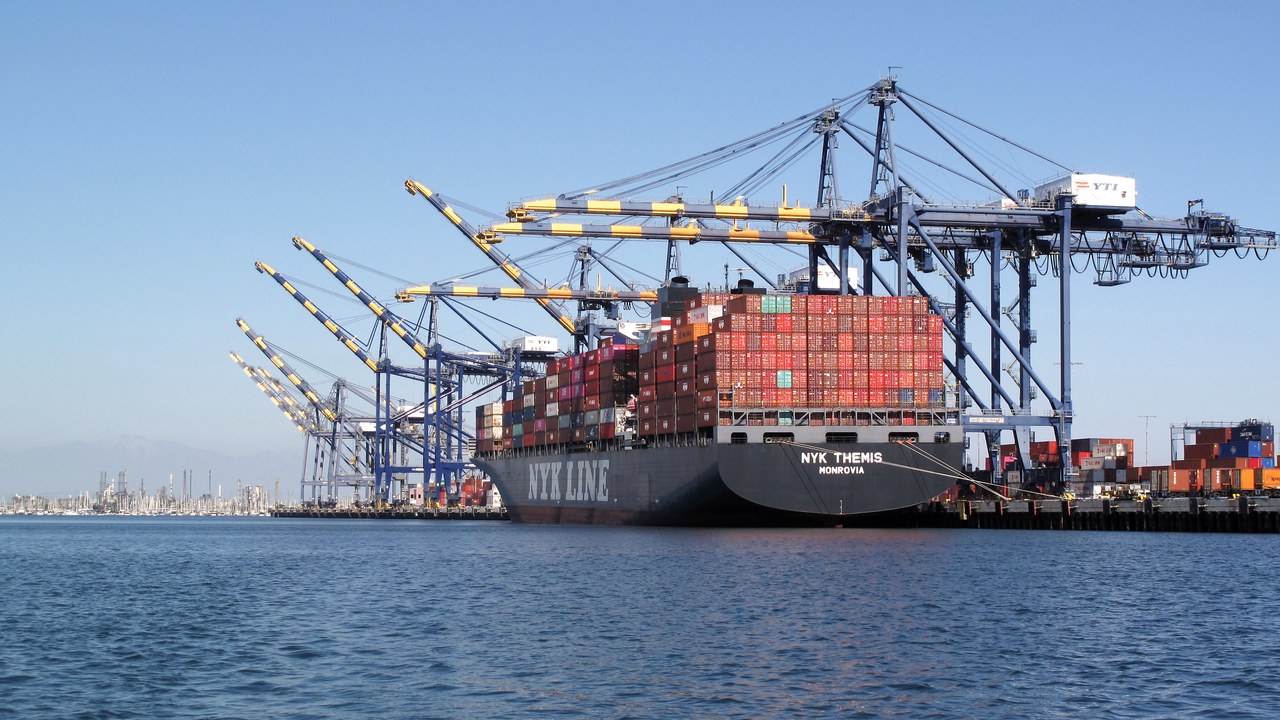
Beginning July 24, 2026, U.S. Customs and Border Protection started collecting a new tariff on imports from 60 economies, and the size of the bill turns on one thing: whether that economy bans the import of goods made with forced labor. Canada, Mexico and the United Kingdom landed in the cheaper of two brackets, paying a 10 percent duty instead of the 12.5 percent that most of the other economies in the same action now pay. For households that buy groceries, clothing, tools or auto parts sourced from these three countries, that four-and-a-half-point gap is a cost that gets built into a supply chain long before it reaches a store shelf.
USTR’s Two-Tier Tariff Split: 10 Percent Versus 12.5 Percent
The tariff comes from a Notice of Actions in Section 301 Investigations that the Office of the United States Trade Representative published in the Federal Register on July 28, 2026, closing out 60 investigations USTR opened on March 12, 2026 into economies that fail to impose and effectively enforce a ban on forced-labor imports. The Trade Representative set the additional duty at 10 percent for any economy that already imposes a forced-labor import prohibition, has committed to one through an Agreement on Reciprocal Trade, or runs a partial regime that blocks certain forced-labor goods. Every other investigated economy pays 12.5 percent. Seventeen economies qualified for the lower rate: Argentina, Bangladesh, Cambodia, Canada, Ecuador, El Salvador, Guatemala, Honduras, India, Indonesia, Jordan, Malaysia, Mexico, Pakistan, Sri Lanka, Trinidad and Tobago, and the United Kingdom. Four of those — Bangladesh, Cambodia, Indonesia and Malaysia — are also slated for separate tariff-rate quotas on cotton and textile imports once USTR determines the quotas are feasible, meant to reward higher use of U.S. cotton and textile inputs. The additional duty applies to nearly all products of each economy, except for specific goods USTR carved out in the notice’s two annexes.
Free retirement updates: A quiet rule change can shrink your Social Security or Medicare check, and no one warns you. The free Retirement Shield newsletter catches these early and tells you what to do. Get it free.
Why Canada, Mexico and the United Kingdom Landed in the Lower Bracket
The notice explains the reasoning for each economy individually, and Canada and Mexico share the same footnote: both already had a law against importing forced-labor goods on the books, but USTR’s investigation found neither government was effectively enforcing it. That finding — a gap in enforcement, not the absence of a law — is what put both countries in the 10 percent bracket rather than exposing them to the higher rate charged to economies with no ban at all. The United Kingdom qualified on different grounds: the notice credits the UK with “its imposition of a partial regime with the effect of prohibiting certain forced labor goods,” a narrower ban that still cleared the bar for the lower rate. Seven of the seventeen economies in the 10 percent bracket — Cambodia, Guatemala, Honduras, India, Sri Lanka and Trinidad and Tobago by adopting new import bans, and Jordan by signing a reciprocal-trade commitment — only reached that tier after USTR’s June 2026 proposal, moving during the public comment period specifically to avoid the higher rate. Canada, Mexico and the UK made no comparable late move; their placement reflects enforcement records and program design USTR had already assessed months earlier.
The 12.5 Percent Group Covers Most of the Investigated Economies
Roughly two-thirds of the economies named in the July 28 notice pay the higher rate, including Australia, Brazil, China, Israel, Russia, Saudi Arabia and Vietnam. Five of the 60 — the European Union, Japan, South Korea, Switzerland and Taiwan — sit outside the flat 10-or-12.5 structure entirely: USTR set their Section 301 duty so it combines with each product’s existing most-favored-nation tariff to reach a target ceiling, rather than stacking a flat rate on top of existing duties. For a household, the mechanism that matters is simpler than the country list: Section 301 duties are collected from the U.S. importer of record at the border, not from the foreign government, and importers routinely build tariff costs into the price a retailer eventually charges. A product built in a 12.5 percent country generally carries a bigger built-in cost than the same product built in Canada, Mexico or the UK, unless it falls under one of the specific exemptions USTR listed in the notice’s annexes.
No Sunset Clause: This Tariff Has No Built-In End Date
The July 28 notice does not include an expiration date, a review deadline, or any language describing the tariff as temporary — the words “expire,” “expiration,” “sunset” and “terminate” do not appear anywhere in its text. That is worth noting because the size of the bill is tied entirely to a foreign government’s forced-labor import law, not to a calendar date or a trade-deficit figure. The companion presidential memorandum published the same day does give the Trade Representative authority to later modify or terminate an economy’s tariff, but only as a discretionary act tied to that country’s policy — there is no scheduled date on which any rate automatically drops or disappears. USTR’s own announcement makes the incentive explicit: Ambassador Jamieson Greer said the administration is “encouraged by the trading partners who have moved quickly to adopt forced labor import prohibitions,” a description that already applied to seven of the seventeen countries in the cheaper bracket before the rule was even finalized. For Canada, Mexico and the United Kingdom, staying at 10 percent instead of 12.5 percent depends on the same thing going forward: whether Washington keeps judging their enforcement, or their partial regime, to be good enough.
This article was produced with AI assistance and reviewed by a human editor. Figures are linked to their primary sources; where a claim could not be verified from the public record, we say so.
More Financial Reading