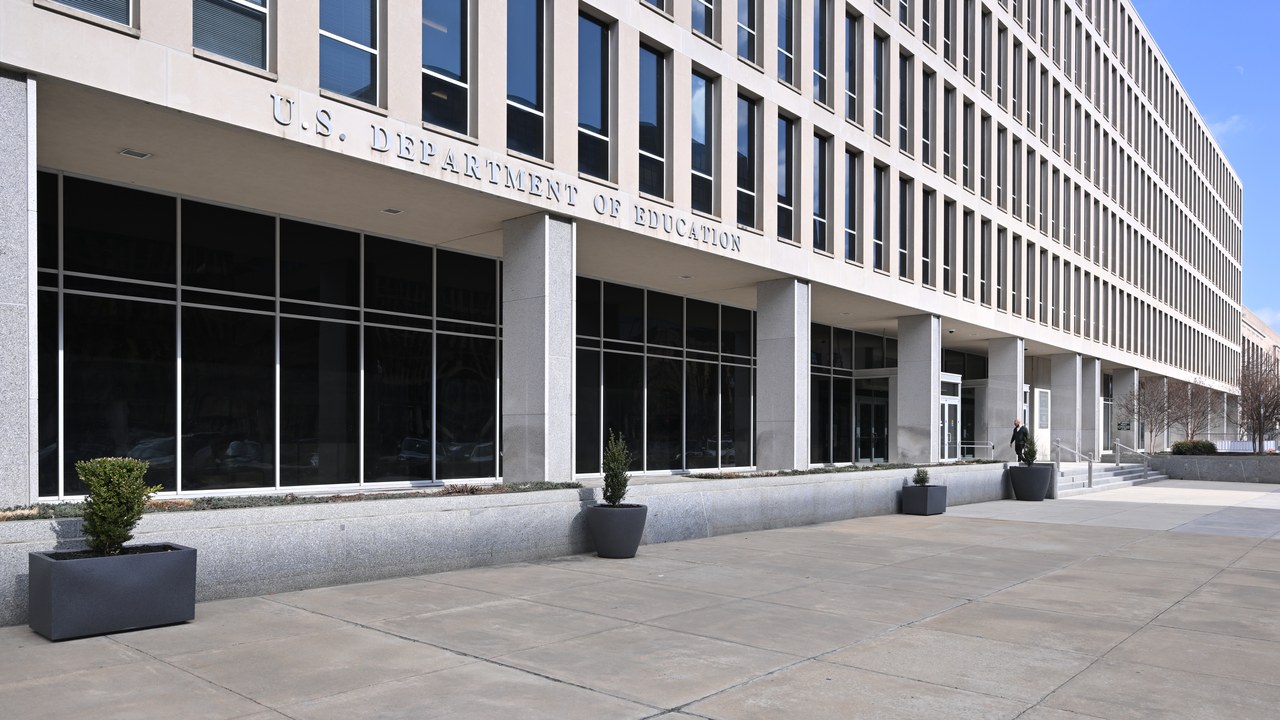
Millions of federal student loan borrowers have watched a monthly payment go out and their balance somehow tick up anyway, a result of interest accruing faster than income-based payments could cover it. The Education Department’s new repayment system is built specifically to stop that from happening. Under the plan the department finalized this year, a borrower who is making the payments their plan requires will not see the balance grow in the meantime, a structural fix rather than a temporary pause.
The Plan That Replaces Old Income-Driven Repayment
The mechanism is called the Repayment Assistance Plan, one of the centerpieces of what the department calls its RISE rule. According to the Education Department’s own announcement, the plan is a new, congressionally authorized income-driven repayment option that “eliminates negative amortization.” Negative amortization is the technical name for exactly the problem borrowers complain about: a loan balance rising even after payments are made, because the payment amount doesn’t cover the interest that has built up. Under the Repayment Assistance Plan, that mechanism is removed for enrolled borrowers, meaning a qualifying payment is structured so it cannot leave the balance higher than it started.
Free retirement updates: A quiet rule change can shrink your Social Security or Medicare check, and no one warns you. The free Retirement Shield newsletter catches these early and tells you what to do. Get it free.
Where This Rule Actually Comes From
The Repayment Assistance Plan isn’t a standalone Education Department initiative. It implements student loan provisions from the Working Families Tax Cuts Act, the tax and spending law President Trump signed in mid-2025. The department ran a formal negotiated rulemaking process on the loan provisions in the fall of 2025, then published a proposed version of the rule for public comment in January 2026 before finalizing it. The final rule states the department received more than 80,000 public comments on the proposal before it was finalized, and it now carries the force of federal regulation rather than guidance the department could quietly reverse.
A Standard Plan Overhaul Alongside It
The Repayment Assistance Plan doesn’t stand alone. The same rule creates a new Tiered Standard plan, meant to simplify what the department describes as a confusing patchwork of repayment options that has existed for years. Together, the two plans are meant to replace most of the income-driven repayment choices borrowers previously had to sort through, on the theory that fewer, clearer options reduce the chance someone ends up on a plan that’s mismatched to their income and default risk. The department’s RISE final rule fact sheet lays out how the new plans interact with existing loan balances.
The Borrowing Limits That Came With the New Repayment Plan
The same rule that eliminates negative amortization also changes how much borrowers can take on in the first place. It eliminates the Grad PLUS program entirely, ending what had been effectively unlimited borrowing for graduate and professional students, and replaces it with defined annual and aggregate loan limits for that group as well as for Parent PLUS borrowers. Colleges and universities also gain the ability to set their own programmatic loan caps, meant to keep students from borrowing more than a given degree program’s typical earnings can support. The department pairs the repayment fix with these borrowing limits deliberately: a plan that stops balances from growing while payments are made addresses debt already taken on, while the new caps are aimed at preventing the next generation of borrowers from taking on debt loads a repayment plan alone can’t solve.
What’s Live Now Versus What’s Still Coming
Timing matters here, because not every piece of this rule started on the same date. The department’s release specifies that the majority of the rule’s provisions, including the Repayment Assistance Plan itself, took effect July 1, 2026. Separate provisions covering loan rehabilitation, deferment, and forbearance don’t take effect until July 1, 2027. A further change, the sunsetting of certain older repayment plans that the Repayment Assistance Plan and Tiered Standard plan are replacing, is scheduled for July 1, 2028. In practical terms, a borrower enrolled in the Repayment Assistance Plan today is already covered by the no-negative-amortization protection; it’s the surrounding rules about rehabilitating a defaulted loan or pausing payments that are still a year away.
Why the Department Says the Old System Needed Fixing
The department frames the change against a backdrop of a loan system it says was failing borrowers under the prior approach: federal student loan debt has grown to nearly $1.7 trillion, with less than 40 percent of borrowers in active repayment and close to a quarter in default, according to the same release. Under Secretary of Education Nicholas Kent said the old system too often left “borrowers with higher balances despite making payments,” which is the specific complaint the new plan targets directly. The same release cites college tuition rising faster than any other household expense over the past four decades and total student loan debt climbing 343 percent since 2005, to the point that it now exceeds the nation’s combined credit card debt and combined auto loan debt.
The department also points to consequences beyond the loan balance itself: it cites survey data showing 71 percent of college graduates with student debt have delayed or abandoned major life milestones, such as buying a home or starting a family, because of what they owe. The department projects the overall rule will save $409 billion by simplifying repayment and closing what it calls illegal loan forgiveness schemes, while reducing student loan debt overall by an estimated $224 billion by limiting overborrowing going forward. The full regulatory text is on file at the Federal Register for borrowers who want the underlying legal language rather than the department’s summary.
This article was produced with AI assistance and reviewed by a human editor. Figures are linked to their primary sources; where a claim could not be verified from the public record, we say so.
More Financial Reading