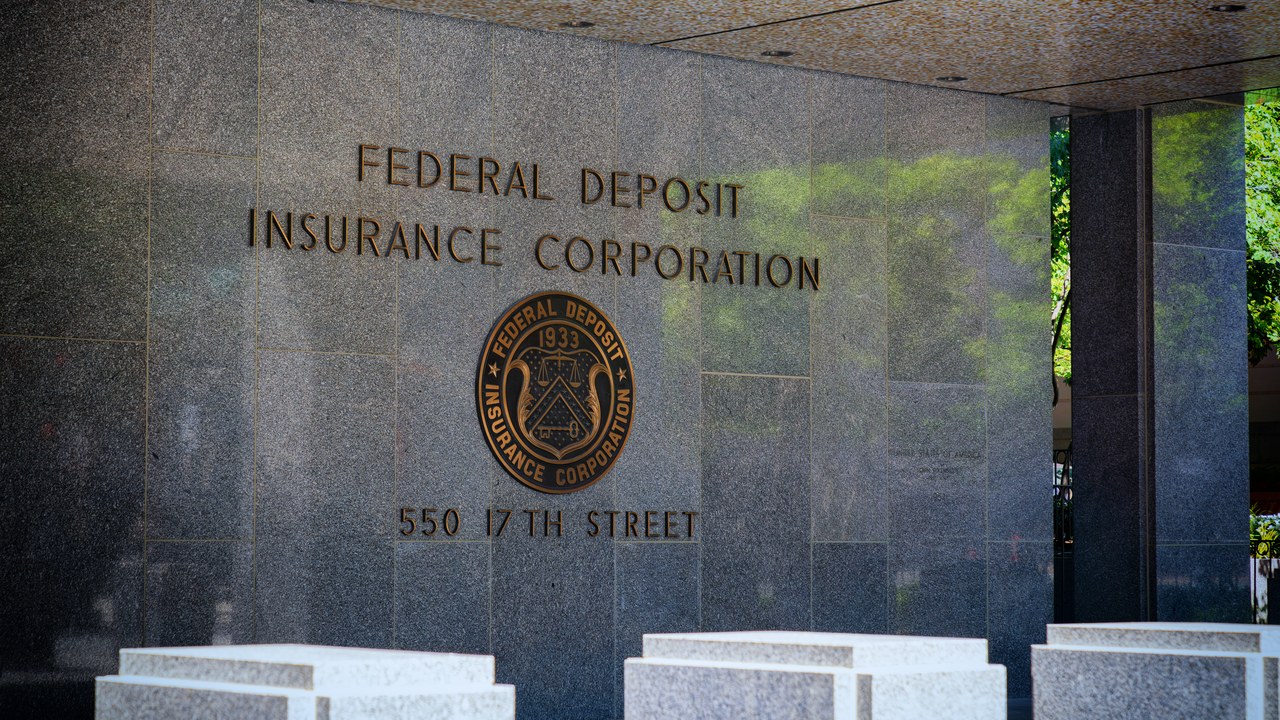
Pennsylvania’s Department of Banking and Securities took possession of Tioga-Franklin Savings Bank in Philadelphia on Friday, August 21, and named the Federal Deposit Insurance Corporation as receiver the same day. Before the branch doors would have opened again, a second Philadelphia institution had agreed to take the entire deposit book. The bank held $67 million in deposits, and every dollar of it changed hands without a single customer signing a form.
The unsafe and unsound condition Pennsylvania cited
The state regulator did not describe the closing as a routine consolidation. It said it acted under the Department of Banking and Securities Code, citing an unsafe and unsound condition at the bank, and that it did so in order to protect depositors. The department then appointed the FDIC as receiver, the standard step that hands a failed institution over to the federal insurer.
What followed the same day was a purchase and assumption agreement, the resolution method regulators prefer when a buyer can be found. Second Federal Savings and Loan Association of Philadelphia agreed to assume all deposits and purchase substantially all of the assets of the failed bank, according to the FDIC’s announcement of the transaction. Tioga-Franklin was small by any measure: as of June 30, 2026 it reported total assets of $68 million and total deposits of $67 million, held at a single branch. The FDIC’s standing practice, restated on the bank’s own failure page, is that no advance notice is given to the public when a financial institution is closed, which is why a depositor learns about it after the fact rather than before.
Free retirement updates: Want plain-English help keeping more of your money in retirement? The free Retirement Shield newsletter covers the benefits, deadlines, and money mistakes that cost retirees, a couple times a week. Subscribe free.
What happened to the $67 million in deposits
The phrase that matters in the agreement is “all deposits.” In a purchase and assumption of this kind, the acquiring institution takes the deposit book whole rather than the insured slice of it, and the FDIC’s failed bank information page for Tioga-Franklin states the outcome flatly: the full balance of all deposit accounts has been transferred to Second Federal Savings and Loan Association of Philadelphia. The transfer did not stop at the $250,000 insurance line, because a buyer took everything.
Depositors of the closed bank automatically became depositors of Second Federal, and the FDIC said the assumed deposits continue to be insured. Account holders kept immediate access to their money across the weekend through checks, ATMs and debit cards, and checks drawn on Tioga-Franklin continue to be processed. The agency staffed a toll-free line at 1-866-314-1744 through Friday evening and across Saturday and Sunday for customers with questions.
That outcome is the ordinary one rather than a lucky break. The FDIC’s own deposit insurance materials note that since the agency was founded in 1933, no depositor has lost a penny of insured funds. What varies between failures is not whether insured money survives but how quickly it moves and whether uninsured balances travel with it.
Five closings on the FDIC’s 2026 list, and none in 2021 or 2022
Counting the closing dates on the FDIC’s failed bank list puts Tioga-Franklin fifth for the year. Metropolitan Capital Bank and Trust in Chicago closed January 30. Community Bank and Trust of West Georgia, in LaGrange, closed May 1. Kentland Federal Savings and Loan Association in Indiana closed July 10, and Small Business Bank in Lenexa, Kansas closed a week later on July 17. August 21 makes five.
The recent baseline is lower than that. The same list records two failures in 2025, two in 2024, and none at all in 2021 or 2022. Five closings in a single year last happened in 2023, a year whose totals included Silicon Valley Bank, Signature Bank and First Republic Bank. The comparison is worth making carefully: the 2026 count has returned to the 2023 level, but the institutions behind it have not. A bank with $68 million in total assets and one branch is a different event from the failures that dominated the spring of 2023, even though both land on the same government list.
The $5.5 million preliminary cost to the Deposit Insurance Fund
The FDIC preliminarily estimates that the Tioga-Franklin failure will cost the Deposit Insurance Fund approximately $5.5 million, and it says that estimate will change over time as retained assets are sold. The figure is not a bill sent to depositors and not an appropriation from Congress.
The fund the money comes out of is filled by assessments, effectively insurance premiums, that FDIC-insured institutions pay to the agency, and it is backed by the full faith and credit of the United States government. It exists to do two things: insure deposits and pay for resolutions when banks fail. A household reading about a $5.5 million loss is reading the industry’s own cost of covering one of its members, not a charge against its accounts.
What Monday looks like for checking accounts and loans
Tioga-Franklin’s sole branch was set to reopen as a branch of Second Federal Savings and Loan Association of Philadelphia during normal business hours on Monday, August 24. The building and the accounts inside it change ownership; the balances do not change.
Borrowers have their own set of instructions, and they are the ones most often missed. The FDIC tells loan customers of a failed bank to continue making payments as usual, including escrow payments, and states that the terms of an existing loan do not change when a receiver takes over. Anyone with a loan in process or an open line of credit is directed to contact a loan officer, and anyone who receives notice that taxes or insurance went unpaid out of escrow is told to do the same. On the FDIC’s telephone schedule, the hotline moves to weekday hours from 9:00 a.m. to 5:00 p.m. Eastern once the first weekend passes, which is the agency’s own signal that the disruptive part of a failure of this size is measured in days.
This article was produced with AI assistance and reviewed by a human editor. Figures are linked to their primary sources; where a claim could not be verified from the public record, we say so.
More Financial Reading