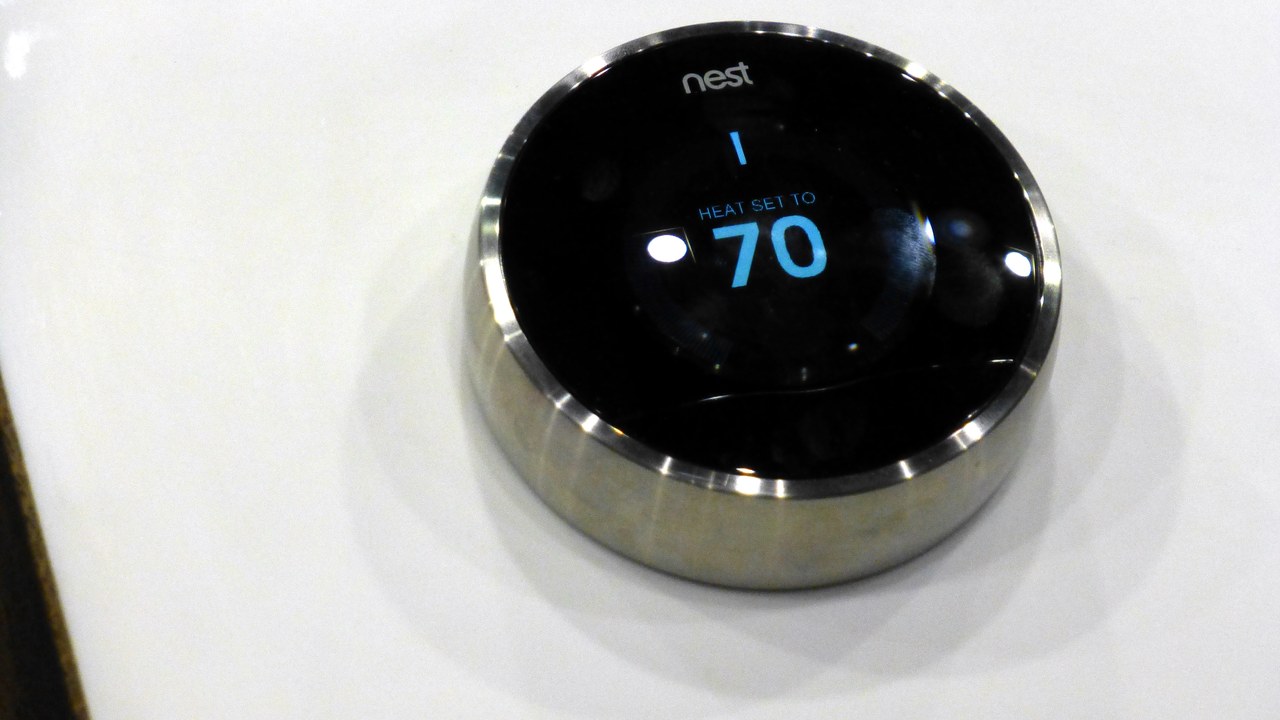
Every cooling appliance in your house has its price written on it — you just need one number to translate. That number is the kilowatt-hour, and as of the latest federal data, the average American home pays about 18.6 cents for each one: the U.S. Energy Information Administration puts the national average residential electricity price at 18.56 cents per kilowatt-hour for March 2026, up from 17.09 cents a year earlier. Your own rate may run far lower (about 13 cents in Missouri) or far higher (over 33 cents in California) — it’s printed on your bill.

With that one number and a label on the back of the appliance, you can price your whole summer. Here’s the arithmetic, worked through the machines most of us actually own — and why the cheapest cooling in the house is the one you probably aren’t using strategically.
The only formula you need
A kilowatt-hour is 1,000 watts running for one hour. So:
watts ÷ 1,000 × hours × your rate = cost.
Find the watts on the nameplate sticker or label on the appliance itself (sometimes it lists amps and volts instead — multiply those two to get watts). Then plug in. A device drawing 1,000 watts for one hour costs about 18.6 cents at the average rate. The same device running eight hours a night, thirty nights a month, costs about $44.50 a month. That’s the whole trick — everything below is just this formula with different labels.
Fans: pennies a night
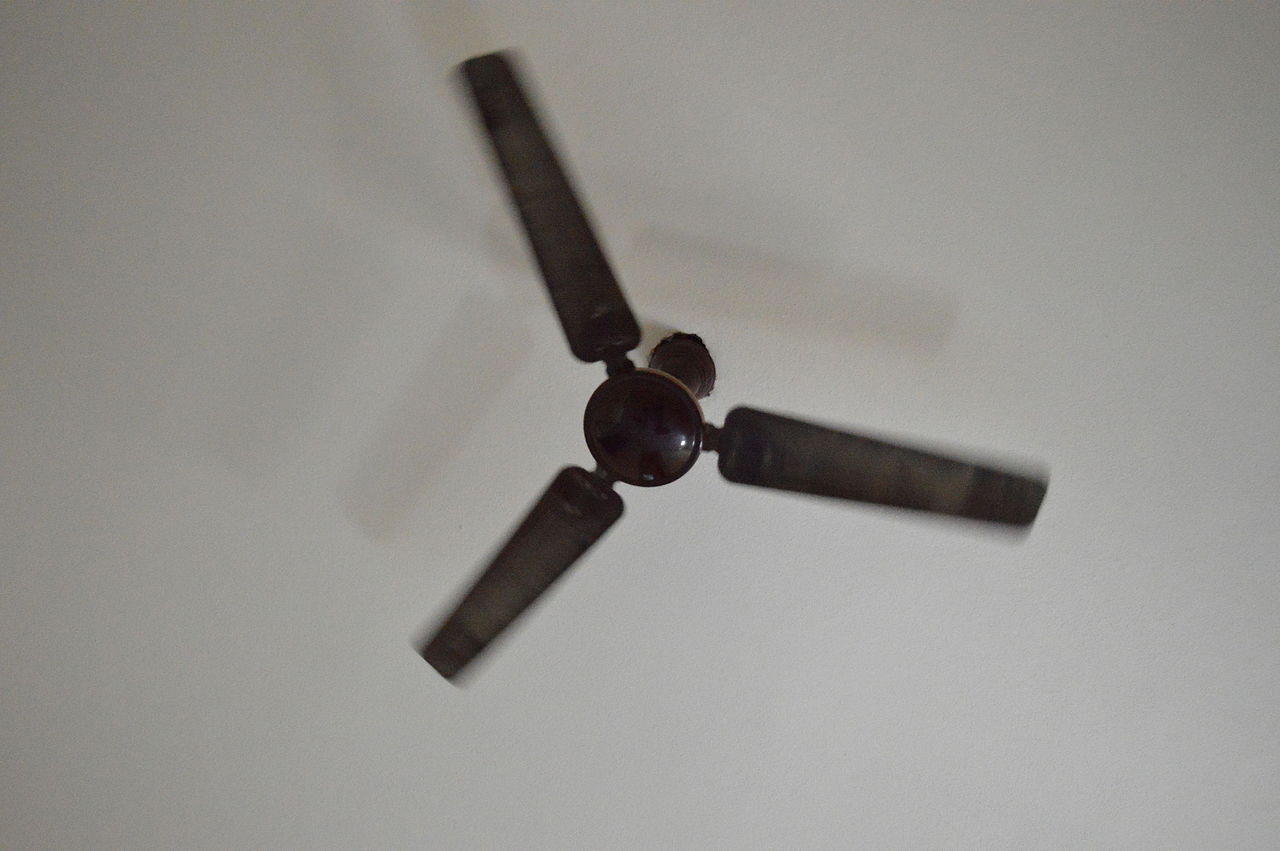
Fans use strikingly little power because they don’t cool air at all — they move it, and the moving air pulls heat off your skin. Check the label on yours, but fans are typically measured in tens of watts, not thousands. Run the formula on a fan whose label reads 50 watts: eight hours a night costs 50 ÷ 1,000 × 8 × $0.186 ≈ 7.5 cents. A whole month of nights is around $2.25.
Two things follow from that. First, a fan running in an empty room is pure waste — the wind-chill effect only works on a person. The Department of Energy’s Energy Saver guidance on fans covers placement: ceiling fans should spin counterclockwise in summer, and window fans work best exhausting hot air on the side of the house away from the wind. Second, if you’re buying, DOE points to ENERGY STAR-certified ceiling fans as up to 60% more efficient than conventional models.
Air conditioning: where the real money goes
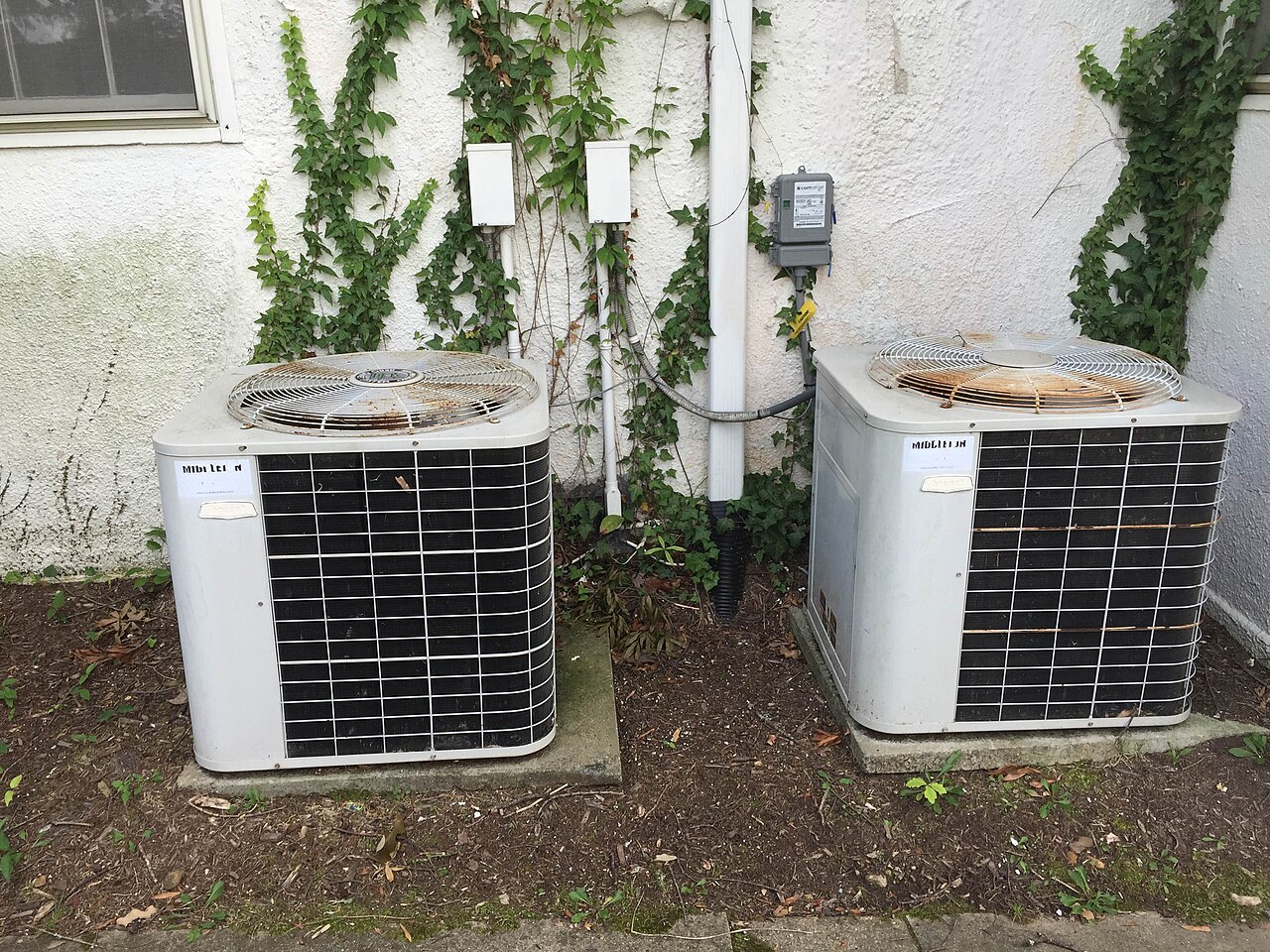
Now run the same formula on air conditioning, where the labels read in the hundreds or thousands of watts. A window unit whose nameplate says 900 watts, running eight hours: 0.9 × 8 × $0.186 ≈ $1.34 a night, or roughly $40 a month. A central air system drawing 3,500 watts while the compressor runs costs about 65 cents per hour of actual runtime — and on a hot afternoon it may run most of the hour.
Those are example nameplates, not universal figures — your unit’s draw depends on its size and age, which is exactly why the label matters more than any national average. But the proportions are the honest story: a night of window-unit cooling costs about as much as two or three weeks of fan nights, and central air multiplies that again. The DOE’s Energy Saver air-conditioning guide is the place to start if your system seems to run constantly; maintenance problems like clogged filters make the same cooling cost more.
The combination play: fan plus thermostat
The cheapest real-world strategy isn’t fans or AC — it’s both, deliberately. DOE’s guidance says a ceiling fan lets you raise the thermostat setting about 4°F with no loss of comfort. Every degree you raise the setting shaves the AC’s runtime, and the fan buying you those degrees costs pennies. In milder climates, DOE notes fans can sometimes replace air conditioning entirely.
The routine looks like this: set the thermostat 4 degrees higher than usual, run the ceiling fan in whatever room you’re occupying, and turn the fan off when you leave the room (remember — it cools people, not rooms). You keep the comfort, and the expensive machine works a meaningfully shorter shift.
Why this year’s math stings more
The formula hasn’t changed, but the rate has. That March 2026 average of 18.56 cents is about 8.6% higher than the same month a year before, per the same EIA table, and prices vary enormously by state — New England averaged over 29 cents while the West North Central states averaged under 14. If your rate is on the high end, every arithmetic example above scales up with it, which makes the cheap-fan-warmer-thermostat play more valuable, not less.
One last practical note: if your utility offers time-of-use pricing, the hours matter too — pre-cooling the house before the expensive evening window and coasting on fans through it can trim the bill further. But even on flat rates, the label-and-formula habit pays off. Once you know your gadgets’ real hourly wages, you’ll never wonder where the summer bill came from again.
This article was produced with AI assistance and reviewed by a human editor. Figures are linked to their primary sources; where a claim could not be verified from the public record, we say so.