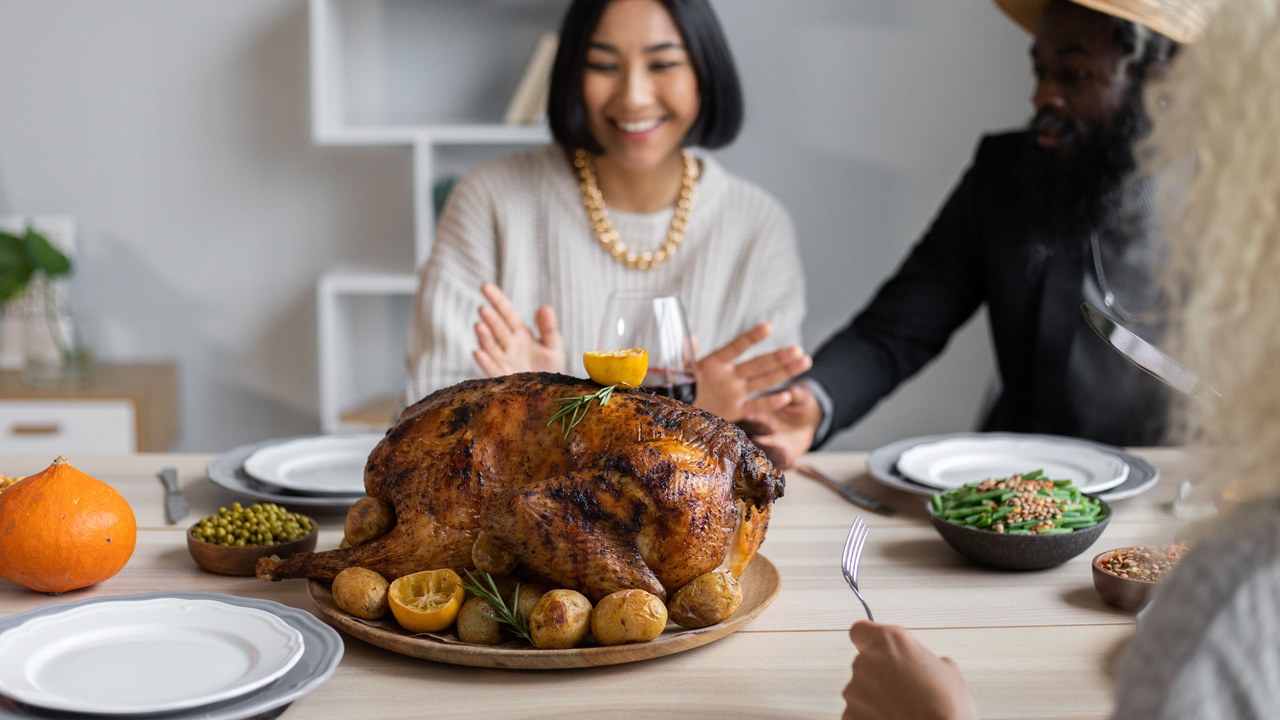
The American Farm Bureau Federation says a classic Thanksgiving dinner for 10 people costs $58.63 this year, or $5.86 a person. That is up more than 6% from 2025 and the first overall increase since 2022. A 16-pound frozen turkey averages $23.68, or $1.48 a pound.
The figures come from the federation’s 41st annual Thanksgiving dinner survey, released Nov. 18. Volunteer shoppers collected prices in all 50 states and Puerto Rico during the first week of November, checking both store shelves and online listings.
How the $58.63 compares with last year
The same basket cost $55.18 in the federation’s 2025 survey, so the 2026 table runs about $3.45 higher. The 2022 record was $64.05, which leaves this year’s total $5.42, or 8.5%, below the peak.
The basket is a fixed shopping list: a turkey, cubed stuffing, sweet potatoes, rolls, peas, cranberries, a veggie tray, pumpkin pie mix, pie crusts, whipping cream, milk and a few miscellaneous ingredients. It measures how prices moved, not what any one family spends, and the federation counts only prices on the shopping list.
Anyone hosting on Thursday, Nov. 26 can hold a grocery list up against the federation’s item prices before heading to the store. A turkey well above $1.48 a pound, or a bag of cranberries well above $2.48, is paying more than the national average the survey found.
The turkey now makes up about 40% of the classic total, since $23.68 is roughly two-fifths of $58.63. In the 2025 survey the bird made up 39% of the cost, its lowest share since 2000, so the share has edged back up as the price rose.
The item-by-item prices
The federation’s news release lists a price and a change from 2025 for each item. Most of the classic basket went up, and a few things got cheaper.
- 16-pound frozen turkey: $23.68, up 10.1%, the largest increase in the survey
- 3 pounds of sweet potatoes: $4.20, up 5%
- 14-ounce bag of cubed stuffing mix: $3.91, up 5.4%
- One dozen dinner rolls: $3.81, up 7%
- One gallon of whole milk: $4.05, up 8.6%
- 12-ounce bag of fresh cranberries: $2.48, up 8.8%
- 30-ounce can of pumpkin pie mix: $4.24, up 1.9%
- Two frozen pie crusts: $3.28, down 2.7%
- One pound of frozen peas: $1.99, down 2%
- Half pint of whipping cream: $1.84, down 1.6%
- One pound veggie tray of carrots and celery: $1.31, down 3.7%
- Miscellaneous ingredients: $3.84, up 6.4%
An expanded meal that adds a boneless ham, russet potatoes and frozen green beans costs $81.72, since those extras add $23.09 to the classic total. The 2025 expanded meal cost $77.09, so the bigger table rose about $4.63, or 6%, in step with the classic one.
Last year’s survey showed a different pattern. Sweet potatoes jumped 37% and the veggie tray rose more than 61% in 2025, while turkey fell 16%. This year the veggie tray is 3.7% cheaper, sweet potatoes rose a more modest 5%, and turkey is the item pulling the total up.
Why the turkey costs more
Faith Parum, the federation’s deputy chief economist, said the increase reflects the rising cost of moving food from the farm to the dinner table. She pointed to high diesel prices and farm labor shortages. The federation’s market analysis adds that strong demand and tight turkey inventories pushed the bird’s price up.
Shoppers can still find bargains. The analysis says some stores were selling turkey for as little as 69 cents a pound, roughly half the national average per-pound price, so the price on the shelf varies a lot from store to store.
The bigger grocery picture is milder. USDA’s Economic Research Service forecasts that food-at-home prices will rise 2.3% in 2026, and its October outlook showed grocery prices 1.8% higher in September than a year earlier. A 6% jump in one holiday basket outpaces that, because turkey, milk and cranberries each rose faster than the average grocery item. USDA’s outlook puts prices at restaurants higher still, with food away from home forecast to rise 3.5% this year.
The Economic Research Service updates that forecast monthly, and its next release is due Nov. 24, two days before the holiday. That update will fold in the latest government price data, so the grocery forecast could shift by then.
Where the dinner costs the most
The Northeast was the most expensive region at $61.57 for the classic meal, about 5% above the national average. The West followed at $58.74 and the Midwest at $56.89. The South was the cheapest at $54.33.
The same order held for the expanded meal: $86.62 in the Northeast, $81.75 in the West, $79.68 in the Midwest and $76.91 in the South. A host in the South pays about $7.24 less than one in the Northeast for the classic table, a gap that is larger than the whole yearly increase.
The federation says farmers and ranchers see a small slice of the final price. Its analysis cites USDA’s Food Dollar Series, which estimates that less than 6 cents of each dollar spent on food goes back to the farm.
This article was produced with AI assistance and edited for accuracy against the sources linked above.