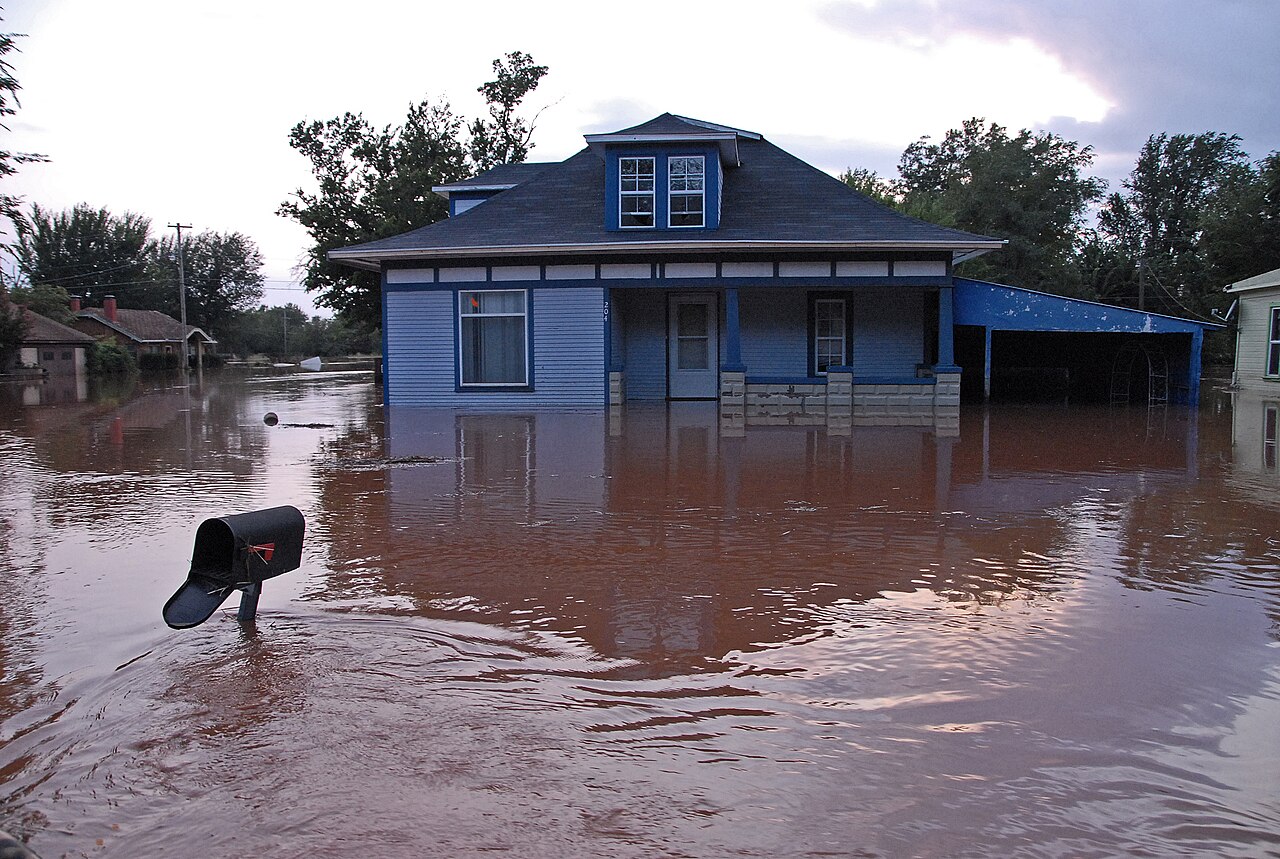
Here is the sentence buried in nearly every homeowners insurance policy in America, in one form or another: water that rises from outside the house is not covered. A burst pipe upstairs? Usually covered. Rain pouring through a hole the wind tore in your roof? Usually covered. Water from a swollen creek, a storm surge, or a flash flood coming under the front door? Not covered, not even a little, and homeowners discover this at the worst possible moment every hurricane and thunderstorm season.

If you want protection against rising water, you have to buy it separately, and for most Americans that means a policy backed by the National Flood Insurance Program, or NFIP, which is run by FEMA. Here’s how that coverage works, what it actually pays for, and the one timing rule — a 30-day waiting period — that makes “I’ll buy it when a storm is coming” a plan that fails.
Why homeowners policies exclude floods in the first place
Flooding is what insurers call a catastrophic, correlated risk: when it happens, it tends to hit thousands of homes in the same area at once, which is very different from the scattered house fires and burst pipes that regular insurance is built to absorb. Private insurers largely stopped covering flood damage decades ago, and Congress created the NFIP in 1968 to fill the gap. Today, FEMA describes the program as covering more than 4 million policyholders, with policies sold through ordinary insurance agents and dozens of private “Write Your Own” companies — but priced and backed by the federal program. The starting point for consumers is FEMA’s official site, FloodSmart.gov.
The dividing line to remember: your homeowners policy generally handles water that falls or breaks loose inside or above the house. Flood insurance handles water that rises from outside — overflow of inland or tidal waters, heavy surface runoff, mudflow. Two policies, two different perils.
What an NFIP policy covers, and the dollar caps
NFIP coverage comes in two separate pieces, and you can buy one or both. Building coverage protects the structure — foundation, electrical and plumbing systems, furnace and water heater, built-in appliances, attached carpet — up to $250,000 for a residential building. Contents coverage protects what’s inside — clothing, furniture, electronics, washer and dryer — up to $100,000, and it’s purchased separately, which surprises renters and homeowners alike. A renter can buy contents-only coverage; a homeowner with a paid-off house sometimes buys building-only and regrets it.
Those caps matter. If your home would cost more than $250,000 to rebuild, an NFIP policy alone leaves a gap, which is where private “excess flood” policies come in. And some things are barely covered or not covered at all: basements get limited treatment (structural elements and essential equipment, but generally not finished walls, floors, or personal belongings kept down there), and outdoor property like decks, patios, and landscaping is excluded.
The 30-day waiting period: why you can’t buy it when the forecast turns
The rule that catches the most people: in most cases, a new NFIP policy does not take effect until 30 days after you buy it. The waiting period exists precisely to stop homeowners from buying coverage only when a hurricane appears on the map and dropping it afterward. If you wait for a named storm to form, it is already too late for that storm.
There are exceptions worth knowing. There’s no wait when you buy flood insurance in connection with making, increasing, extending, or renewing a mortgage — which is why coverage kicks in immediately at closing when a lender requires it. There’s a shortened one-day wait if your property was newly mapped into a high-risk flood zone and you buy within the first months after the map change, and a similar exception applies for flooding on land affected by wildfire in some circumstances. But for the ordinary homeowner who simply decides to get covered, the practical advice is: buy it in the calm season, because May is exactly when a policy purchased today will be active for the heart of hurricane season.
“I’m not in a flood zone” is the most expensive sentence in this topic

Technically, everyone is in a flood zone — the zones just carry different risk levels. FEMA’s own claims data undercuts the comfort many homeowners take from living outside the mapped high-risk areas: according to the agency’s consumer materials, people living outside high-risk areas file more than 40 percent of NFIP flood claims. Development changes drainage. Storms stall in unexpected places. A “moderate-risk” zone on a map drawn years ago says little about what six inches of rain in three hours will do to your street.
FEMA also puts a number on how little water it takes to do real damage: just one inch of floodwater in an average-size home can cause roughly $25,000 in damage. That’s not a wrecked house — that’s soaked flooring, drywall cut out two feet up, ruined furniture, and a dehumidifier bill. It’s also more than many households could absorb out of pocket.
What it costs, and how to check your own risk
Premiums are set property by property under FEMA’s current pricing system, which weighs your distance to water, flood frequency, foundation type, and rebuilding cost — so a quoted price for your neighbor tells you little about yours. The honest way to find out is to ask the agent who already handles your home or auto policy for an NFIP quote, or use the provider locator on FloodSmart.gov. While you’re there, you can look up your address on FEMA’s flood maps to see your official zone. Renters should note that contents-only policies are typically the cheapest way into the program.
One more scenario worth naming: federal disaster assistance is not a substitute. Most flood events never receive a presidential disaster declaration, and when they do, the typical individual assistance is a limited grant or a loan you repay — not a rebuilt house. Insurance pays on your contract; disaster aid pays on politics and severity.
The bottom line
If rising water could plausibly reach your home — and for far more Americans than the maps suggest, it could — the homeowners policy you already pay for will not help you. A separate flood policy, bought at least 30 days before you need it, is the only tool built for that job. The worst time to learn this is standing in a wet living room; the second-worst is when the forecast is already tracking a storm toward your county.
This article was produced with AI assistance and reviewed by a human editor. Figures are linked to their primary sources; where a claim could not be verified from the public record, we say so.