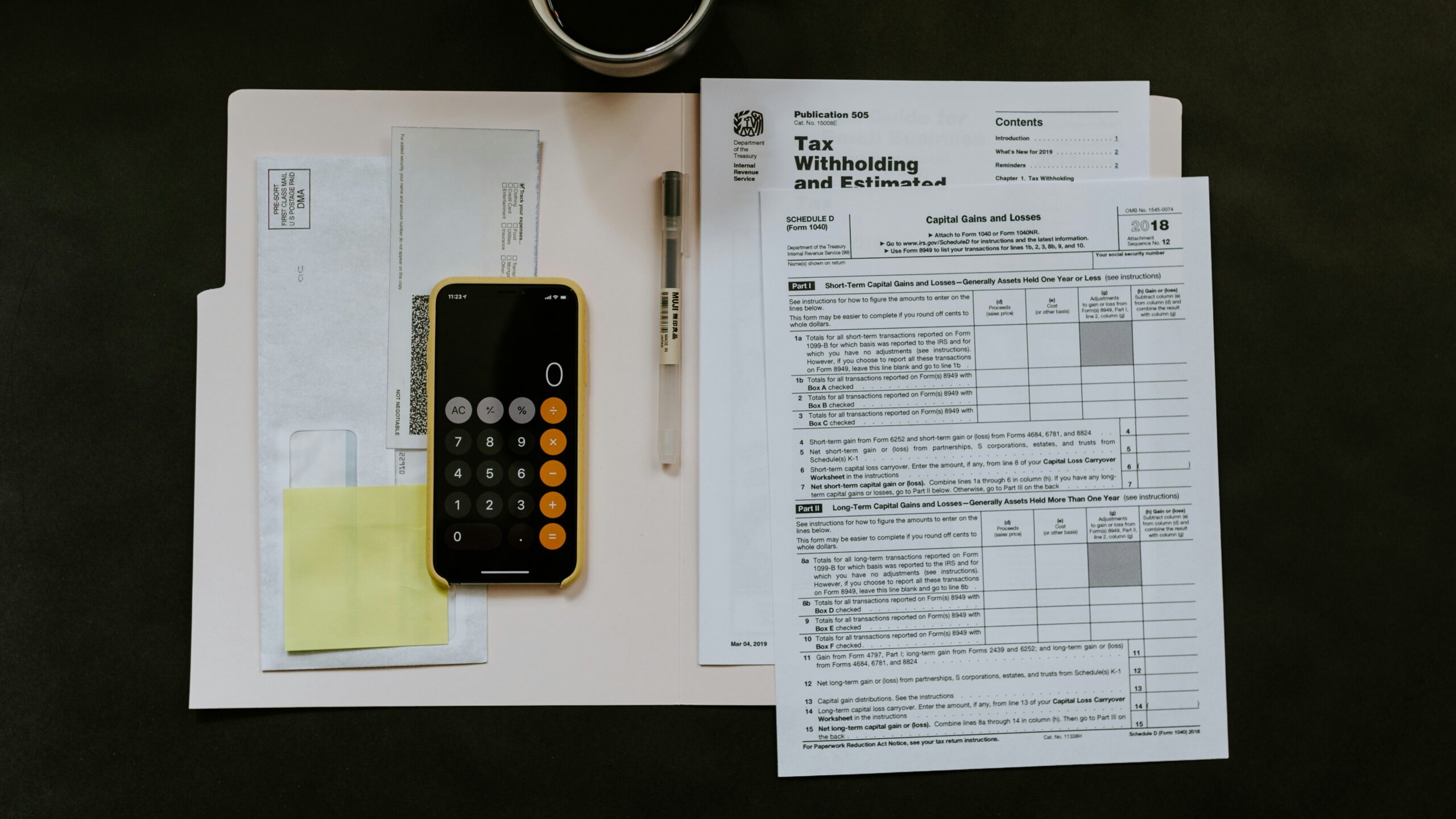
The federal tax calendar has one more date on it before the year runs out, and it lands on Tuesday, September 15. That is the deadline for the third estimated tax payment of 2026, and it is the one that catches people who do not think of themselves as taxpayers with deadlines at all: a retiree drawing from an IRA, a landlord, someone who picked up contract work after leaving a payroll job. Nobody sends them a bill, and no employer takes the money out for them.
The April and June payments have already passed. September 15 is the next one, and the rules that decide whether it applies to a given household are more specific than the folk version most people carry around.
The $1,000 test, and the second condition the form adds
Form 1040-ES sets the general rule for 2026 as two conditions that both have to be true: the filer expects to owe at least $1,000 in tax for 2026 after subtracting withholding and refundable credits, and expects withholding plus refundable credits to come in below the smaller of 90% of the 2026 tax or 100% of the tax shown on the 2025 return. The form also lists the four payment dates: April 15, June 15, September 15 and January 15, 2027.
Two things get misread here. The first is the threshold itself. The $1,000 is not $1,000 of income, and it is not $1,000 of tax. It is the balance still expected to be owed at filing time, after everything already withheld and every refundable credit is counted. The second is the calendar. The payment periods are not equal quarters, whatever the word “quarterly” suggests. There is a two-month gap between the first two and a three-month gap after that.
Free retirement updates: The money rules affecting ordinary households keep changing. The free Retirement Shield newsletter turns the important ones into plain-English next steps. Get the free email.
The income that arrives with no tax taken out
Wages solve this problem automatically, which is why most workers never think about it. Everything else does not. The IRS lists interest, dividends, self-employment income, capital gains, prizes and awards among the income types that may require estimated payments, and states that people in business for themselves generally need to make them. Rental income and retirement account distributions taken without withholding belong on the same list, and estimated tax covers not only income tax but self-employment tax as well.
The agency is blunt about the consequence of getting it wrong: a penalty can apply for not paying enough through withholding and estimated payments, and it can also apply when payments are late even if the return ultimately produces a refund. Being square by April is not the same as having paid on time.
There is one clean exemption. A filer who had no tax liability at all for 2025, was a U.S. citizen or resident alien for the whole year, and whose 2025 tax year covered 12 months does not have to pay estimated tax for 2026.
The prior-year safe harbor is the escape hatch
The most useful line in the general rule is the second half of it, because it means a filer does not have to forecast 2026 accurately to be safe. Paying in 100% of the tax shown on the 2025 return satisfies the requirement even if 2026 turns out to be a much bigger year, as long as the 2025 return covered all 12 months.
Higher incomes get a stiffer version. If 2025 adjusted gross income was more than $150,000, or more than $75,000 for someone filing married filing separately in 2026, the safe harbor rises from 100% to 110% of the prior year’s tax. Farmers and fishers who draw at least two-thirds of gross income from those activities work off 66 2/3% rather than 90% of the current year, and the higher-income rule does not apply to them.
Retirees can have the tax withheld instead of writing checks
This is the part worth knowing before September, and it is specific to people living off retirement accounts. Withholding is not limited to paychecks. Form W-4P starts or changes withholding on periodic pension and annuity payments, Form W-4V handles certain government payments, and Form W-4R tells a payer how much federal income tax to withhold from a nonperiodic payment or an eligible rollover distribution from an IRA, an employer retirement plan or a commercial annuity.
The timing advantage is the real prize. Publication 505 states that one-fourth of a filer’s estimated withholding is considered withheld on the due date of each payment period, so tax pulled out of a distribution in the fall is generally treated as though it had been paid evenly across the year rather than late. A missed June estimated payment cannot be repaired that way. A filer may instead elect to count withholding on the actual dates it occurred, which is an option, not the default.
Uneven income does not require even payments
A household whose money arrives in bursts, such as a contractor paid on completion or an investor with a single large gain, is not required to pay in four identical installments. The annualized income installment method allows the required payment to track when the income was actually received, and it is worked out on Form 2210 with the guidance in Publication 505. It is more paperwork, and it exists precisely so a lumpy year does not generate a penalty for a payment that could not have been anticipated in April.
One further date is worth putting on the calendar now. Form 1040-ES states that the January 15, 2027 payment can be skipped entirely by a filer who files the 2026 return by February 1, 2027 and pays the entire balance due with it.
This article was produced with AI assistance and reviewed by a human editor. Figures are linked to their primary sources; where a claim could not be verified from the public record, we say so.
More Financial Reading