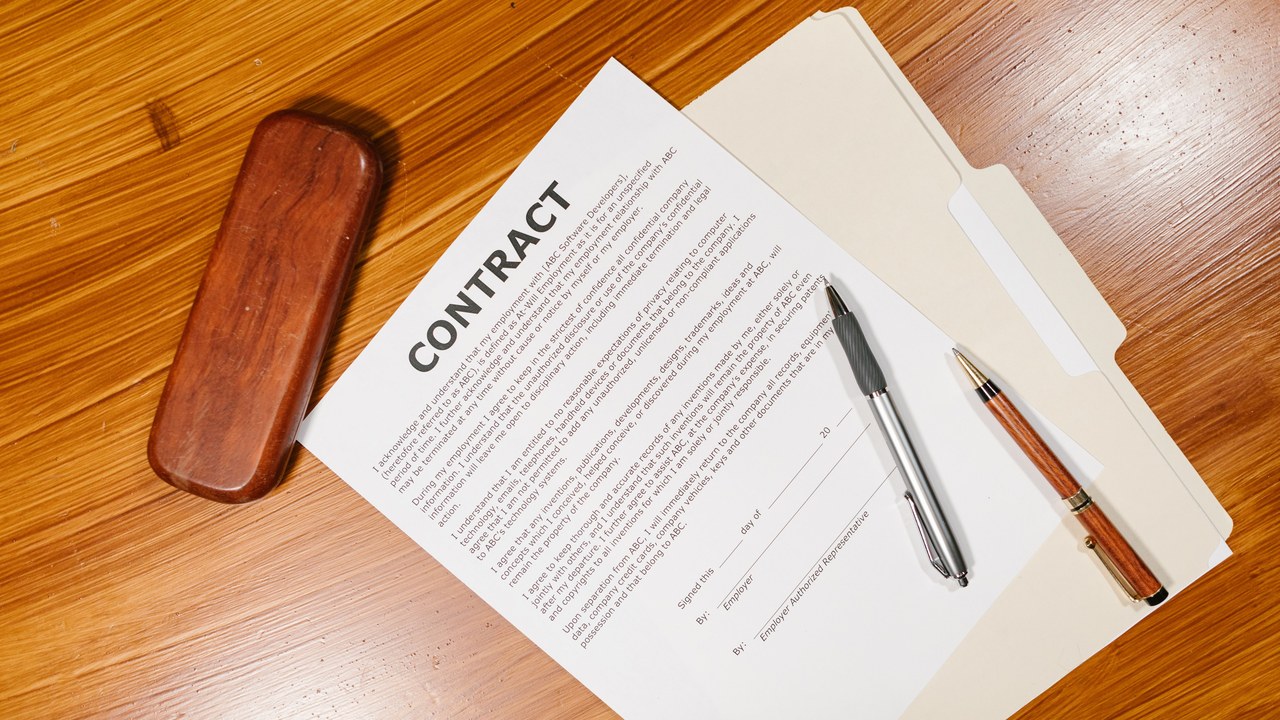
Washington will ban noncompete agreements for employees and independent contractors starting in July 2027, according to the state Department of Labor & Industries. The ban covers existing contracts as well as new ones, so a noncompete a worker signed years ago is expected to stop being enforceable. Employers that try to enforce one afterward can owe the worker at least $5,000.
The change replaces a system built on pay thresholds. Until now, a noncompete was enforceable only for workers earning above a yearly line, and the labor department adjusts that line for inflation. The new law drops the earlier $100,000 earnings threshold entirely, so pay will no longer decide who is bound. For a retiree who takes a consulting job or part-time work, the clause in an old contract will no longer matter after the ban starts.
What the Washington noncompete ban covers
The labor department put the date in a Sept. 30 news release that also announced the state’s 2027 minimum wage. It says state law will prohibit noncompete clauses starting in July 2027. The underlying law, Engrossed Substitute House Bill 1155, takes effect June 30, 2027, so the ban is in force from the first day of July.
Gov. Bob Ferguson signed the bill March 23, 2026, and it is now Chapter 149 of the Laws of 2026. The legislature’s bill history shows lead sponsor Rep. Liz Berry’s bill passing the House 65 to 29 in February, the Senate 30 to 19 in March, and final passage in the House 62 to 33 on March 9.
The enrolled law says “all noncompetition covenants are void and unenforceable,” no matter when they were signed. It defines a covenant as any written or oral agreement that keeps an employee or independent contractor from working in a lawful profession, trade or business.
Anyone working under a noncompete in Washington has one question to settle: does the clause fall inside that definition? The law reaches performer agreements that limit lawful performances, terms that bar dealing with a customer, and clauses that make a worker repay or forfeit pay for taking other lawful work. Those count as noncompetes too, even if the contract uses another name.
Retirement deadlines, in your inbox: Miss an enrollment or claim deadline and the money can be gone. Join the Retirement Money Brief and we’ll send you our 2026 Government Check Reality Tracker as a welcome gift.
Get the Brief + the check tracker →
We may earn a commission from links on this page.
What an employer can still keep
The ban does not erase every restriction. The law excludes nonsolicitation agreements, confidentiality agreements and covenants that protect trade secrets or inventions. Noncompetes tied to the sale of a business also survive when the seller gives up an ownership interest of 1 percent or more, along with certain franchise covenants.
Customer nonsolicitation is allowed only within limits. The law says the restriction must end within 18 months, and it covers customers the employee built a relationship with through the job. It also tells courts to read the definition narrowly, so a clause that works like a noncompete under another label can be struck down.
Training and education repayment agreements are allowed in a limited form. The obligation must expire within 18 months of the start date, repayment must be pro rata, and the employee is released if the job ends for “good cause” as defined in state unemployment law.
What employers owe, and what workers can collect
Employers cannot enforce a noncompete, threaten to enforce one, or tell a worker falsely that one applies. They also cannot enter into a new one. A violator pays the worker the greater of actual damages or a $5,000 statutory penalty, plus attorneys’ fees, expenses and costs.
Employers also have a notice duty. By Oct. 1, 2027, they must make reasonable efforts to tell current and former employees and independent contractors whose covenants are still in effect that the covenant is void. The law does not set a form for that notice.
The new rules apply to court cases started on or after June 30, 2027, regardless of when the dispute arose. Cases begun earlier stay under the old version of the law.
What changes between now and July
The old pay-threshold system still applies until the ban starts. The labor department says it uses the consumer price index for urban wage earners to set the minimum yearly salary a worker must earn before an employer can enforce a noncompete. From January through June 2027, that threshold is $131,326.59 for employees and $328,316.49 for independent contractors.
That means a noncompete is enforceable in the first half of 2027 only for workers above those pay lines, and only until the ban takes over. Workers below the lines already cannot be held to a noncompete.
The same Sept. 30 release covers other 2027 pay changes. Washington’s minimum wage rises 3.5 percent to $17.73 an hour on Jan. 1, up from $17.13. The overtime-exempt salary line for employers with 51 or more workers is $1,773 a week, or $92,196 a year, and $1,595.70 a week, or $82,976.40 a year, for employers with up to 50 workers.
Bound by a Washington noncompete before July 2027?
A noncompete can keep a worker from taking a consulting job or a second income, and the ban does not start until July 2027. Until then, the money that matters is the money a household can control: tax bills, Medicare costs, house costs and scams.
The Keep-It Starter Bundle puts nine guides in one download, one per money leak, including how to cut the tax bill: the senior deduction, RMDs, QCDs and the Roth window. It runs 95 pages, built around afternoon-sized moves.
Get nine money-leak guides while the noncompete ban is pending →
This article was produced with AI assistance and edited for accuracy against the sources linked above.