President Trump has signed a proclamation that changes which Canadian goods are hit by his tariffs, and the new list takes effect Friday, October 30, 2026. Plywood sheets, some paper products, certain machinery and refrigeration equipment, and certain packing crates and boxes come off the list. Certain valves, carpets, waste products and other items go on.
The White House announced the change in a fact sheet dated October 23, 2026. It does not state any tariff rates, so the fact sheet does not say how much more or less the added and removed goods will cost to bring across the border.
For a household, the question is what to set up before October 30. The fact sheet claims no change in store prices. A tariff is collected from the importer at the border, and whether a store passes it on is a separate decision. A retiree planning a flooring or plumbing job has a few days to check quotes with the contractor and supplier.
What changed this year: Social Security and Medicare change every year, and nobody sends you a memo. The Retirement Money Brief breaks down what changed and what to do.
Get the Retirement Money Brief →
We may earn a commission from links on this page.
What comes off the list and what goes on
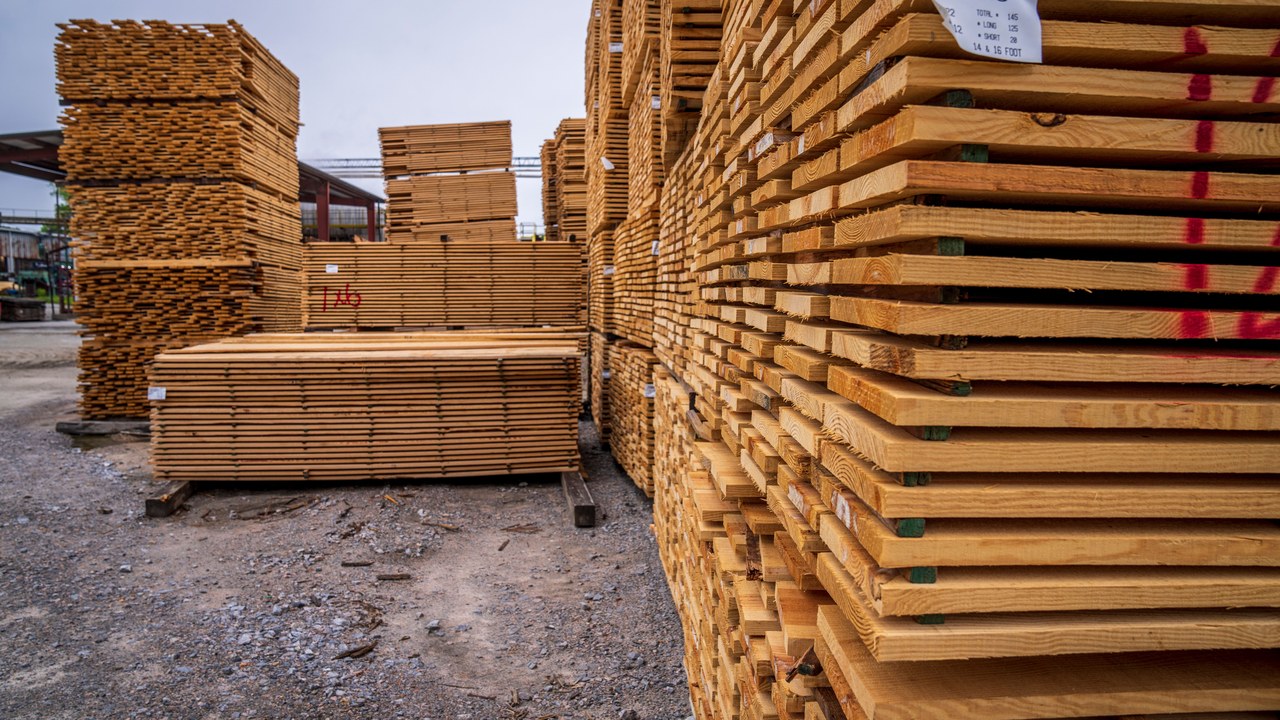
Under the White House fact sheet, the removals are plywood sheets, some paper products, certain machinery and refrigeration equipment, and certain packing crates and boxes. The additions are certain valves, carpets, waste products and others, and the product additions and removals take effect on October 30, 2026.
The fact sheet uses words such as “certain” and “some” for most categories and does not publish a tariff schedule. The exact product codes are in the proclamation itself, which customs brokers and importers work from.
What Section 338 is and how long this has been building
The proclamation is issued under Section 338 of the Tariff Act of 1930. It changes Proclamation 11048, as amended, which imposes additional duties to offset what the administration calls Canadian discrimination against U.S. commerce in motor vehicles.
The October change builds on tariffs announced July 20, 2026 and modified September 8, 2026. The fact sheet says the aim is “to continue effectively offsetting the burden to U.S. commerce while better serving the public interest,” and notes that Section 338 lets the president amend or revoke proclamations when the public interest requires it.
Do these tariffs depend on a trade-agreement exemption?
No. The White House says the Section 338 tariffs apply to all covered goods regardless of whether a good originates under the U.S.-Mexico-Canada Agreement, and they apply in addition to tariffs under Section 232 of the Trade Expansion Act of 1962.
That means a Canadian-made product that qualified for duty-free treatment under the trade agreement can still be caught by the list. It also means removal from this list does not by itself end every tariff on a product, because the Section 232 duties are separate.
Canada’s side of the dispute
The fact sheet says Canada imposed new retaliatory tariffs on about $20 billion of U.S. exports after it “walked away from a near-final trade deal with the United States this past summer.” It also states that only two countries have chosen to retaliate against the president’s tariffs rather than negotiate a deal, naming China and Canada.
The administration frames the Section 338 action as protecting American farmers, manufacturers and workers and restoring reciprocity in trade with Canada. The fact sheet gives no Canadian government response.
What households can do with a week to spare
A tariff change moves the cost of goods slowly and unevenly, and the fact sheet does not claim any effect on prices at all. The practical response for a household on a fixed income is to know which of its monthly costs have help attached to them. Heating and cooling bills, groceries, prescriptions, Medicare premiums and property taxes each have programs for older and low-income households, and most of them require an application with its own income limit and its own dates.
A household that has never been screened for those programs can do so now, at no cost, through the state agency that runs each one, before any tariff-related price change reaches the checkout.
Costs climbing around the house before October 30?
The Canadian tariff list covers goods such as carpet and valves, and the fact sheet gives no rate, so nobody can say yet what any single household will pay. Retirees on a fixed income still feel it first in the costs they cannot skip.
The Benefits Checklist does not cover tariffs. It is the pivot from the cost question to the programs that can lower household bills: it scans 11 benefit programs retirees most often miss, with the 2026 income limits and a 50-state phone directory. A printable application tracker comes with the download.
Scan the 11 household-cost programs with the Benefits Checklist before October 30 →
More Financial Reading
- 21 Ways to Stretch a $2,087 Social Security Check
- 15 Places to Find Your Share of the $4.25 Billion States Give Back
- 15 Ways Retirees Are Tapping a Record $14.9 Trillion in Home Equity
This article was produced with AI assistance and edited for accuracy against the sources linked above.