
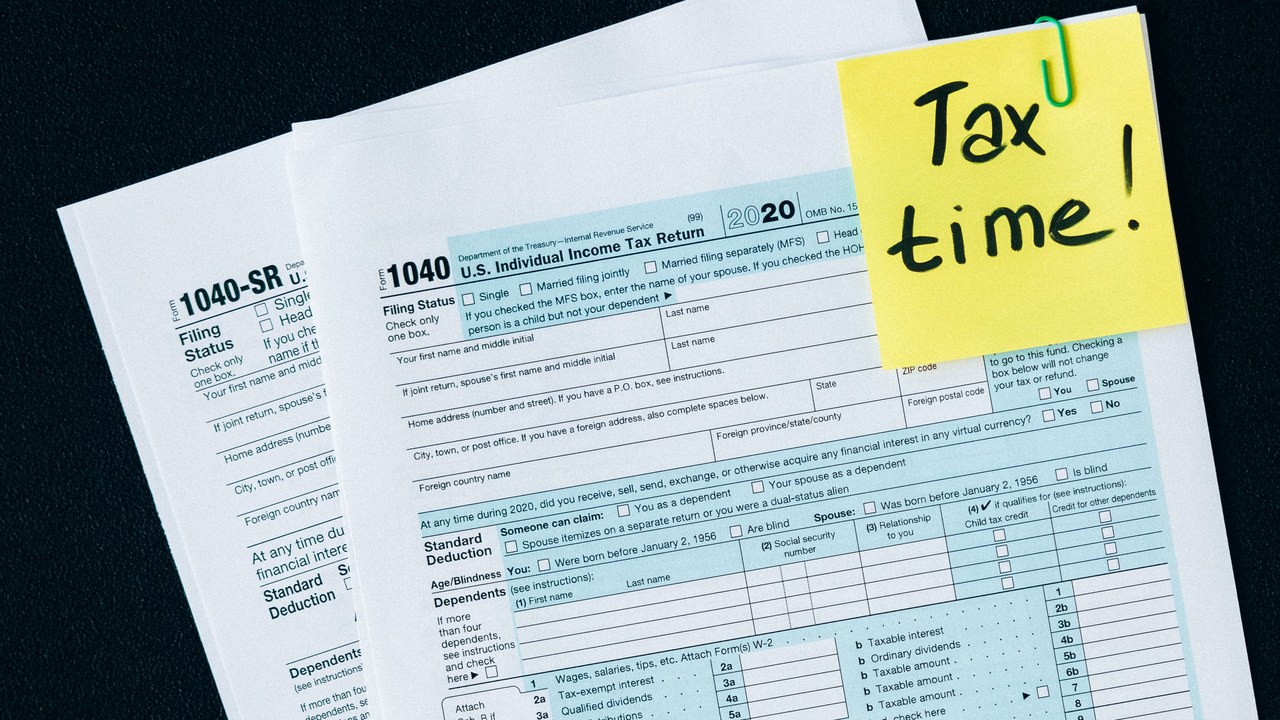
For the year a spouse dies, a surviving widow or widower who has not remarried can still file a joint tax return with the late spouse. The IRS treats the survivor as married for that whole year. For the two years after, special filing benefits are possible too, but only for a survivor raising a dependent child.
The rule is spelled out in IRS Publication 501, the agency’s guide to filing status for 2025 returns. It says that if a spouse died during the year, the survivor is considered married for the whole year and can choose married filing jointly.
The year of death still counts as a joint year
Pub 501 notes that the standard deduction may be higher on a joint return for people who do not itemize. The catch is remarriage. A survivor who remarries before the end of the year can file jointly with the new spouse, and the late spouse’s return is then filed as married filing separately.
IRS Publication 559, Survivors, Executors, and Administrators, says the same thing from the other side: a final joint return with the decedent cannot be filed if the survivor remarried before the end of the year. If no personal representative has been appointed before the due date, the surviving spouse alone can file the joint return.
Anyone widowed in the last few years has a few facts to pin down before choosing a status. The first is the year of death. The second is whether a remarriage happened before December 31 of that year, and the third is whether a child the survivor can claim as a dependent has been living in the home.
Retirement deadlines, in your inbox: Miss an enrollment or claim deadline and the money can be gone. Join the Retirement Money Brief and we’ll send you our Will My Social Security Be Taxed? Worksheet as a welcome gift.
Get the Brief + the tax worksheet →
We may earn a commission from links on this page.
IRS Topic 356 on decedents, last reviewed October 7, 2026, covers the paperwork, and says a surviving spouse can file joint returns for the year of death and, if no return was filed before the death, for the year before. When an executor or administrator has been appointed, that person signs and the surviving spouse signs a joint return as well. With no appointed representative, the survivor writes “Filing as surviving spouse” in the signature area.
An IRS tax tip on final returns adds two comforts. Surviving spouses do not need to complete Form 1310, the refund claim for a deceased taxpayer, and the IRS does not need a copy of the death certificate. The usual filing deadlines still apply unless an extension is granted. The tip also says to report all income through the date of death, and that a prior-year return may be due if the late spouse had not filed it. Paper filers write “deceased,” the late spouse’s name and the date of death across the top, while e-filers follow their tax software’s signature instructions.
What the two extra years require
The status for those later years is called qualifying surviving spouse. Pub 501 says it entitles the survivor to joint return tax rates and the highest standard deduction for people who do not itemize, though it does not allow a joint return. The law behind it, section 2 of the tax code, covers a survivor whose spouse died in either of the two tax years just before the current one and who keeps up a home for a dependent child.
Pub 501 sets out the requirements one by one:
- The survivor was entitled to file a joint return for the year the spouse died.
- The survivor has not remarried before the end of the tax year.
- A child or stepchild, not a foster child, qualifies as the survivor’s dependent and lived in the home all year, apart from temporary absences.
- The survivor paid more than half the cost of keeping up the home.
The status lasts only two years after the year of death. The statute and the publication agree on the clock. Pub 501 gives an example: a spouse who died in 2024 leaves the survivor eligible to use it for 2025 and 2026, if every requirement is met.
A survivor with no dependent child does not get the two extra years. Pub 501 says that when a spouse died before January 1, 2025, the filing status may be single, unless another status such as head of household or qualifying surviving spouse fits.
For a survivor without a qualifying child, that makes the year of death the last year of joint filing, and the first full year alone starts with a new status.
What changes when the joint years end
The IRS publications answer the filing question and then stop. They do not cover what the new status means for tax on Social Security benefits, for withdrawals from savings accounts or for the Medicare premium surcharge known as IRMAA.
That leaves the open question for each survivor: which status applies in the years ahead, and what it does to the tax bill on a fixed income. Pub 501 and Pub 559 give the dates and the tests, and the dollar figures come from the survivor’s own return and income.
Widowed and planning for the tax years after joint filing ends?
The filing-status rules are only the first tax question after a spouse dies. The next one is what the survivor’s new status does to tax on Social Security, to withdrawals from savings and to the IRMAA premium tier.
The Retirement Tax & Withdrawal Planner picks up there. It covers the senior deduction and the account withdrawal order, and it includes four calculators for provisional income, IRMAA tier, RMD schedule and Roth bracket fill. The tax on Social Security is its own part of the kit, so a widowed household can see where income lands before the return is filed.
More Financial Reading
- 21 Ways to Stretch a $2,087 Social Security Check
- 15 Places to Find Your Share of the $4.25 Billion States Give Back
- The New $6,000 Senior Deduction and 14 More Tax Moves for Retirees
This article was produced with AI assistance and edited for accuracy against the sources linked above.


