
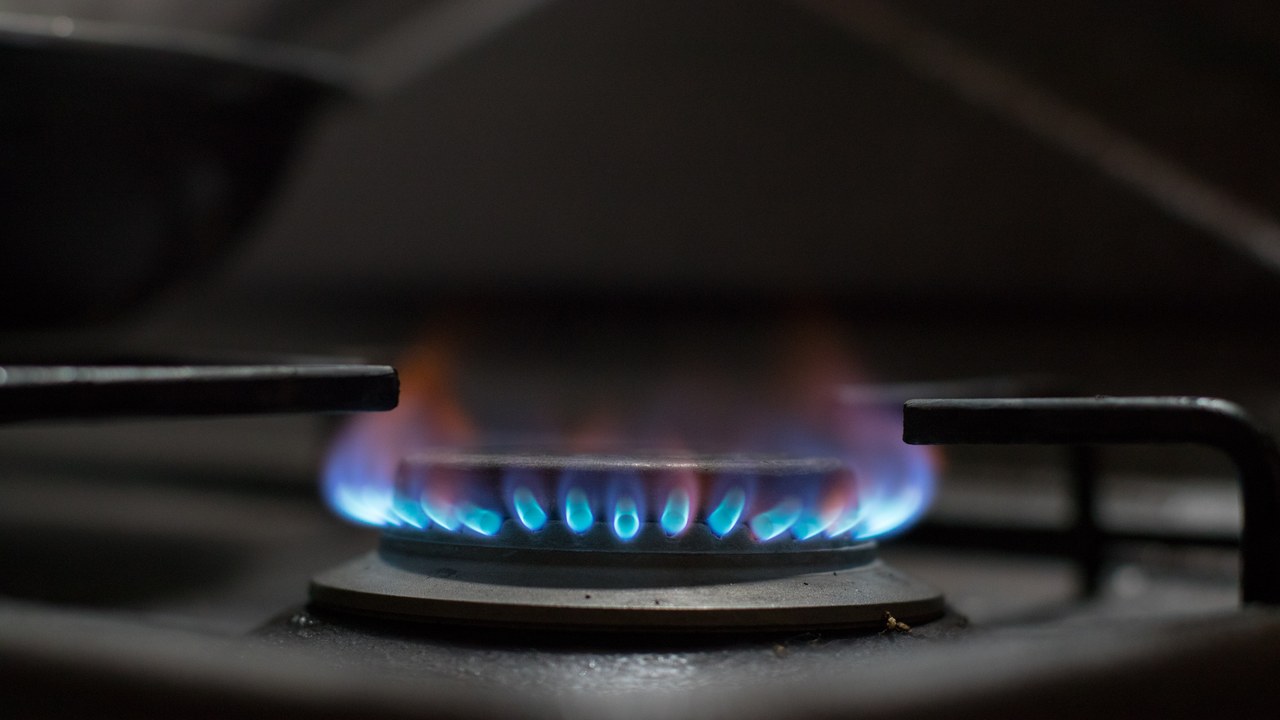
Natural gas heating bills are forecast to fall in three of four U.S. regions this winter and rise in one. The U.S. Energy Information Administration (EIA) expects Western households that heat mainly with natural gas to pay $590 from November through March, up 7 percent from last winter, according to its Winter Fuels Outlook, published October 6. The West is the only region where EIA sees gas heating bills rising. The Northeast is forecast at $879, down 14 percent, the Midwest at $613, down 10 percent, and the South at $511, down 15 percent.
Why the West is the one region going up
Two EIA figures for the West explain the split. The season’s average natural gas price there is forecast at $15.10 per thousand cubic feet, down 8 percent. But EIA’s base case has the West at 2,781 heating degree days, a measure of how cold a season runs, which is 25 percent more than last winter. The U.S. total is 3,155 heating degree days, unchanged. A cheaper unit of gas is expected to be outweighed by a lot more units burned.
For a household in the West on a fixed income, the forecast turns into a budgeting question: a $590 gas winter that is higher than the same house paid last year. The question is where help with that bill comes from, and the main federal answer is the Low Income Home Energy Assistance Program, known as LIHEAP.
A $590 gas winter in the West is the number older homeowners on fixed incomes have to plan around. The Senior Property Tax & Home-Cost Relief Kit lays out heating, cooling and home-repair help and an application log and renewal calendar, so the forecast turns into applications on a schedule.
Find heating, cooling and home-repair help in the Home-Cost Relief Kit →
EIA’s table spreads the Western total across the months. Average spending for a gas-heated Western home runs from $103 in November to $137 in December, then $131 in January, $113 in February and $105 in March. December and January carry nearly half the season’s cost: the two months add up to $268 of the $590. EIA also runs side cases that move heating degree days up or down 10 percent in every region, so a colder or milder winter would move these numbers.
Nationally, EIA expects the average gas-heated home to spend $640, down 9 percent.
What the forecast covers
The figures apply to homes whose main space heating fuel is natural gas. EIA counts 60.96 million households heating mainly with gas in 2026, about 46 percent of U.S. homes, so the forecast covers the largest single group. Homes that heat with something else get their own numbers, and not all of them point down. Heating oil households, about 3 percent of the country, are forecast to spend $2,115, up 21 percent, with the price at $5.26 a gallon, up 34 percent. EIA’s first weekly survey of the season, dated October 5, put residential heating oil at $6.042 a gallon, which is $2.487 more than a year earlier. Propane homes are forecast to spend an average $1,246, down 3 percent, and the average electric-heated home $1,196, up 4 percent.
What LIHEAP pays for
The Administration for Children and Families describes LIHEAP as federally funded assistance to reduce the costs associated with home energy bills. Its page lists heating bill help, shutoff prevention, restoring service that was disconnected, and repair or replacement of heating equipment. It also covers energy crises, weatherization and minor energy-related home repairs. The page says LIHEAP serves lower-income households and refers applicants to Energyhelp.us for local terms, so the rules and amounts depend on where the household lives.
Applying for heating help before the December and January peak
The free route starts at the federal LIHEAP page. It points to Energyhelp.us and to the National Energy Assistance Referral hotline at 1-866-674-6327, which answers weekdays from 9 a.m. to 7 p.m. Eastern time. Applications are local, so the first call or click is how a household learns its own state’s rules.
Applying before the cold months matters because the Western bill is back-loaded: $268 of the $590 forecast falls in December and January. A recent gas bill, the utility account number and a list of household income sources are the usual starting papers.
One warning belongs on the application list. The federal page says LIHEAP does not give direct grants to individuals and charges no fee for benefits. Anyone who is asked for money or offered a grant should report it to the HHS Fraud Hotline at 1-800-447-8477.
Western gas bills peak at $137 in December
Heating help is applied for locally, and a renewal that slips past its date can end the help. The Senior Property Tax & Home-Cost Relief Kit pulls heating, cooling and home-repair help together for older homeowners, with an application log and renewal calendar for every program’s dates.
Keep every heating-help application and renewal date in the Home-Cost Relief Kit log →
This article was produced with AI assistance and edited for accuracy against the sources linked above.


