
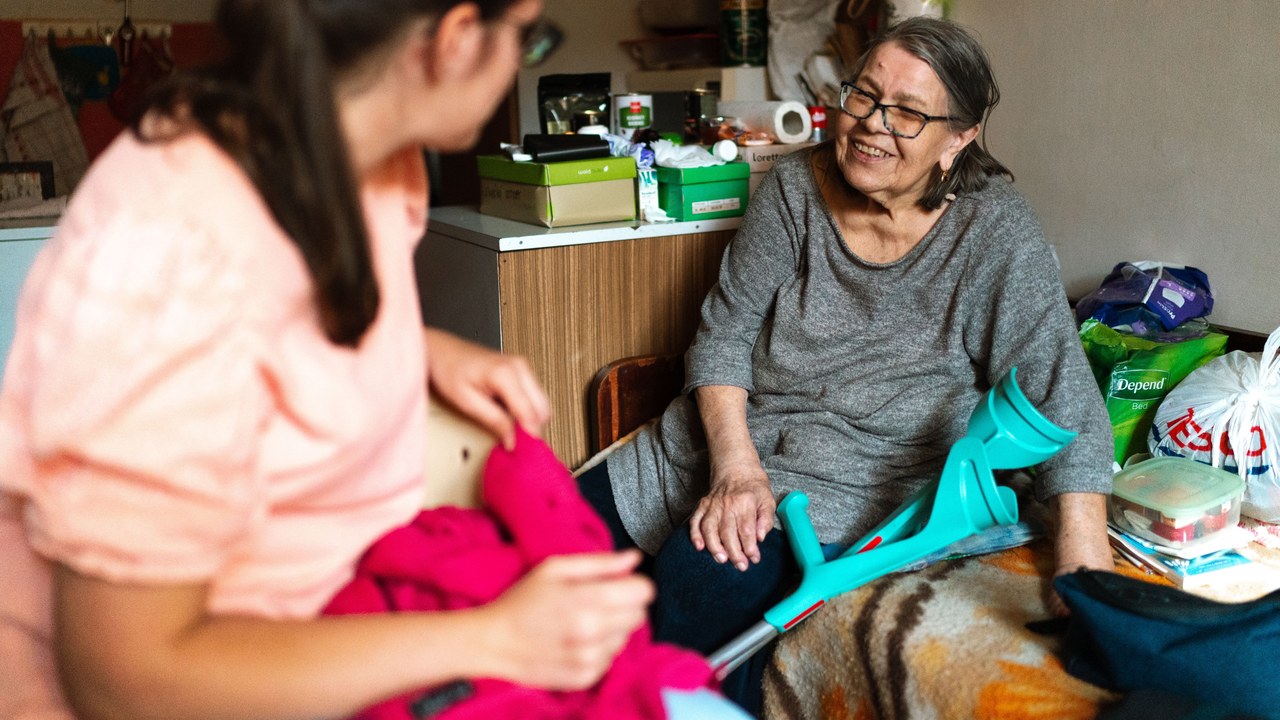
An older or disabled Californian who lives in a licensed care home can get up to $1,626.07 a month in 2026 from SSI and the state’s supplement together. A person of the same kind who lives on their own gets $1,233.94. That is a difference of $392.13 a month, and it comes from the state’s payment standards, which were updated for January 1, 2026.
Two parts of one payment
SSI, Supplemental Security Income, is the federal program that pays people who are 65 or older, blind or disabled and have little income and few savings. The federal benefit rate for 2026 is $994 a month for an individual and $1,491 for a couple. California adds its State Supplementary Payment, called SSP. The state’s Department of Social Services says the program “augments SSI” and that both are administered by the Social Security Administration.
The state’s payment table shows how the two parts add up. For an older or disabled individual living independently, the federal $994 is joined by a $239.94 state payment, for $1,233.94. In non-medical out-of-home care, which covers a licensed facility, the federal $994 is joined by a $632.07 state payment, for $1,626.07. The state’s table gives the same figure for a person living in a relative’s household without in-kind room and board.
For Californians on SSI, or about to apply, the question is which row of that table is theirs, because the figure changes with where they live and who provides the food and shelter.
A $392.13 monthly swing between living arrangements shows how much one change in a household can move an SSI check. The SSI & Disability Action Kit includes the 2026 SSI income and resource limits and review and reporting steps for exactly that kind of change.
Get the SSI limits and reporting-steps kit for living-arrangement changes →
What other arrangements pay
The same table lists a payment for each situation in 2026. For individuals, the totals are:
- Living independently in their own household: $1,233.94.
- Without cooking facilities in their own household: $1,362.81.
- Living in another person’s household and receiving in-kind room and board, at the reduced rate: $907.87.
- In non-medical out-of-home care in a relative’s household with room and board: $1,287.07.
- In a licensed facility: $1,626.07.
A blind individual living independently gets $1,318.32, which is $84.38 more than an older or disabled individual in the same setting. A disabled minor living independently gets $1,091.27.
Couples get more. An older or disabled couple living independently gets $2,098.83, while a couple in a licensed facility gets $3,252.14. A blind couple living independently gets $2,324.35.
What “up to” means
The table lists the most a person can receive in each setting. An actual check depends on the person’s own income, because SSI is reduced as other income rises, and on the other details of their situation. The state’s table is a ceiling, and a person’s award letter from Social Security shows the amount actually being paid.
For people who live in a medical facility paid for by Medicaid, a different rule applies. The table shows a personal needs allowance of $62 for an individual and $124 for a couple in that case, and those are not the figures above.
What moves the number
Moving into or out of a licensed care home is one trigger. Another is the household arrangement: whether someone else supplies food and shelter changes which row of the table applies.
The state page tells people to apply at a local Social Security office, online at ssa.gov/apply/ssi, or by calling 1-800-772-1213 (TTY 1-800-325-0778). It does not describe how to report a change, so a call to the same number is the direct route after a move.
Matching the check to the living arrangement
The first step is to look at the award letter and find the amount Social Security says is being paid and the living arrangement it assumes. If that arrangement is not the one a person is actually in, the amount may be wrong in one direction or the other, and the agency should hear about it. The program page at ssa.gov/ssi lists the rules and the ways to contact the agency.
It helps to keep a short note of the date a person moved, what the facility or relative charges, and whether meals are included. Those details are what Social Security asks about when it decides which payment standard applies.
The state’s table is also worth reading in full. It is published by the California Department of Health Care Services as an enclosure to a letter to county welfare directors, and it lists every row, including the couples and the blind rows.
Where a $392.13 gap can come from
A move, a change in who pays for meals or a change in income can shift an SSI check by hundreds of dollars a month, and reporting it late can mean an overpayment to repay. The SSI & Disability Action Kit covers the 2026 SSI income and resource limits and the review and reporting steps, in 74 pages.
Get the reporting-steps kit before the next change in living arrangements →
This article was produced with AI assistance and edited for accuracy against the sources linked above.


