
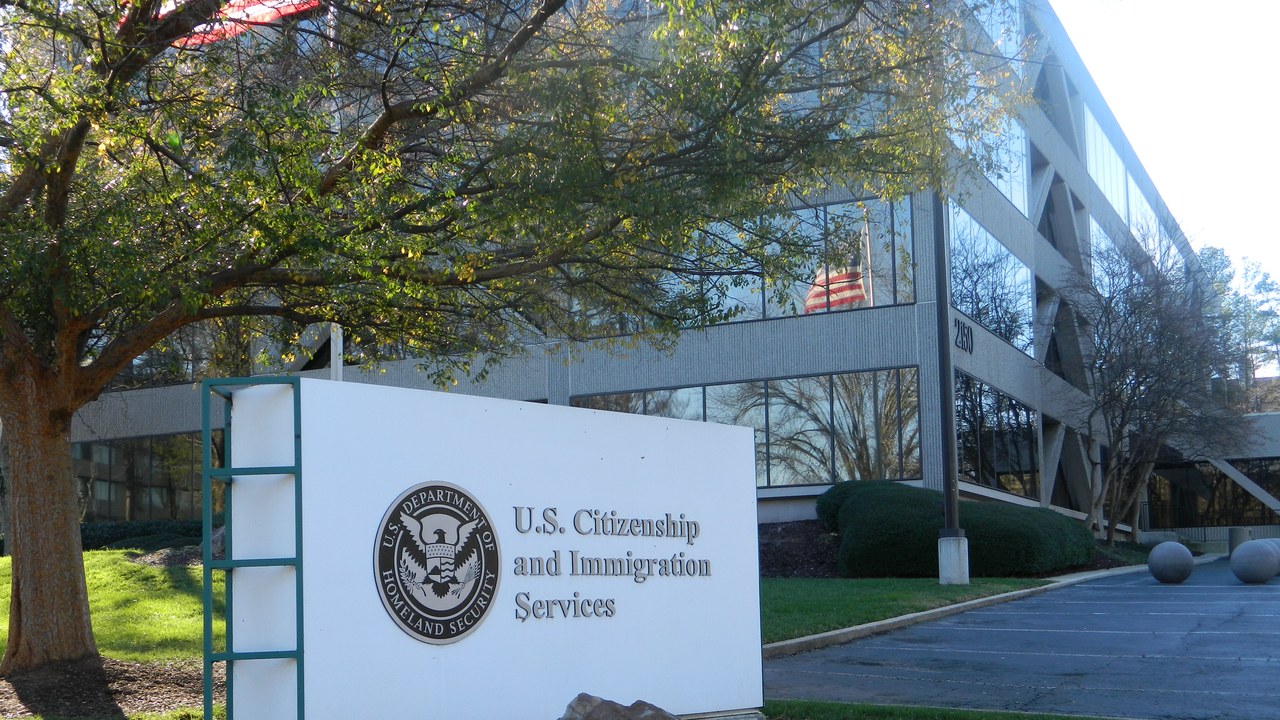
Several immigration fees set by the 2025 tax-and-spending law, known as H.R. 1, go up on Oct. 16. The parole fee rises from $1,020 to $1,050, and the fee for a first work permit for an asylum applicant rises from $560 to $570. Any request postmarked on or after Oct. 16 without the proper fee will be rejected, according to a notice U.S. Citizenship and Immigration Services published in the Federal Register on Oct. 1.
The new fee list
The notice is a yearly inflation adjustment. It is signed by Homeland Security Secretary Markwayne Mullin and covers fiscal year 2027. These are the fees that change:
- Immigration parole, Form I-131: $1,020 to $1,050.
- Initial work permit, Form I-765, for asylum applicants, parolees and people with Temporary Protected Status (TPS): $560 to $570.
- TPS application, Form I-821: $510 to $520.
- Annual fee for a pending asylum application, Form I-589: $102 to $105.
Other fees on the same table stay where they are. The fee to file an initial asylum application remains $100. Renewing an asylum applicant’s work permit stays at $275, and renewals for parole and TPS work permits stay at $280. The special immigrant juvenile petition fee holds at $250, and the I-94 fee at $24. The notice says H.R. 1 does not provide for an inflation adjustment to the asylum renewal fee.
The people affected are applicants, their families and the lawyers or volunteers who mail their packets. What matters for each of them is the postmark. The new amounts apply to requests postmarked on or after Oct. 16, so the date on the envelope decides which fee applies.
Oct. 16 is the postmark date that catches anyone mailing the old $1,020 parole fee or the old $560 work permit fee.
Get the deadline alerts before they pass →
How the increase was figured
USCIS says the consumer price index for all urban consumers rose from 323.048 in July 2025 to 333.918 in July 2026, about 3.36 percent. Most fees were rounded down to the next lowest $10. The annual asylum fee was rounded down to the nearest dollar, as the law requires for that charge.
The notice says comments are no longer accepted. It adds that DHS may write the yearly adjustments into its regulations at 8 CFR part 106 in a later rule. This is the second round of yearly adjustments: earlier notices ran in the Federal Register in October and November 2025, and in an interim final rule on April 29, 2026.
The same fees at immigration court
A parallel set of increases already took effect on Oct. 1. The Justice Department’s Executive Office for Immigration Review adjusted the versions of these fees that apply to DHS forms filed with an immigration court. In a Federal Register notice dated Sept. 29, the office raised the adjustment-of-status fee for Form I-485 from $1,540 to $1,590. The waiver fee for Form I-601 went from $1,070 to $1,100, and the annual asylum fee from $102 to $105. The notice used a 3.4 percent change in the consumer price index.
So the two agencies use slightly different inflation figures and different effective dates. A case at an immigration court follows the Justice Department’s table, and a request mailed to USCIS follows the USCIS table.
What rejection means
The notice says that a request postmarked on or after Oct. 16 without the proper filing fee will be rejected. It does not describe a grace period or a way to make up a short payment after the fact. A filing sent with the old $1,020 parole fee or the old $560 work permit fee on or after that date falls short by $30 or $10.
The notice calls its approach “the most equitable path forward” for collecting the fees, and it lists no exceptions beyond the fee table itself.
Checking the fee before mailing
The fee table in the Federal Register notice is the controlling list for USCIS filings, and the agency’s own fee page, uscis.gov/fees, is the free place to look up a specific form. Anyone with a question about the notice itself can call the USCIS Office of the Chief Financial Officer at 240-721-3000. The number is not toll-free, and the TTY line is 1-877-889-5627.
A short checklist helps before sealing an envelope: the form number, whether the request is an initial filing or a renewal, and the postmark date the post office will actually stamp. A package dropped in a mailbox late on Oct. 15 may be postmarked Oct. 16 or later.
The Federal Register notice is the document to keep. It states the amounts, the Oct. 16 date and the rejection rule in one place.
More Financial Reading
- 24 Ways to Stretch a $2,087 Social Security Check
- 17 Places to Find Your Share of the $4.25 Billion States Give Back
- 16 Steps to Stop the Scams That Took $7.7 Billion From Seniors
This article was produced with AI assistance and edited for accuracy against the sources linked above.


