
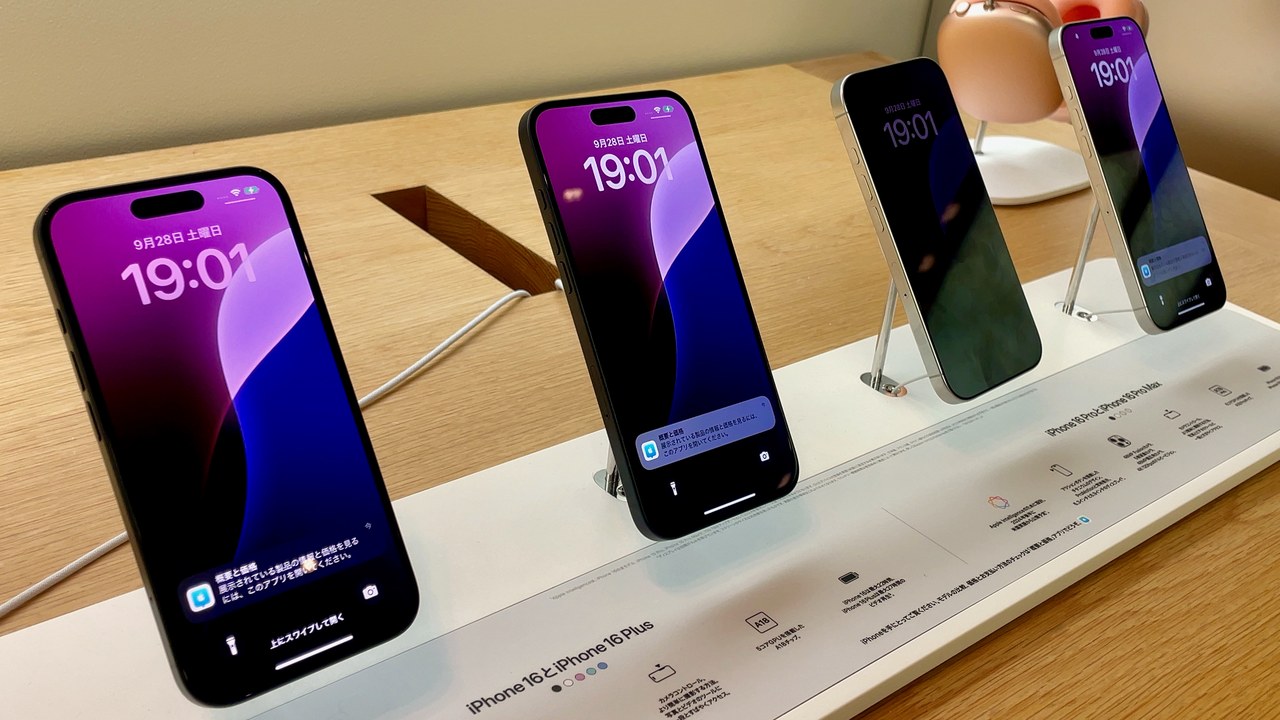
Seven iPhone models are covered by Apple’s Siri settlement, as long as the phone was bought in the United States between June 10, 2024 and March 29, 2025. The $250 million fund pays per device rather than per person, and the administrator’s claim deadline is December 21, 2026.
One claim per eligible iPhone. The payment attaches to each device rather than each person, which leaves a household tracking several claims, and The Settlement & Refund Recovery System includes a step-by-step filing walkthrough and a claim log and payment tracker.
Sort one claim per iPhone with a step-by-step walkthrough →
The seven models and the purchase window
The settlement administrator’s website lists the eligible devices as the iPhone 16, iPhone 16e, iPhone 16 Plus, iPhone 16 Pro, iPhone 16 Pro Max, iPhone 15 Pro and iPhone 15 Pro Max. That is seven models. Each must have been purchased in the United States from June 10, 2024 through March 29, 2025.
The date limit matters most for the two iPhone 15 Pro models, which reached stores before the window opened. A third-party case summary from OpenClassActions notes that those two are covered only if bought on or after June 10, 2024. An iPhone 15 Pro purchased in 2023 falls outside the class even though the model name appears on the list.
A payment that follows the phone
The settlement sets payment at $25 per eligible device. That amount may be raised pro rata up to a maximum of $95 per device, and the administrator’s FAQ warns that it can also go lower: the payment “may be increased or decreased pro rata depending on the total number of valid claims submitted and Eligible Devices claimed,” after attorneys’ fees, service awards and administration costs.
The $250 million fund is therefore a pool shared across all valid claims rather than a promise of a fixed sum to each claimant. Fewer filings would push the per-device figure toward the $95 ceiling; heavy filing would pull it down. Claimants can choose payment by physical check or digital check, according to the administrator’s FAQ.
The allegation behind the case
The lawsuit, Landsheft et al. v. Apple Inc., is pending in the Northern District of California before Judge Noël Wise, according to the case summary. Purchasers claim they bought the phones expecting certain Siri and Apple Intelligence features that they did not receive. Apple denies all of the allegations and denies that it did anything improper or unlawful.
A settlement of this kind resolves the dispute without any finding about who was right. The final approval hearing is set for February 24, 2027.
Where the December 21 date sits among the others
Three obligations share one date. The administrator lists December 21, 2026 as the claim deadline and also as the deadline for exclusion and objection. A phone owner who files a claim has chosen to take part in the settlement; an owner who wants to keep the right to sue Apple separately has to opt out by the same day.
The only later date on the notice is the February 24, 2027 hearing, when the court decides whether to approve the deal. Payments follow approval, and the administrator’s pages read for this article give no payment date.
Claims go in through the administrator’s online claim form, and the case summary reports that paper forms must be postmarked by the same December 21 date. Questions go to the administrator at 1-888-988-8945 or by mail to the Landsheft, et al. v. Apple Inc. Settlement Administrator, P.O. Box 301132, Los Angeles, CA 90030-1132. The site adds a plain instruction: do not call the court or the court clerk’s office to ask about the settlement.
A household with three eligible iPhones files three times
The difficulty is bookkeeping rather than eligibility. Each claim turns on a specific model and a specific purchase date, so a family that bought an iPhone 16 Pro in the fall of 2024 and an iPhone 15 Pro for a relative in the spring of 2024 has to check each handset against the list and the window separately. Because the payment attaches to the device, each phone counts separately.
The claim form also asks for identifying information. According to the FAQ, claimants must confirm that the device was bought in the window in the United States and give “information sufficient to confirm your purchase and/or ownership of the Eligible Device.” The administrator’s site points to the serial number under Settings, General, About. The OpenClassActions summary reports that a receipt is not required and that either a serial number or an Apple Account email and phone number can be used, but the administrator’s own pages do not spell that out, so the form itself is the final word. Filing is done directly with the administrator and costs nothing, with no paid help needed.
A final point concerns amounts. Because the per-device payment is a range and not a fixed sum, a household cannot total its eventual payment in advance; the administrator publishes the formula, not the result. With three eligible phones, the arithmetic runs from three times $25 at the baseline up to three times $95 at the ceiling, which is $75 to $285 before any pro rata reduction below the baseline.
The administrator’s website, smartphoneaisettlement.com, carries the $250 million fund, the $25 to $95 per-device range, the seven models, the June 10, 2024 to March 29, 2025 window and the December 21, 2026 deadline.
Matching each handset to its own claim
A household with several eligible iPhones faces one claim per device, each with its own model, purchase date and identifier. The filing steps are simple one at a time and easy to lose track of in a group.
The Settlement & Refund Recovery System includes a step-by-step filing walkthrough and a claim log and payment tracker, for matching each device’s model and purchase date to its own claim.
Log each iPhone’s model, purchase date and claim status in a tracker →
This article was written with the help of AI and checked against the administrator’s pages before publication.


