
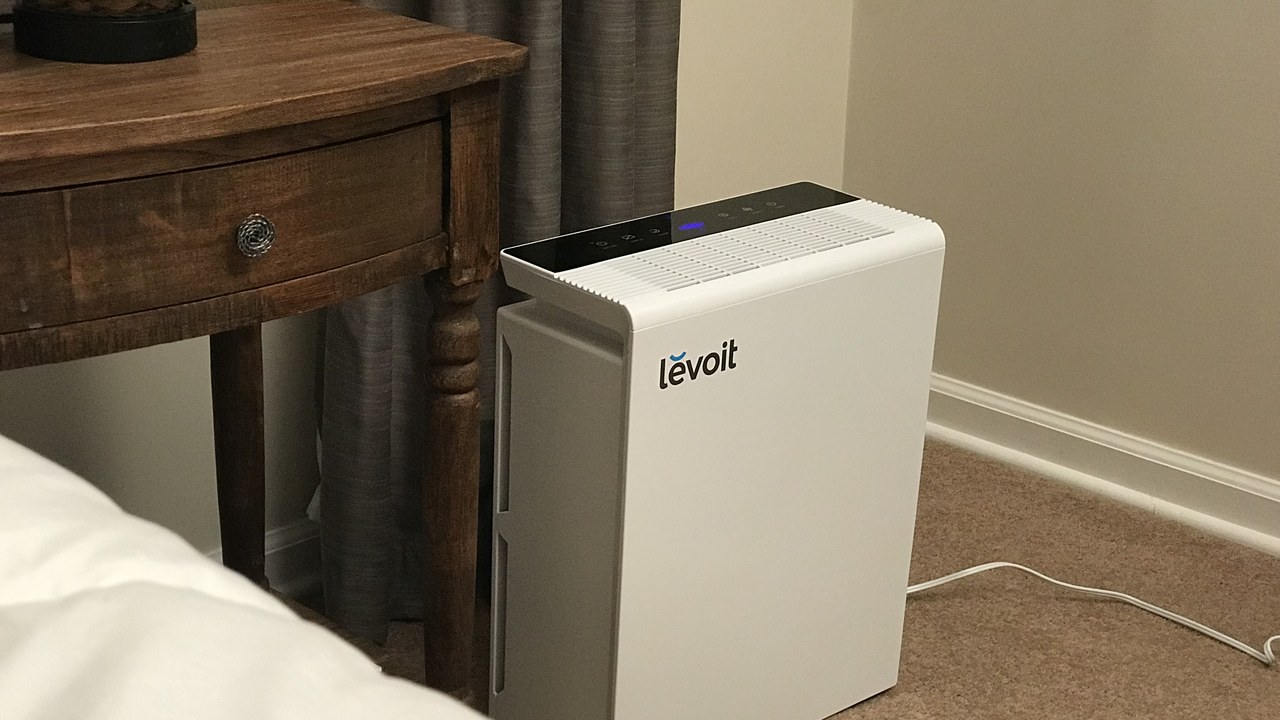
Buyers of Levoit Core and EverestAir air purifiers and replacement filters can file for a $10 digital payment from a $15 million settlement over “True HEPA” labeling. The claim window closes Nov. 3. The settlement website warns that the payment may shrink if the number of valid claims grows too large for the fund.
Claim log and filing walkthrough: The Settlement & Refund Recovery System includes a step-by-step filing walkthrough and a claim log and payment tracker for keeping notice dates and confirmations together.
Log the Nov. 3 Levoit claim and its confirmation →
Who the Levoit “True HEPA” class includes
The case is Sen v. Vesync, pending in Kings County Supreme Court in Brooklyn, New York. According to the official settlement website, the class covers people who bought a Levoit-branded Core or EverestAir air purifier, or a replacement filter, that carried “True HEPA,” “HEPA” or “H13” language between Aug. 29, 2019, and Aug. 4, 2023, in the United States.
The allegation, as summarized by Top Class Actions, is that the filters failed to meet actual HEPA-level filtration standards. Vesync, the company behind the Levoit brand, “unequivocally denies all allegations and denies any wrongdoing,” the settlement site states. The settlement resolves the lawsuit without any finding against the company.
For a household, the class definition is less about the purifier on the shelf today and more about when it was bought. A purifier purchased in 2024, or one whose filters were replaced only after August 2023, falls outside the dates on the site. A household that bought a machine in 2021 and swapped filters in 2022 and 2023 is inside the window twice over, though the site describes a single payment to each valid claimant.
What the $10 digital payment and the $15 million cap mean in dollars
The fund is capped at $15,000,000, and the notice language on the site says each valid claimant receives a “$10.00 USD digital payment.” It adds that the final amount “may be reduced depending on the total number of valid claims filed.” In other words, $10 is the ceiling per claimant, not a floor.
That is a small check by household-budget standards, closer to a coffee-shop run than a repair fund. The pages read for this article do not say whether a household that bought several purifiers or many filters receives more than one payment, so no multiple of $10 should be assumed. The settlement’s own claim page is the place where that question would be answered.
The payment arrives digitally. The site refers to email and phone contact information used for delivering it, which matters because a payment sent to an old address or a dead phone number can sit unclaimed.
Three actions share the Nov. 3 date
The claim deadline is Nov. 3, 2026, the last day to submit a valid claim form. The site says claims can be filed online. The same date governs the other two steps class members have: a request to opt out of the settlement, and an objection to its terms. Both must be mailed and postmarked no later than Nov. 3.
The choices are not interchangeable. The site presents a claim, an exclusion request and an objection as separate steps, and only the first is described as leading to the $10 payment. A household that wants the payment therefore needs the claim form, not a letter to the court.
The final approval hearing is set for Feb. 17, 2027, at 11 a.m. Eastern in Courtroom 541 of the Kings County Supreme Court, and the site notes that the date is subject to change. The hearing date matters for households that file, because the court still has to approve the deal at that point.
Who runs the claims process
The administrator is Apex Class Action LLC, with a mailing address at PO Box 54668, Irvine, California 92619, and a phone line at 1-800-837-2979, both listed on the settlement site. Questions about a specific purchase or a missing confirmation go to that administrator.
The claim form asks for proof of purchase, and three dates run on the same day
The public claim page on the settlement site is titled as one where proof of purchase is required. Its instructions describe proof showing the original date of purchase, the claimant’s full name, address and signature. The form also asks for a first name, a last name and an email address for confirmation. A household that bought a purifier years ago, perhaps on a marketplace account since closed, may need to dig through order history or email receipts to produce a document with a date on it.
The dates add a second layer. The class period ends Aug. 4, 2023, the claim deadline, opt-out deadline and objection deadline all land on Nov. 3, 2026, and the hearing follows on Feb. 17, 2027. Two of those are postmark deadlines by mail and one is an online submission, so a household that chooses to opt out has a different task than one that files a claim. The pages read do not spell out which payment options are offered or what happens to a claim with a missing document, which is a question for the administrator.
Filing a claim with the administrator costs nothing and requires no paid help, and the administrator’s settlement website and phone line are the official route.
Sorting out the dates on a purifier settlement notice
Class-action notices often stack a claim deadline, an opt-out date, an objection date and a hearing date on a single page, and the Levoit notice puts three of them on the same day. Missing the wrong one can mean losing a payment or losing the right to sue.
The Settlement & Refund Recovery System covers the four-date rule for reading a settlement notice and a claim log and payment tracker for recording each filing and confirmation.
Get the four-date rule in The Settlement & Refund Recovery System before the Nov. 3 deadline →
This article was prepared with AI assistance and checked against the settlement website and related sources before publication.


