
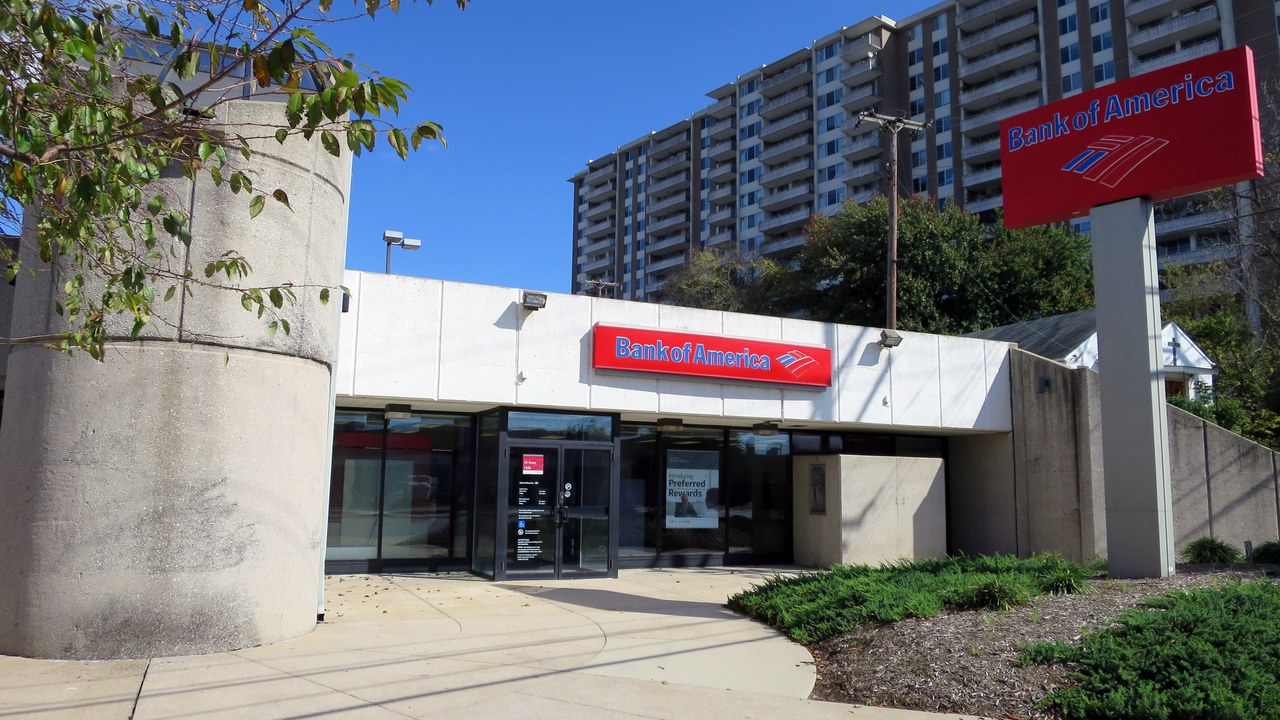
Interest on a fully drawn $50,000 home equity line at Bank of America works out to about $239 a month at the 5.740% introductory rate and about $355 a month at 8.525%, the rate the bank’s page lists after six months. That is a $116 monthly jump on the same balance. The page dates the 8.525% figure to Sept. 23, 2026, and ties the variable rate to the Wall Street Journal prime rate, which stands at 7%.
Two rates on one rate sheet
Bank of America’s home equity rates page lists a variable introductory APR of 5.740% for six months and a standard variable APR of 8.525% as of 9/23/2026. It says the introductory rate is “based upon The Wall Street Journal Prime Rate (‘Prime’) minus a discount” and “can change periodically based on Prime.” Both rates are variable, so neither is locked at the level shown.
The gap between the two is 2.785 percentage points. The page lists both rates as variable and dates only the second, so the size of the step reflects what the bank posted on Sept. 23 and can differ on another date.
Measuring both rates against prime
The Federal Reserve’s H.15 release lists the bank prime loan rate at 7.00% for Sept. 21-25. Against that figure the introductory 5.740% is 1.26 points below prime, and the standard 8.525% is 1.525 points above it. The Sept. 23 date on the page falls after prime moved to 7.00% from 6.75% on Sept. 17, according to U.S. Bank’s announcement, so the 8.525% was posted after the higher prime took effect.
The prime increase followed the Federal Reserve’s Sept. 16 decision to raise the target range by a quarter point to 3-3/4 to 4 percent. A further move in prime would change a variable line’s rate by the same amount in the same direction.
Who the listed rates are written for
The page states that its rates “assume a borrower with excellent credit.” A borrower with a weaker profile should not expect to be quoted the same numbers. The page also carries a footnote that “no customer or other discounts are available during the Variable-Rate Introductory Period,” so the 5.740% is the same for every borrower who meets the credit assumption and is not lowered by automatic payments or other discounts during those six months.
The discounts apply to the standard rate. The bank lists 0.125% for automatic payment, 0.10% per $10,000 of initial withdrawal up to a maximum of 1.50%, and up to 0.625% for members of its rewards program, depending on tier. The page does not say which of them, if any, are already reflected in the 8.525%, and it should not be assumed that all apply to a given borrower.
Fees, terms and the borrowing limit
On costs, the page states “no closing costs, no application fees, no annual fees, and no fees to use the funds.” On structure, it describes a borrowing period that is typically 10 years followed by a repayment stage that is typically 20 years, and it lets a borrower convert $5,000 or more of the balance to a fixed rate. The maximum line is generally up to 85% of the home’s value minus the amount still owed on it.
The fixed-rate option matters after a rate increase. A converted portion no longer follows prime, while the rest of the balance keeps moving with it. The page lists the option but does not print the fixed rate, so the comparison cannot be made from it.
What the $116 is and is not
The $239 and $355 figures come from simple interest-only arithmetic: $50,000 times 5.740% divided by 12 is $239.17, and $50,000 times 8.525% divided by 12 is $355.21. They assume the whole line is drawn on day one, and they do not describe any actual payment schedule. A borrower who draws $20,000 sees the same proportional jump on the smaller amount, about $46 a month. Balances repaid during the draw period cost less.
The exact monthly payment depends on the bank’s payment terms, which the rates page does not fully lay out, and on how much of the line is drawn.
A first year in two halves
Over twelve months on the same fully drawn $50,000, six months at $239.17 and six months at $355.21 add up to $3,566.28 in interest, against $4,262.52 if the 8.525% applied throughout. The introductory period is worth $696.24 on those assumptions, and the comparison holds only if prime does not move during the year.
The dated numbers
Bank of America’s page is the source for the 5.740%, the six-month period and the 8.525% dated Sept. 23, 2026. The Federal Reserve’s H.15 table is the source for the 7.00% prime figure. A rate page is a snapshot of one date, and the bank can revise it as the index or its pricing changes.
Account rules that matter when balances grow
The kit is written for households that hold bank accounts and owe money on lines of credit, cards or other debts, and want the deposit and collection rules in one short reference. It addresses the difficulty of recalling which protections exist when a creditor’s letter arrives or a balance is restricted.
The Bank Account & Debt Protection Kit is a 10-page kit with the 2-month bank protection rule and the frozen-account response, plus a protected-funds and dispute log.
Read the 2-month bank protection rule in The Bank Account & Debt Protection Kit →
An AI assistant drafted this piece, and it was checked against Bank of America’s rate page and the Federal Reserve documents linked above.


