
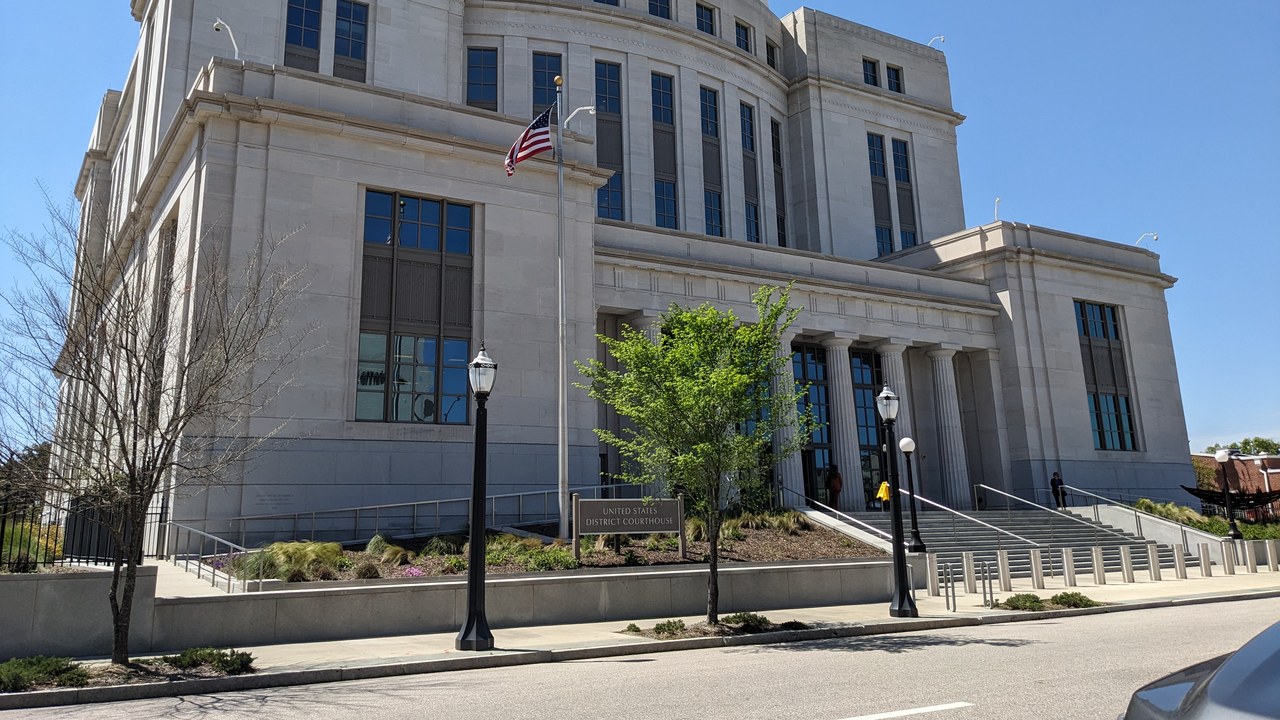
A caller who claims a missed jury summons or a missed court date is impersonating a court officer or a sheriff’s deputy, and the FBI’s Internet Crime Complaint Center says that exact script drew 6,833 complaints and nearly $36 million in losses. The bureau logged the pattern inside a Sept. 17 alert on government-impersonation fraud covering January 2025 through July 2026. The callers cite a case number, demand payment before a court date arrives, and count on the person answering not phoning the courthouse first.
The missed court date itself: A caller naming a real-sounding case number leaves no way to check the claim mid-call, and The Senior Fraud Defense & First-Hour Recovery Kit’s family code word lets a household confirm any unexpected caller before money moves. Set the family code word before the next call →
How the Jury-Duty Script Works
The FBI’s Sept. 17 public service announcement groups four separate impersonation scripts under one government-impersonation sweep, and the jury-duty and missed-court-date pattern is one of them. The same alert notes the schemes it tracks can arrive by phone call, text message or email, and a caller sometimes escalates from a scripted voicemail to a live conversation only after a callback confirms someone is listening. In this version, a caller identifies a target by name, states that the person missed a jury date or a court appearance, and warns of an outstanding warrant. The FBI’s notice says scammers across the sweep spoof “authentic phone numbers, email addresses, employee names, and credentials” belonging to real agencies, so caller ID can display a courthouse or sheriff’s office number that has nothing to do with the person actually calling. The same notice describes scammers building “mock sets of official government facilities” and, in some categories, wearing law-enforcement-style uniforms during video calls, tactics the FBI says are increasingly supported by artificial intelligence made to sound or look like a real official.
Nearly $36 Million Lost to One Script
Within that broader sweep, the FBI counted 6,833 complaints tied specifically to jury-duty and missed-court-date claims, with losses reaching nearly $36 million. The bureau’s count covers complaints filed between January 2025 and July 2026, so the figure reflects a year and a half of reports rather than a single month or a single spike. The same alert tracks other scripts as their own categories: 3,322 complaints and more than $37 million for scams that targeted medical license holders, and 496 complaints with more than $348,000 for fake license-renewal notices, each counted separately from the jury-duty total. Averaged over the 19 months the notice covers, the jury-duty figure works out to roughly 360 complaints a month, a pace the FBI’s alert frames as steady rather than a single spike tied to one event.
The Payment Methods That Give a Scam Away
The FBI’s notice lists the payment methods scammers behind these scripts request: prepaid cards, cash handed to a courier sent to a target’s home, bank wires, cryptocurrency transfers, and cash fed directly into a cryptocurrency kiosk. None of those match how an actual court, sheriff’s office or clerk of court collects a fine or a bond; real court fees are paid at a courthouse window, through a clerk’s office, or via a payment portal listed on a court’s own website, never by wiring cash to a stranger on the phone or feeding it into a kiosk. The FBI’s alert frames the payment-method list as one of the clearest tells across every scam it covers, since a caller pushing for a prepaid card or a crypto kiosk deposit almost always signals a script rather than a real legal demand. A cryptocurrency kiosk in particular appeals to a scammer staying on the phone with a target, since the transaction finishes in minutes at a machine inside a gas station or convenience store, without a bank employee ever seeing the deposit or asking why it is being made.
Where Seniors Fit Inside the Larger Pattern
The jury-duty script is one piece of a notice the FBI frames as covering law-enforcement and government impersonation broadly: across every category in the Sept. 17 alert, the bureau counted nearly 61,000 complaints and losses topping $1.6 billion for the same 19-month window. The FBI’s 2025 annual fraud report found that adults 60 and older alone lost more than $413 million to government-impersonation scams that year, the bureau’s clearest signal that older callers bear a disproportionate share of this particular category. What ties the categories together, per the FBI, is the method rather than the script: a caller who sounds authoritative, a spoofed number that looks legitimate, and a payment demand timed to prevent a target from checking the claim with a real court or agency first. None of the figures in the notice are broken out by state, so it isn’t possible to tell from the alert alone whether jury-duty impersonation is concentrated in any particular part of the country or spread evenly across it.
Reporting a Jury-Duty Impersonation Call
IC3.gov’s elder-fraud page is the same reporting channel referenced throughout the Sept. 17 notice for filing a complaint about any of these scripts, jury duty included, and it lists calling 911 or a local police department first if money has already been sent. The Justice Department’s National Elder Fraud Hotline, reachable weekdays at 1-833-372-8311, is a separate line staffed to help someone who has already lost money to a scam like this one walk through next steps, including how a report to IC3.gov supports any later investigation into the same phone numbers or accounts. Both the elder-fraud page and the hotline emphasize acting quickly rather than waiting to see whether a caller follows up again, since a bank or a cryptocurrency exchange has a narrower window to reverse a transfer the longer a target waits to report it.
What a Fake Court Call Leaves Unresolved
The FBI’s complaint count covers people who already sent money to a scripted arrest threat, not the decision available in the minutes before a call like that ends. A real jury summons or court notice arrives by mail, not by phone with a same-day payment demand, and that gap between the two is exactly what a scripted caller is counting on.
The Senior Fraud Defense & First-Hour Recovery Kit lays out the family code word for confirming any unexpected caller and the first-hour recovery plan for a household that has already sent money.
See The Senior Fraud Defense & First-Hour Recovery Kit.
This article was produced with AI assistance and reviewed by a human editor before publication.


