
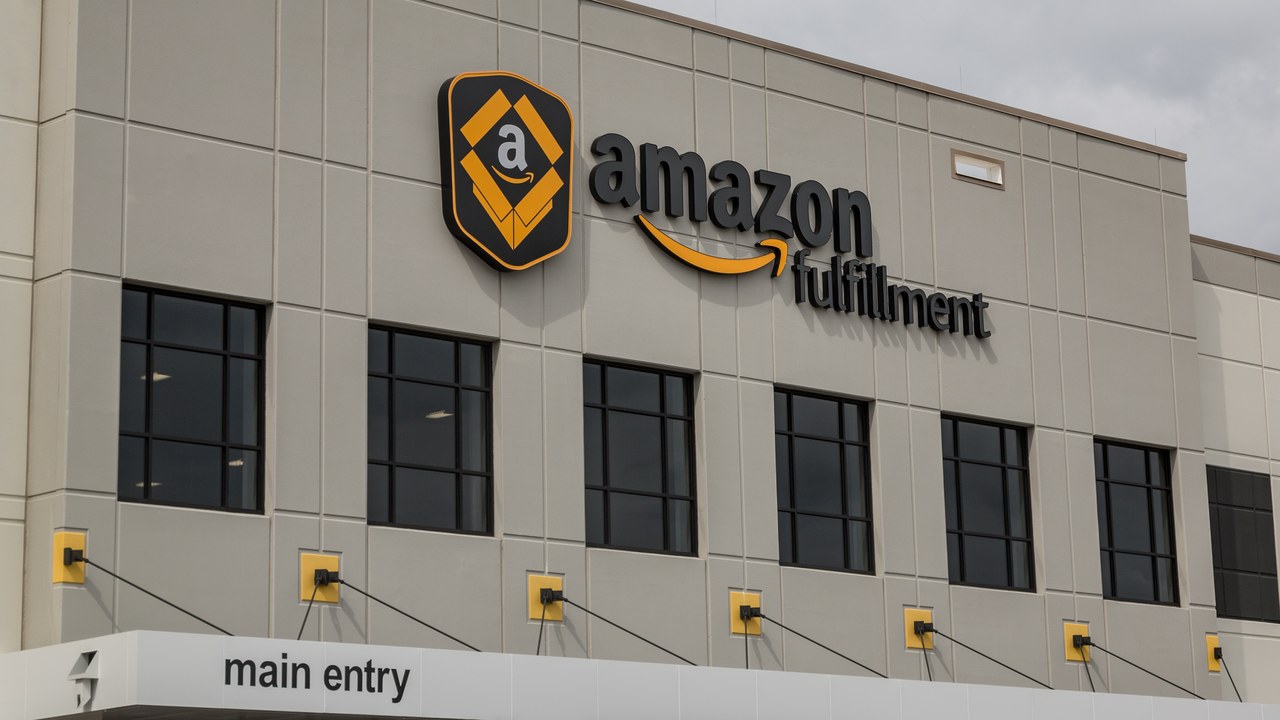
Amazon is giving its core-operations employees a 20% discount on purchases made inside Whole Foods Market stores, on top of a 10% discount on Whole Foods grocery orders placed online, starting Oct. 1. The same Sept. 16 announcement adds a banking benefit with $0 overdraft fees and $0 monthly maintenance fees, plus up to $300 a year in ATM fee reimbursements. The changes apply to the hourly warehouse, delivery and sortation employees Amazon calls its core-operations workforce. None of it changes pay directly, though Amazon rolled it out alongside a separate wage increase the same day.
Amazon’s zero-fee bank account: It waives overdraft and maintenance fees on the new account, but says nothing about a frozen account or a debt collector reaching an existing one, which The Bank Account & Debt Protection Kit walks through. Compare Amazon’s zero-fee account with the frozen-account response →
20% Off at Whole Foods, Starting October 1
Beginning Oct. 1, core-operations employees get 20% off purchases made in person at Whole Foods Market stores, the grocery chain Amazon has owned since 2017, according to Amazon’s own newsroom post. The same benefit includes a 10% discount on Whole Foods grocery orders placed online, a smaller cut than the in-store rate but one that applies without a worker needing to visit a physical location. Amazon has not said whether the discount extends to Amazon Fresh stores or grocery delivery through Amazon’s other services, only to purchases tied to Whole Foods specifically.
A Zero-Fee Bank Account With ATM Refunds
The banking benefit that came with the same announcement waives two of the most common charges attached to checking accounts: overdraft fees, charged when an account balance goes negative, and monthly maintenance fees, charged simply for keeping the account open. On top of that, the account reimburses up to $300 a year in fees charged by other banks’ ATMs, the kind of charge the Consumer Financial Protection Bureau confirms a bank or credit union is generally allowed to pass on to a customer who uses a machine outside its own network, on top of whatever fee the ATM’s own owner charges. For a worker who relies on out-of-network ATMs regularly, that reimbursement can offset a meaningful share of what those withdrawals would otherwise cost over a year.
Who Counts as a Core-Operations Employee
Amazon’s announcement applies to core-operations employees, the company’s term for the hourly workforce staffing its fulfillment centers, sortation centers and delivery stations, rather than corporate or office staff. These are the workers who pick, pack, sort and load the packages that move through Amazon’s delivery network, and they represent the bulk of Amazon’s hourly workforce in the United States. The discount and banking benefits are tied to that job classification, not to tenure or a minimum number of hours worked, based on how Amazon described the eligible group in its announcement. Amazon has not published a state-by-state or facility-by-facility breakdown of how many workers fall into the core-operations category, so the exact number of employees who will see the discount and banking benefit is not public.
How the Banking Benefit Actually Works
Amazon has described the account as a checking account offered in partnership with a banking provider rather than a product Amazon itself operates as a bank, which is standard for large retailers that offer employee banking perks. Money deposited into the account, such as a paycheck sent by direct deposit, would carry the $0 overdraft and $0 maintenance fee terms Amazon announced, and the ATM reimbursement applies up to the $300 annual cap regardless of which network the ATM belongs to. Workers who already bank elsewhere are not required to switch, and nothing in Amazon’s announcement changes the terms of an account a worker already holds somewhere else.
Part of a Larger Pay and Benefits Package
Amazon paired the Whole Foods discount and banking benefit with a separate increase to minimum starting pay for full-time core-operations employees, part of the same Sept. 16 announcement. The company framed the combination as an effort to make everyday costs, not just wages, more manageable for its front-line workforce. Because both changes were announced together, a worker evaluating the news should look at the pay change and the benefits change as two separate line items rather than a single number, since a grocery discount and an ATM refund do not show up on a pay stub the way a wage increase does.
What the Discount and Refund Are Actually Worth
A household that spends $150 a week at Whole Foods and shops in person would save roughly $30 a week, or about $1,560 a year, from the 20% in-store discount alone, before counting anything bought online at the smaller 10% rate. Add the full $300 annual ATM reimbursement and a worker who uses both benefits fully could see over $1,800 a year in combined savings, though actual savings depend entirely on how much a given employee already shops at Whole Foods and how often that employee uses out-of-network ATMs. A worker who rarely shops at Whole Foods or already banks somewhere with no ATM fees would see far less benefit from either program, since neither one pays out in cash beyond what a worker actually spends or withdraws.
What a New Bank Benefit Doesn’t Protect
Amazon’s new banking benefit removes fees on an account built for its own workforce; it says nothing about the accounts millions of other workers already use at banks and credit unions with no such waiver. Overdraft charges and out-of-network ATM fees remain standard at many banks, and a debt collector’s demand or a sudden account freeze does not pause just because an employer announced a new benefit elsewhere.
The Bank Account & Debt Protection Kit covers the 2-month bank protection rule for federal benefit deposits, the steps for making a collector validate a debt, and what to do the day an account gets frozen.
Read the 2-month bank protection rule in The Bank Account & Debt Protection Kit.
This article was produced with AI assistance and reviewed by a human editor, who checked the discount and fee figures against Amazon’s own announcement.


