
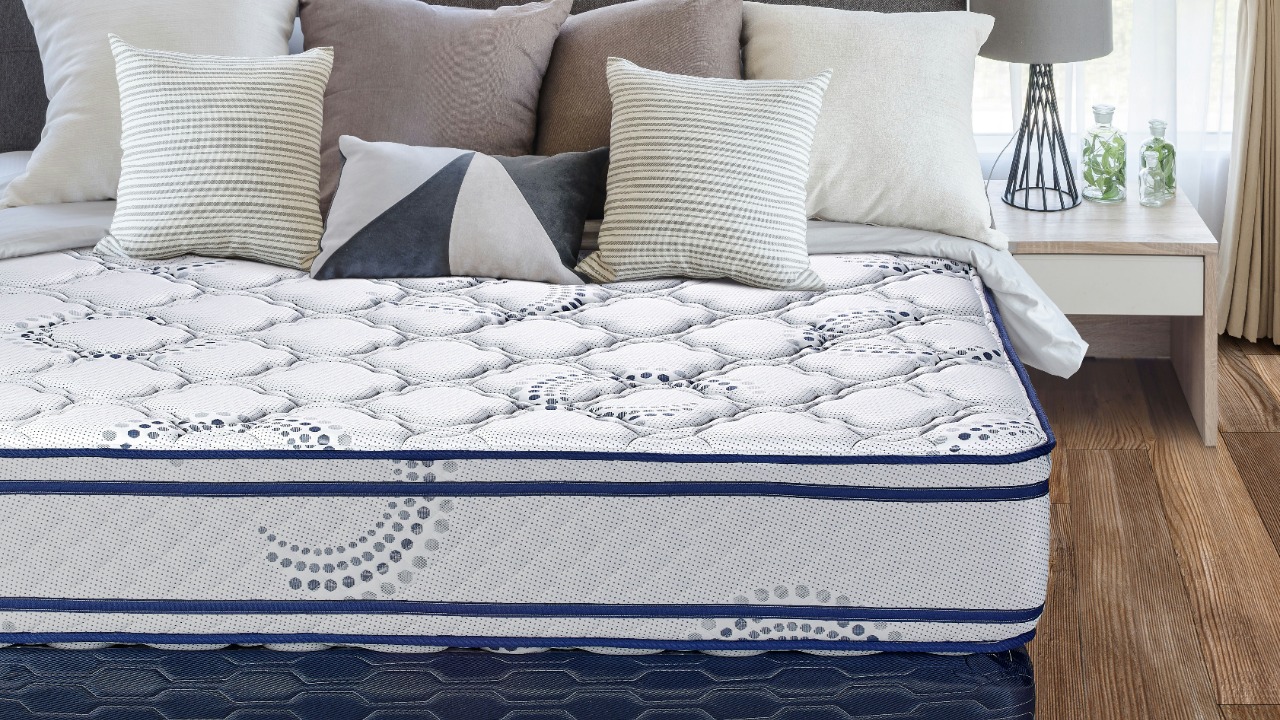
The Consumer Product Safety Commission is recalling about 48,405 Kesyup mattresses sold exclusively on Amazon after testing found they fail the federal open-flame flammability standard every mattress sold in the country has to pass. Buyers who purchased one between December 2024 and April 2026 qualify for a full refund rather than a repair, once they complete a required destruction step. The commission has not received any reports of fires or injuries tied to the mattresses so far.
The Open-Flame Standard the Mattresses Failed
Federal rule 16 CFR Part 1633, the commission’s Standard for the Flammability of Mattress Sets, requires every mattress sold in the United States to withstand a controlled open-flame test without releasing more than 200 kilowatts of peak heat or 15 megajoules of total heat during the first ten minutes. The standard also requires a permanent label sewn into the mattress identifying the tested prototype, the same kind of label the commission’s recall notice, filed as recall number 26-788 on September 24, 2026, says the Kesyup mattresses carry despite failing the flame test it is meant to certify. Because the defect sits inside the standard’s fire-safety criteria rather than a stitching or comfort issue, the notice treats it as a hazard serious enough for a full recall rather than a warning label.
A refund process with no posted cutoff: The Kesyup notice sets no deadline for the destroy-and-refund process it describes, so a household already tracking a different recall or a settlement notice can lose track of which one still needs a photo mailed in and which one has already closed. The four-date rule separates a notice’s real deadline from the dates that only look like one. See how that rule works in The Settlement & Refund Recovery System.
Size, Price and a Single Sales Channel
The recalled mattresses measure 12 inches thick and were sold in twin, full, queen and king sizes with a white top and blue sides and trim, shipped compressed in a cardboard box the way many online-only mattress brands package their products. Amazon.com is the only retailer named in the recall, which covers mattresses bought there between December 2024 and April 2026 for $100 to $200. Because no other retailer sold the mattresses, an Amazon order history is the clearest record most buyers have of when they purchased one, since Kesyup does not appear as a brand in any store the notice names. The 17-month sales window also means the recall reaches buyers who purchased a mattress well over a year ago, not only recent shoppers, since a flammability defect does not surface the way a broken zipper or a torn seam would on its own.
The Refund Process, Step by Step
The refund is not automatic. Buyers must write the word “Recalled” along with their name and the date directly on the mattress in permanent marker, photograph the marked mattress, and email that photo to S-Q Business (HK) Limited, the manufacturer doing business as ZCK01, at [email protected], then dispose of the mattress according to local or state regulations. Only after the company receives that photo does the refund move forward. The destroy-and-photograph sequence mirrors what the commission has required on other 2026 flammability and battery recalls, where the goal is keeping a hazardous unit out of circulation rather than letting it be resold once a refund has already been paid.
A Single Brand From One Manufacturer
ZCK01 is the trade name S-Q Business (HK) Limited uses to sell the Kesyup mattress line, and the recall notice does not list any other product tied to the company. Selling only through Amazon’s marketplace rather than a retailer with its own quality checks means the compliance testing the flammability standard requires rested entirely with the manufacturer before the mattresses reached a customer’s door. The notice does not name a separate U.S.-based importer, a pattern common to marketplace-only recalls where a single overseas company handles both manufacturing and the Amazon listing itself. That structure leaves the manufacturer itself, rather than a domestic distributor with its own inspection process, as the sole party responsible for correcting the mattresses and paying every refund the recall generates.
One of Several Actions the Commission Announced Together
The Kesyup mattress recall was one of a batch of September 24, 2026 actions the commission posted to its recalls list the same day, alongside separate recalls covering furniture, power banks and children’s toys. Grouping several unrelated product recalls into one announcement day is routine for the commission rather than a sign the cases are connected, and each notice in that batch carries its own recall number, hazard finding and remedy specific to the product involved. A shopper who bought more than one recalled item in that window, a mattress and an unrelated electronic accessory, for instance, would need to work through each notice separately, since the commission does not consolidate unrelated product recalls into a single refund process even when they post on the same day.
Confirming Whether a Mattress Is Covered
A household with a Kesyup mattress bought in the recall window can check the sewn-in label the flammability standard requires, which on the recalled units reads “Prototype ID: <PU-US>,” alongside the white top and blue trim the notice describes. That label ordinarily certifies a mattress passed the flame test; on this batch, the same tag is what identifies a mattress that failed it instead.
The commission’s September 24, 2026 notice, filed as recall number 26-788, remains the only source for the refund process and the only confirmation of which mattresses are included.
A Mattress Refund That Still Needs a Paper Trail
Getting the Kesyup refund means marking the mattress, photographing it, and emailing that photo to a company reachable through a single inbox, and the recall notice says nothing about how long that inbox will keep answering. A household relying on that one exchange has no independent record of the refund beyond whatever confirmation the company sends back, if it sends one at all.
The Settlement & Refund Recovery System pairs a claim log with a payment tracker for keeping a single-company refund like this one on the same page as every other notice a household is working, alongside the source vault of 12 official places money sits for checking a company that stops responding.
Open the payment tracker in The Settlement & Refund Recovery System.
This article was written with AI assistance and checked by a human editor before it published.


