
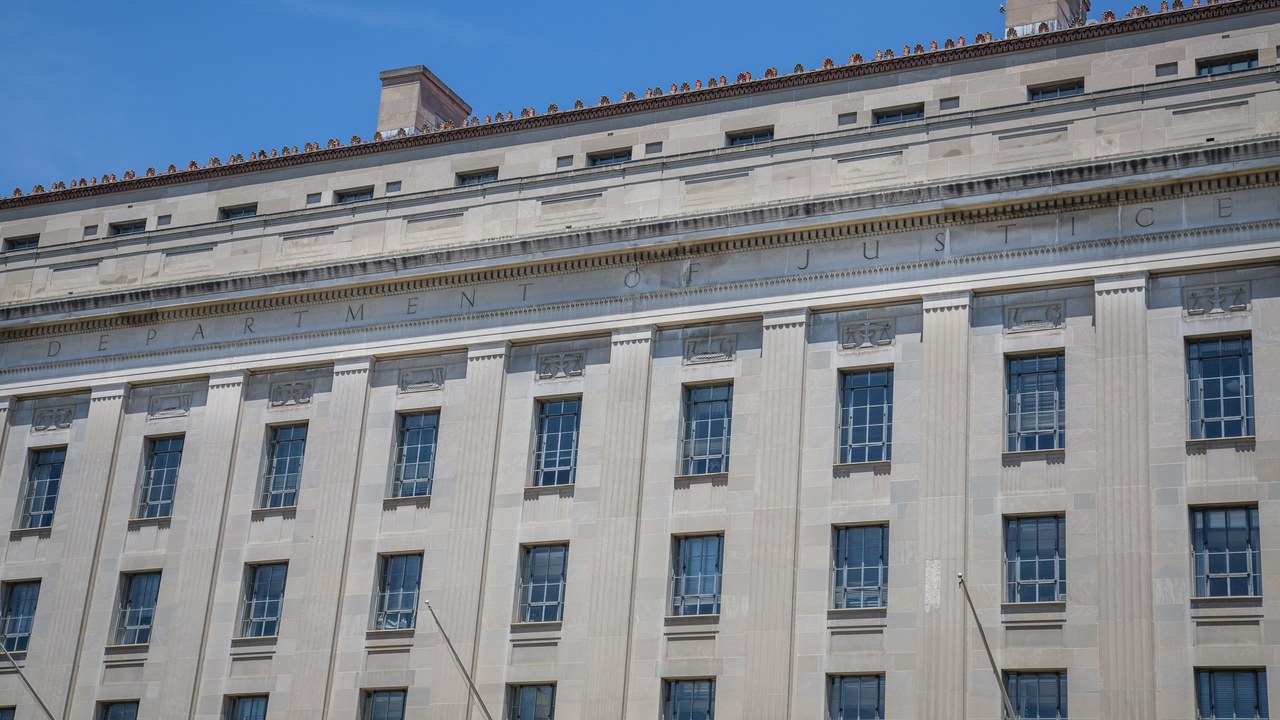
Federal prosecutors obtained felony charges against nearly 80 defendants during a summer crackdown on fraud in the Small Business Administration’s COVID-era loan programs, the Justice Department said September 14. The effort, called Operation No Doze, ran from June 12 through September 1 and involved more than 40 U.S. Attorney’s Offices. DOJ said the newly charged defendants were responsible for about $100 million in intended loss to the United States. Charges are allegations, and every defendant is presumed innocent unless proven guilty.
What Operation No Doze covered
The Justice Department announcement credits the department’s new National Fraud Enforcement Division, the SBA and the SBA Office of Inspector General. Prosecutors in the Fraud Division and 44 U.S. Attorney’s Offices worked with about 20 federal and state investigative agencies, including the FBI, IRS Criminal Investigation, the Secret Service and the Social Security Administration.
The surge targeted people accused of exploiting the Paycheck Protection Program and COVID Economic Injury Disaster Loans at the height of the pandemic. “The defendants charged during our summer surge allegedly fabricated businesses, submitted false payroll and revenue claims, stole identities, and concealed foreign ties on their applications,” Attorney General Todd Blanche said.
The figure DOJ uses throughout is “intended loss,” meaning the amount prosecutors say the defendants sought. It is not money already recovered, a restitution order or the sum each defendant received.
When a relative’s or client’s identity turns up on a loan. Several Operation No Doze cases involve applications filed in other people’s names, including a caregiver accused of using the identity of the person she cared for. The fraud evidence and report log and first-hour recovery plan in The Senior Fraud Defense & First-Hour Recovery Kit lay out what to document and whom to call first.
Charges, guilty pleas and sentences
The nearly 80 newly charged defendants were only part of the total. DOJ said about 43 other defendants pleaded guilty to SBA-related COVID fraud during the surge, involving about $44 million in intended loss, and about 40 were sentenced in cases involving nearly $100 million in intended loss.
Taken together, the department said, enforcement actions spanned more than 160 criminal defendants and about $245 million in intended loss to taxpayers. Those groups are at different legal stages. A charged defendant has not been convicted, and a defendant who pleaded guilty may not yet have been sentenced.
SBA Administrator Kelly Loeffler placed the cases within a larger crackdown, saying the agency has suspended 870,000 borrowers tied to $39 billion in suspected fraudulent PPP and COVID EIDL activity. She said the SBA is sending demand letters to suspected fraudsters, who must repay their debts or face Treasury collections and possible law enforcement action. Assistant Attorney General Colin M. McDonald of the National Fraud Enforcement Division said the mission is to “protect taxpayer funds, safeguard the integrity of federal relief programs, and deliver justice to those who exploited them.” SBA Inspector General William Kirk said the operation shows that “the passage of time does not diminish our commitment to accountability.”
Cases DOJ highlighted
The largest case listed is an indictment in the Western District of Missouri against Jamie Gray, charged with wire fraud and money laundering in connection with about $55.9 million in intended loss. Prosecutors allege Gray claimed to own dozens of businesses that were not operating before the February 15, 2020, eligibility date. The only real company allegedly named, a Texas business called Fur Lives Matter, had no knowledge of Gray, according to the indictment.
In the Northern District of Iowa, a grand jury in Cedar Rapids on July 9 charged Adrian Rafael Pupo Perez and Helen Yaima Leyva Santiesteban with 47 counts of wire fraud, money laundering and conspiracy. Prosecutors allege they and more than 100 others filed about 470 fraudulent PPP applications seeking more than $4.5 million, with about $2.4 million paid out. Both are fugitives.
Two cases show how stolen identities can involve family members or people in someone’s care. In Texas, Eve Zou, then a state child-protective-services employee, is accused of using her daughter’s identity without permission and falsely claiming 50 employees to obtain $319,800 in SBA loans. Zou has agreed to plead guilty and to forfeit assets bought with the proceeds; because those assets have grown in value, DOJ said the government expects to recoup more than she took. In Oregon, former Clackamas County Commissioner Melissa Fireside is accused of seeking about $1.6 million in PPP and EIDL funds, in part by filing an EIDL application in the name of a person identified as G.F., for whom she was allegedly a caregiver and financial manager. Fireside is believed to have left the country and is the subject of an INTERPOL Red Notice.
New state partnerships
DOJ paired the results with a Heartland Fraud Partnership Summit in Kansas City, Missouri, on September 14, where more than 25 federal and state officials met. The Fraud Division signed new cooperation agreements with the Missouri Secretary of State, the Nebraska Treasurer and the Kansas Treasurer. Missouri Gov. Mike Kehoe said fraud “is not a victimless crime,” adding that every stolen dollar comes from taxpayers or from people who depend on public programs.
What the crackdown means for households
The operation does not create a claims process, refund or payment for the public. It is a criminal enforcement effort, and any money recovered goes back to the government. Because real case names draw attention, a phone call, text or email that mentions Operation No Doze and asks for bank details, a fee or a Social Security number should be treated as suspect. DOJ’s announcement gives no instruction for members of the public to provide that kind of information to anyone.
The Fireside and Zou allegations point to a quieter risk: loans taken out in someone else’s name. Older adults whose finances are handled by a relative or paid caregiver may not learn about a fraudulent application until a collection notice, tax form or credit report shows it. Anyone who finds an SBA loan they never applied for can report it to the SBA Office of Inspector General hotline and place a freeze with the three credit bureaus.
Catching a loan filed under the wrong name
Identity-based loan fraud often surfaces late, through a collection letter or credit report, and the first days after discovery decide how cleanly it gets reported and contained.
The Senior Fraud Defense & First-Hour Recovery Kit includes the first-hour recovery plan, the free credit-freeze steps, a fraud evidence and report log, and the family code word for confirming who is really calling.
Start the first-hour plan with The Senior Fraud Defense & First-Hour Recovery Kit.
This article was prepared with AI assistance and reviewed against the linked official sources.


