
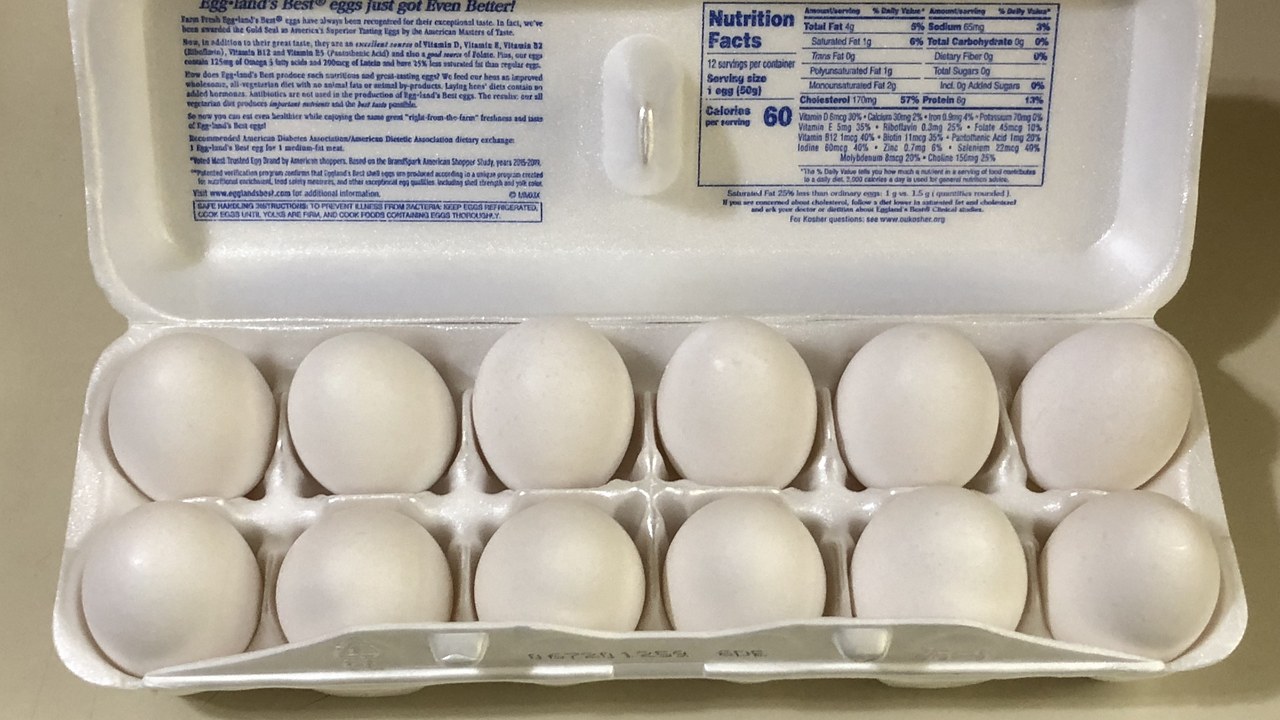
The grocery bill looked flat in August, at least on the receipt’s bottom line. But two of the most ordinary items in the cart moved in opposite directions and by a lot: eggs got noticeably more expensive while lettuce got noticeably cheaper, extending a slide that started the month before. The Bureau of Labor Statistics tracked both moves in its Consumer Price Index report for August, the monthly release the government uses to measure how prices for food, fuel, housing and everything else are changing. For a household doing the same shopping list every week, that split matters more than any single average, because it decides whether this month’s cart costs more or less than last month’s.
Eggs Climbed 2.9 Percent in August, BLS Reports
The Bureau of Labor Statistics’ Consumer Price Index Summary for August 2026, released September 11, 2026, put the seasonally adjusted, one-month increase in the eggs index at 2.9 percent. Eggs sit inside the broader meats, poultry, fish and eggs group, which the same release shows rising a smaller 0.1 percent for the month, meaning eggs moved well ahead of pork, beef, chicken and fish prices in the same basket. Measured over the full year, the meats, poultry, fish and eggs group is up 1.1 percent, a far gentler climb than the single-month egg number suggests on its own — a reminder that one month’s move and one year’s move are two different measurements answering two different questions.
Relief that waits to be asked for: Property-tax freezes, exemptions and utility help are rarely applied automatically, and each has its own filing window. See the five kinds of relief in The Senior Property Tax & Home-Cost Relief Kit.
Lettuce Fell 6.2 Percent, on Top of a 16.4 Percent July Drop
Lettuce moved the opposite way, and it has been moving that way for a while. BLS recorded a 6.2 percent seasonally adjusted decline in the lettuce index for August, coming right after a 16.4 percent drop in July. Stacked together, those two months erased a substantial share of what a head of lettuce cost heading into the summer. Lettuce is counted inside the fruits and vegetables group, which fell 0.4 percent overall in August after declines in each of the two prior months, even though the same group is still running 3.2 percent above where it stood a year earlier. Vegetable prices swing with growing seasons, weather and regional supply more than most grocery categories, which is part of why a single vegetable can post a double-digit monthly move while the surrounding grocery aisle barely shifts.
Food at Home Overall Was Unchanged for the Month
Put the two items back inside the full grocery basket and the picture flattens out. The food-at-home index — BLS’s measure of prices for food bought at grocery and convenience stores rather than restaurants — was unchanged in August on a seasonally adjusted basis, even with eggs rising sharply and lettuce falling sharply inside it. Over the past 12 months, food at home is up 2.2 percent, a pace that has held fairly steady through the summer. The flat monthly reading is arithmetic, not a sign that grocery costs stopped moving: gains in eggs, other food at home (up 0.1 percent) and dairy were offset by the drop in fruits and vegetables, leaving the total close to where it started.
Dairy Barely Moved, and Is Cheaper Than a Year Ago
Dairy and related products — milk, cheese, butter and similar items — rose 0.3 percent in August, a small move in either direction. What stands out more is the 12-month comparison: the dairy index is down 0.3 percent from a year earlier, one of the few major grocery categories in the report actually running below last August’s prices. That puts dairy in the opposite position from eggs, which sit in a different BLS category despite both coming from the same part of the grocery store, and it is a specific example of why treating “grocery prices” as one number can hide categories moving in entirely different directions at the same time.
These Are Seasonally Adjusted, Once-a-Month Figures
All of the monthly percentages above — the 2.9 percent for eggs, the 6.2 percent for lettuce, the unchanged food-at-home reading — are seasonally adjusted changes for the Consumer Price Index for All Urban Consumers, the U.S. city average series BLS uses to compare one month against the next after stripping out predictable seasonal patterns like holiday demand or harvest timing. The 12-month figures cited for food at home, dairy and fruits and vegetables come from the same release but are calculated on an unadjusted, not-seasonally-adjusted basis, which is BLS’s standard practice for year-over-year comparisons. The data covers prices collected through the end of August; BLS’s next Consumer Price Index release, covering September, is scheduled for October 14, 2026, and will show whether eggs kept climbing or lettuce kept falling.
A Grocery Bill Resets Every Month; a Property Tax Bill Does Not Reset Itself
Egg and lettuce prices will move again next month, in whichever direction the harvest and the supply chain take them, and the household budget absorbs each swing as it comes. Property taxes and home-energy costs work differently: they are large, recurring and the relief for them does not show up automatically on a bill or in a government report the way a grocery price does.
The Senior Property Tax & Home-Cost Relief Kit is an 11-page kit covering the 5 kinds of property-tax relief and the circuit-breaker credit that includes renters.
Compare heating, cooling and home-repair help in The Senior Property Tax & Home-Cost Relief Kit.
This article was produced with AI assistance and reviewed by a human editor. Figures are linked to their primary sources.


