
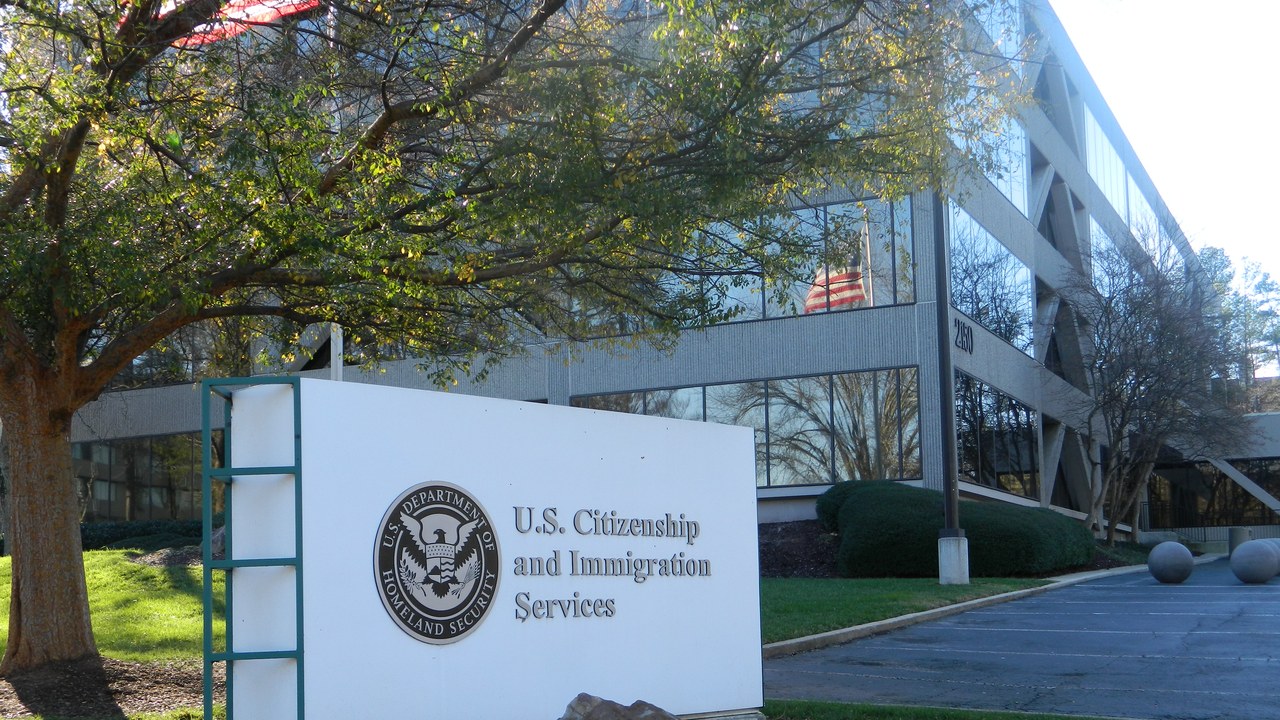
A presidential order signed September 18 adds a new screening step to the H-1B visa process, directing three federal agencies to weigh a company’s recent layoffs before approving its next visa petition. The move rides alongside a companion proclamation extending a $100,000 fee on most new H-1B hires through September 2027. For a household whose paycheck depends on a hiring decision at an H-1B-sponsoring employer, the practical question is what actually changes for the next petition filed on that employer’s behalf.
Three Agencies Add a Layoffs Test to H-1B Petitions
The change centers on how the government reviews a petition before it is approved, not on how many H-1B visas are issued overall. The order does not touch the annual cap or bar any employer from the program; instead, it adds a documented layoffs check to a review process agencies already run.
The executive order, titled Enhancing Program Integrity and Interagency Coordination in the Administration of the H-1B Nonimmigrant Visa Program, directs the Secretary of State, the Secretary of Labor and the Secretary of Homeland Security to consult with the Secretary of Commerce, the Secretary of Education and the Administrator of the Small Business Administration on wage, employment and industry data. Under Section 3 of the order, those three lead agencies must now factor in whether a sponsoring employer directly or indirectly laid off, or plans to lay off, similarly situated American workers before that employer’s next H-1B petition moves forward. The order also gives the Labor Department’s Wage and Hour Division 30 days to begin reviewing previously filed labor condition applications and decide whether enforcement action against specific sponsoring employers is warranted.
Free check tracker: A headline about a new government payment is not the same as a payment that has been approved. Check the status with the free tracker.
A Documented Wage Gap Drives the Policy
The order’s own reasoning leans on a specific pay gap: H-1B visa holders earn less than comparable U.S.-born workers in similar roles, a gap the administration puts at roughly $9,000 a year and climbing to as much as $20,000 in H-1B-reliant industries, according to the White House fact sheet released alongside the order. The same fact sheet points to Fiscal Year 2026 filings showing the six largest users of the outsourcing-style H-1B hiring model accounted for more than 25,000 cap registrations, even as technology-sector employers laid off an estimated 800,000 to 1.3 million American workers between 2022 and 2026.
Unemployment among people entering technical fields sits at the center of the administration’s case. Before the original 2025 fee took effect, unemployment among recent computer science graduates had reached 6.1 percent, and 7.5 percent for computer engineering graduates, more than double the rate for biology or art history majors, the fact sheet states.
The $100,000 Hiring Fee Now Runs Through September 2027
Alongside the order, a proclamation extending the H-1B entry restriction first imposed in September 2025 pushes that restriction out another 12 months, through 12:01 a.m. eastern time on September 21, 2027. The restriction applies to new H-1B petitions for workers currently outside the United States unless the petition is accompanied by a $100,000 payment, subject to a national-interest exception the Homeland Security secretary can grant case by case. Since the fee took effect in September 2025, employers have made that $100,000 payment on more than 700 petitions, according to the proclamation’s own text.
The proclamation credits the fee, combined with a separate lottery-selection rule, with a measurable shift in who receives an H-1B visa: combined registrations from the largest IT staffing and outsourcing firms fell from 24,946 to 2,055, a 92 percent drop, while the share of selected registrants holding at least a U.S. master’s degree rose from 45.1 percent to 66.1 percent between the Fiscal Year 2026 and Fiscal Year 2027 cap seasons.
A Weighted Lottery Already Rewards Higher-Paying Job Offers
Part of that shift traces to a separate rule change. On December 29, 2025, the Department of Homeland Security finalized the weighted selection process for cap-subject H-1B petitions, replacing the previous random lottery with a system that improves the odds of selection for registrations offering wages closer to, or above, the government’s own prevailing-wage survey for that occupation and location. The rule took effect in time for the Fiscal Year 2027 cap season, the first year the H-1B lottery was decided by wage level rather than chance alone.
The proclamation reports that job offers in the two highest wage tiers accounted for roughly 46.3 percent of selected registrations for Fiscal Year 2027, compared with 17.8 percent for the lowest wage tier, a reversal from the largely randomized selection pattern that preceded the rule.
Recent Graduates Are Still Waiting to See the Effect
The administration’s own extension order concedes the labor market hasn’t fully caught up. Unemployment among recent college graduates measured 5.7 percent as of June 2026, only a marginal improvement from 5.8 percent in September 2025 when the original fee took effect, and underemployment for that same group rose from 41.8 percent to 42 percent over the same period, according to the proclamation. A separate Labor Department rule meant to align H-1B prevailing wages more closely with what comparable American workers earn was still a proposed rule, not a final one, as of late March 2026.
For a household whose income depends on a hiring decision at a mid-size technology or IT-services employer, the September 18 order does not guarantee that any specific job goes to an American applicant instead of an H-1B hire. What it adds is a documented layoffs-history check to the government’s review of that employer’s next visa petition, a $100,000 fee now locked in through September 2027, and an unfinished wage-alignment rule that the administration’s own extension order records as still pending rather than resolved.
The State Benefit-Office Numbers Nobody Keeps On Hand
A layoffs review inside an H-1B petition does not tell a worker who actually loses a job which office to call about food, energy or health-care assistance while a new job search plays out. That gap between a federal hiring-policy change and the local paperwork it can trigger is where most households lose the most time. The right phone number rarely lives in one place, and it changes state by state.
The Benefits Checklist opens with a 50-state phone directory for benefit offices and a printable tracker that comes with the download for logging every call and deadline.
Open the 50-state phone directory in The Benefits Checklist.
AI-assisted research and drafting; reviewed by an editor.


