
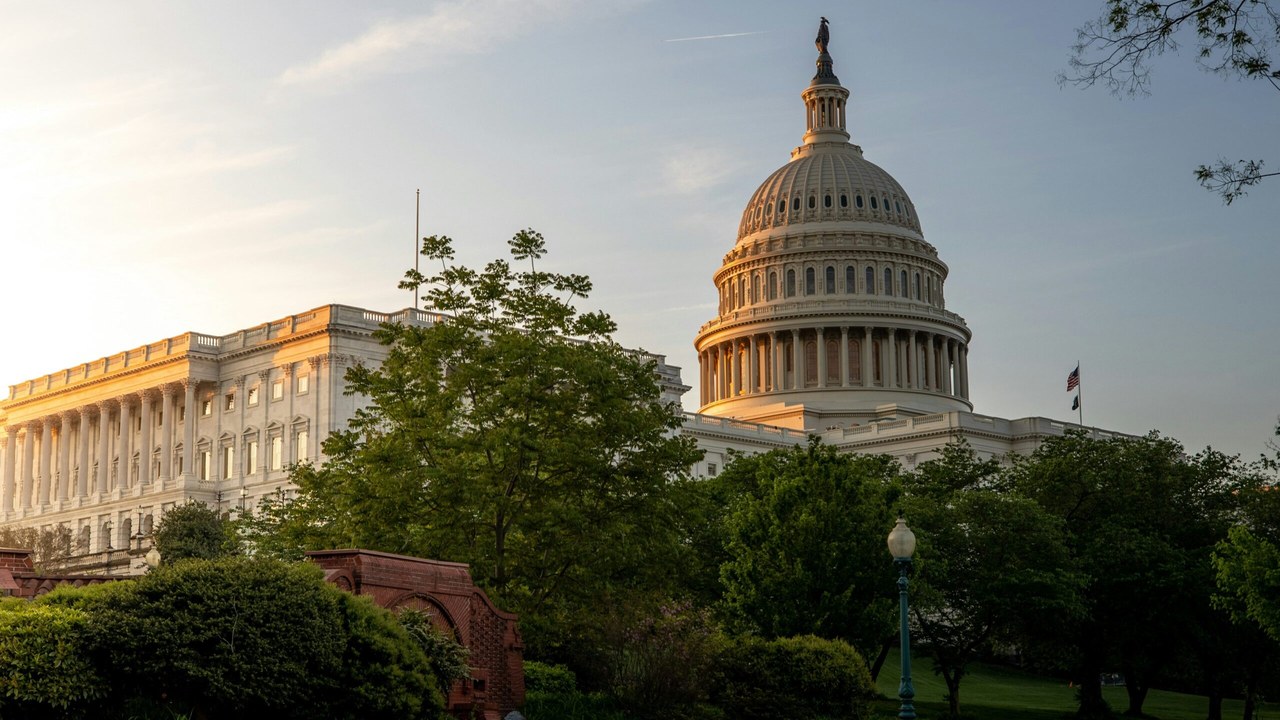
A stopgap spending law is keeping the federal government’s discretionary agencies funded at current levels through December 11, following months of on-and-off funding fights earlier in 2026. The measure, H.R. 6500, the “Continuing Appropriations and Extensions Act, 2027,” was signed into law on September 2, 2026, after clearing the House 370-48 and the Senate 90-6. The same measure also extends a batch of unrelated authorizations, from veterans’ program funding to surface-transportation authority, that would otherwise have expired alongside the rest of the discretionary budget. For a household budgeting around a Social Security deposit, a SNAP allotment or a passport appointment, the more useful question isn’t the vote count — it’s exactly what happens to each of those things if lawmakers miss the December 11 line.
Why Social Security and Medicare Checks Keep Moving Either Way
Social Security and Medicare do not depend on the twelve annual spending bills Congress is still negotiating. Both run on mandatory spending financed through dedicated payroll-tax trust funds, a category that sits outside the yearly appropriations fights that fund most agency operations. That structural difference is why retirement, survivor and disability benefits, along with Medicare Part A, B, C and D coverage, are built to keep paying out even if funding for discretionary agencies lapses on December 11, according to the Committee for a Responsible Federal Budget’s shutdown explainer, which lists Social Security, Medicare and Medicaid among the programs “not subject to annual appropriations.”
What can slow down is everything wrapped around the payment itself. New card issuance, benefit verification and general customer-service calls are staffed by employees whose funding is tied to the same appropriations fight as the rest of the government, so those functions have been the first to back up in past lapses. A retiree waiting on a replacement Medicare card or a benefit-verification letter for a mortgage application could feel that delay even while the deposit itself lands on schedule.
Free download: A seven-step ladder from rumor to payment issued, plus five yes/no tests to run before counting on any promised check. Get the free government check tracker.
SNAP and WIC Run on a Much Shorter Funding Leash
Not every benefit shares Social Security’s insulation. SNAP funding is technically mandatory too, but the mechanics are different: once agency funding lapses, the U.S. Department of Agriculture is only authorized to keep issuing benefits for roughly 30 days before that authority runs out. A December 11 lapse that stretched into January would start that clock, putting the following month’s SNAP deposit at risk if a deal still hadn’t been reached. Existing SNAP allotments already loaded onto an EBT card stay usable no matter what happens on Capitol Hill, and retailers keep accepting them; the risk sits specifically with the deposit for the following month, which is what depends on USDA’s day count.
WIC, the nutrition program for pregnant women, new mothers, infants and young children, sits on a thinner cushion still. Its funding relies on a contingency reserve that, according to a congressional shutdown guide for constituents, can run dry within days rather than weeks once a lapse begins, leaving individual states to decide how long they can keep loading benefits onto EBT cards before pausing new distributions. Neither program has been touched by anything that has happened so far. Both are simply riding the same appropriations calendar as the rest of the discretionary government, a calendar that resets to zero if nothing else passes by December 11.
IRS Service, Passport Waits and the Back-Pay Guarantee
Two more pieces of the household-facing government are worth naming on their own. The IRS keeps collecting taxes and processing returns during a lapse, since the tax code itself doesn’t pause, but phone lines and other taxpayer-service functions have historically been the first casualties: a 2013 lapse left more than a million income- and Social Security-verification requests stuck in a backlog that delayed mortgage and other loan approvals for weeks. Return processing and refunds have continued in recent lapses because the IRS treats them as tied to existing legal obligations rather than discretionary services, but taxpayers who need to reach a live person, resolve an audit question or get help from the Taxpayer Advocate Service face the same staffing crunch as everyone else calling a federal help line. Passport processing follows a similar pattern. The same congressional shutdown guide notes that already-slow passport turnaround tends to face further delays once a lapse pulls staff and building access into the mix.
Federal employees split into two groups once funding runs out: “excepted” staff keep working without pay because their jobs are considered essential, and everyone else is furloughed and barred from working at all. Both groups are guaranteed back pay once funding is restored, a protection written into law after the 2018-2019 lapse, though federal contractors carry no equivalent guarantee and have historically gone unpaid for the missed weeks. None of that has happened yet. The law signed September 2 is what’s keeping every one of these categories running on a normal schedule through December 11.
A Countdown That Stops Short of the Household
A funding deadline is one clock. A household’s eligibility for programs like Medicare Savings Programs, Extra Help or home energy assistance runs on an entirely separate one that keeps ticking whether or not Congress reaches a deal. Few people ever see those programs, and the income rules behind them, gathered in one place.
The Benefits Checklist lays out all 11 benefit programs and their 2026 income limits in one 69-page guide, with a 50-state phone directory built in.
Read the 69-page guide in The Benefits Checklist.
AI-assisted research and drafting; reviewed by an editor.


