
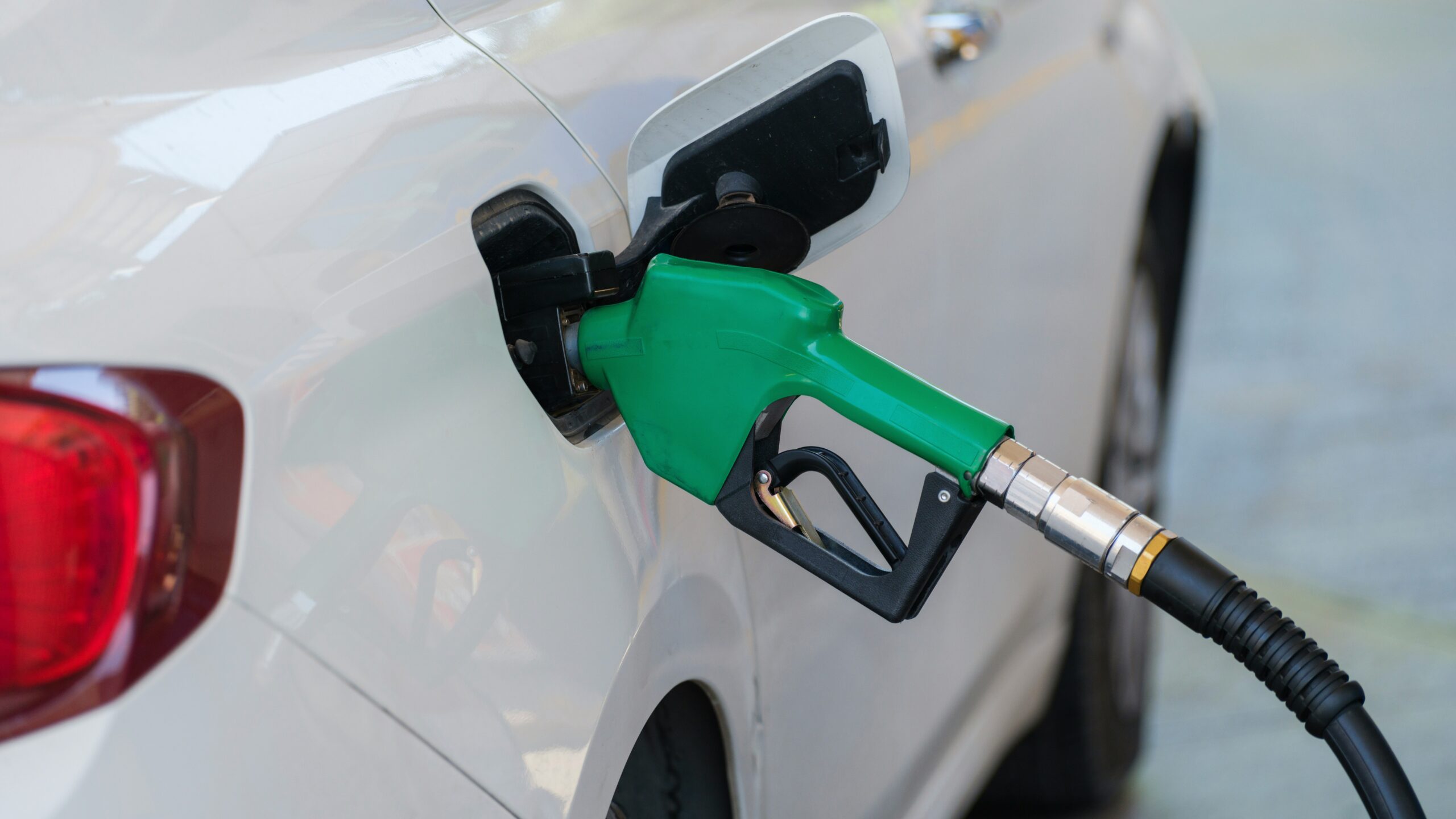
Gas prices are set to fall further in 2027 than they have in years, according to the government’s own numbers — but only after a run-up this year that is still working its way through household budgets. The Energy Information Administration’s September Short-Term Energy Outlook forecasts the retail price of gasoline at $3.35 a gallon next year, down about 49 cents from this year’s $3.84 average. That gap is one of the larger year-over-year swings in the agency’s recent forecasts, in either direction.
The EIA’s Retail Gasoline Forecast
The agency’s own table puts the annual average retail gasoline price at $3.10 a gallon in 2025, $3.84 in 2026, and $3.35 in 2027. That means 2026 is forecast to be the highest of the three years by a wide margin, with 2027 pulling back closer to where prices sat in 2025. Both the 2026 and 2027 numbers are projections completed as of September 3, 2026 — not locked-in outcomes — and the agency updates this forecast monthly, with its next release due October 6, 2026.
Free retirement updates: Enrollment and claim windows come and go, and missing one can cost you real money. The free Retirement Shield newsletter keeps you ahead of the deadlines that matter. Sign up free.
Why Oil Prices Are Expected to Come Back Down
Gasoline prices track crude oil, and the EIA’s Brent crude forecast tells much of the story: an average of $69 a barrel in 2025, jumping to $91 in 2026, then easing to $74 in 2027. Brent averaged $91 a barrel in August, $7 higher than July, as global inventories kept falling — the agency estimates roughly 400 million barrels have come out of global storage so far this year, with inventories falling by an average of 3.9 million barrels a day in the second quarter of 2026 and an estimated 3.0 million barrels a day in the third quarter. Much of the 2026 spike traces back to reduced tanker traffic through the Strait of Hormuz and the Bab el-Mandeb strait, which the EIA says pushed crude oil production shut-ins to an average of 6.7 million barrels a day in August, up from 5.0 million barrels a day in July, and which the agency expects to average about 5.7 million barrels a day in the fourth quarter of 2026. The agency publishes a country-by-country accounting of those shut-ins covering Saudi Arabia, Iraq, Iran, the UAE, Kuwait, Qatar and Bahrain, whose combined baseline production before the disruption totaled 25.2 million barrels a day. The agency expects most of the shut-in production to return to near pre-conflict levels by the second quarter of 2027, as shippers find pipeline and overland workarounds and new bypass pipeline capacity in the United Arab Emirates comes online in mid-2027 — the main reason its forecast has Brent easing to around $77 a barrel by that quarter and gasoline prices easing next year rather than staying at 2026’s elevated level.
Diesel Is Squeezed by the Same Forces, on Its Own Timeline
Diesel is forecast to average $5.07 a gallon in 2026 and $4.40 in 2027, according to the EIA’s petroleum products outlook, which also estimates diesel crack spreads — the margin refiners earn turning crude into diesel — will exceed $2 a gallon from August through November before easing steadily through mid-2027. That decline assumes Middle East tanker traffic returns to normal, letting refineries in Saudi Arabia and Kuwait ship more distillate fuel to the global market. If the Strait of Hormuz stays constrained past the end of 2026, the agency says diesel prices could run higher than its current forecast. The same September release also updated the agency’s forecast for residential electricity prices, a separate but related line in most household energy budgets, for 2026 and 2027.
The Agency Just Revised Its Own Diesel Forecast Higher
The September report does not just update last month’s numbers — it shows how much they moved. The EIA’s own comparison of this forecast against its August 11, 2026 forecast shows the annual average diesel crack spread revised up to $1.57 a gallon for 2026, from $1.30 previously, a 20.8% jump, and to $1.25 for 2027, from $0.97, a 28.5% jump. Retail diesel itself was revised up a smaller amount: to $5.07 a gallon for 2026 from $4.85, and to $4.40 for 2027 from $4.07. Those upward revisions to diesel sit alongside the West South Central region’s downward-revised electricity sales in the same September report, a reminder that a monthly forecast update can move different fuels and different regions in different directions depending on what changed in the underlying data.
U.S. Oil Production Keeps Climbing While Imports Shrink
West Texas Intermediate, the U.S. benchmark crude, is forecast to average $65 a barrel in 2025, $85 in 2026, and $70 in 2027 — the same swing as Brent, just consistently a few dollars cheaper, reflecting the usual discount domestic crude trades at relative to the global benchmark. Behind that price path, U.S. crude oil production keeps rising: 13.7 million barrels a day in 2025, 13.8 million in 2026, and a forecast 14.3 million in 2027. As that output grows, the EIA expects net imports of crude oil and petroleum products to fall further into negative territory — meaning the country exports more than it imports — sliding to about 4.2 million barrels a day in 2026 before easing slightly to 3.8 million in 2027.
None of that changes what a specific driver pays walking up to a specific pump, but it explains why the agency expects Brent, WTI and retail gasoline to move together through 2027 rather than decouple: more domestic supply cushions the price somewhat even as global disruptions from the Middle East work themselves out.
These are still projections, not locked-in outcomes — the agency revises its numbers every month as tanker traffic, refinery output and weather shift. But the direction the EIA has published is specific: retail gasoline averaging $3.35 a gallon in 2027, down from $3.84 in 2026, with the swing tied mainly to Middle East oil supply recovering rather than any new tax, rule or rebate check.
Inside the kit
The 5 kinds of property-tax relief, the circuit-breaker credit that includes renters, help with heating, cooling and home repairs, and an application log and renewal calendar.
The Senior Property Tax & Home-Cost Relief Kit includes an 11-page kit, the 5 kinds of property-tax relief and the circuit-breaker credit that includes renters.
Open The Senior Property Tax & Home-Cost Relief Kit.
This article was produced with AI assistance and reviewed by a human editor. Figures are linked to their primary sources; where a claim could not be verified from the public record, we say so.


