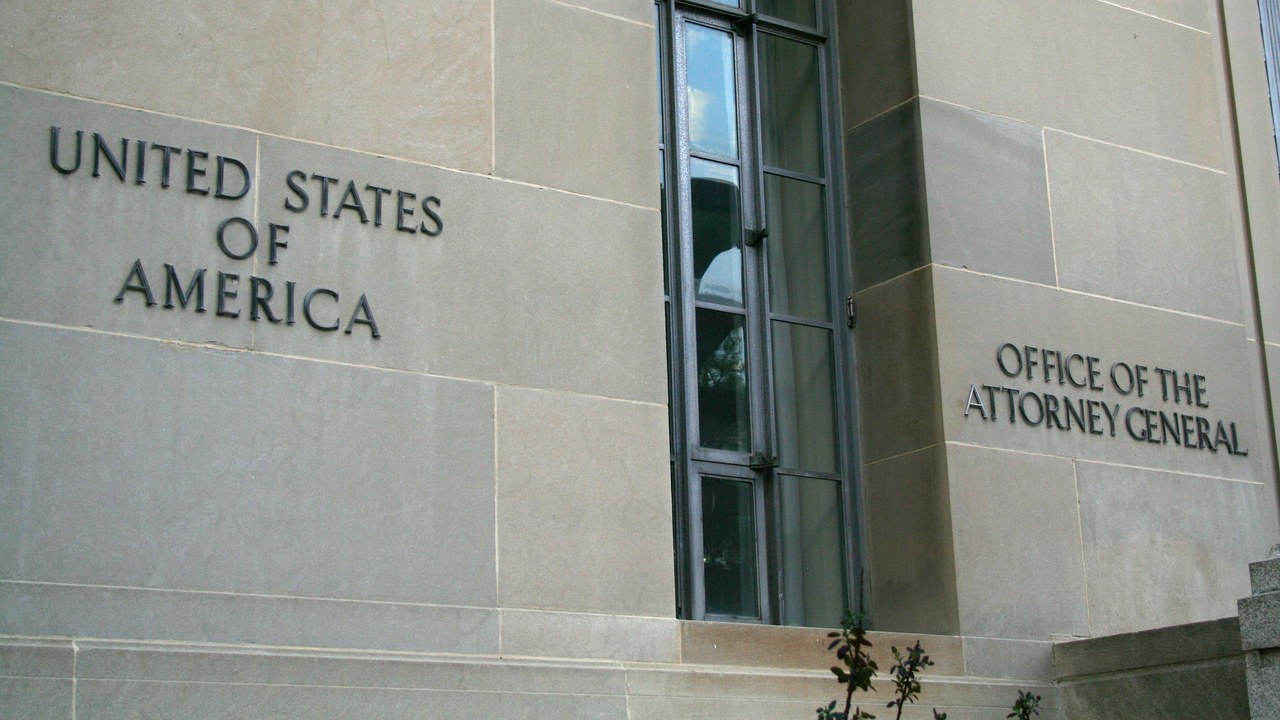
Federal prosecutors in Washington pulled off an unusually large one-day haul this week, restraining roughly $52 million in cryptocurrency tied to a Chinese-language marketplace that functioned less like an underground criminal network and more like a supplier catalog for scam operators. The Department of Justice’s Scam Center Strike Force says the seizure pushes its running total past $938 million recovered from scam-related crypto since the unit was formed less than a year ago. For households who get the unsolicited texts and investment pitches, the case is worth understanding for what it reveals about who is actually behind those messages: not a lone caller, but a marketplace of vendors selling scam tools to each other.
A Marketplace That Sold Scams Like Software
The marketplace at the center of the case, known as Xinbi Guarantee, ran primarily through a Chinese-language Telegram channel where vendors advertised services to scam center operators: building custom fake investment websites, laundering money taken from wire-fraud victims, and recruiting people to work inside scam compounds in Southeast Asia. Xinbi itself held vendor payments in escrow, releasing the money only once a vendor delivered, which let scam operators shop for laundering and tech services with roughly the same confidence as ordering from a legitimate supplier.
U.S. Attorney Jeanine Ferris Pirro, who announced the case, put the stakes in blunt terms, according to the Justice Department’s account of the case: “If Chinese organized crime can buy a custom website and a money laundering service the way you order takeout, then every American with a retirement account is in the blast radius.”
Free retirement updates: Enrollment and claim windows come and go, and missing one can cost real money. The free Retirement Shield newsletter stays ahead of the deadlines that matter. Sign up free.
The Warrant That Cut the Channels Off
A seizure warrant unsealed the same day the case was announced laid out how investigators traced victims’ stolen funds to specific vendors who had posted cryptocurrency wallet addresses for payment on the Telegram channel. On September 7, 2026, the U.S. District Court for the District of Columbia authorized law enforcement to seize the Telegram channels that hosted the marketplace. Investigators also seized two cryptocurrency wallets Xinbi had used to collect vendor payments, together holding about $12 million, and sought the restraint of 47 more wallets connected to the network’s money laundering and vendor activity. Combined, those actions restrained more than $52 million in a single day, with Tether credited by prosecutors for assisting the investigation.
Treasury Adds Sanctions on Top of the Seizure
The same day, the Treasury Department’s Office of Foreign Assets Control designated Xinbi Guarantee a significant transnational criminal organization, along with two companies OFAC says helped keep it running: SafeW Technology, a Singapore-based encrypted-messaging developer, and Anwen Technology, a Cambodia-based firm behind a cryptocurrency wallet app called XinbiPay. The designation blocks any property those entities hold in the United States or under the control of U.S. persons. Treasury says the action carries out an executive order President Trump signed on March 6, 2026, directing agencies to use every available tool against foreign-based fraud networks, and estimates Xinbi’s marketplace has processed the equivalent of more than $24 billion in digital assets and cash since it launched around 2022.
A Strike Force Total That Keeps Climbing
The Justice Department created the Scam Center Strike Force in November 2025 to go after the Southeast Asian scam-compound economy, pairing federal prosecutors with the FBI, the Secret Service and several other agencies. Since then, the unit says it has restrained close to $938.5 million in cryptocurrency tied to scam operations. This week’s announcement also covered a separate front: a Strike Force team spent two weeks in Madagascar helping local authorities dismantle 13 scam compounds run by Chinese organized crime groups, a deployment that involved processing more than 3,200 electronic devices and interviewing roughly 400 people who were arrested, about 30 of whom were repatriated to China as leaders of the compounds.
Why the Loss Numbers Keep Climbing
The Justice Department’s release cites figures from the FBI’s Internet Crime Complaint Center, or IC3, to explain why cases like this keep growing in size. Cyber-enabled fraud accounted for nearly 85% of all losses reported to IC3 in 2025, and within that category, IC3 calculated that reported losses from cryptocurrency investment fraud schemes rose from $4.57 billion in 2023 to $8.65 billion in 2025, an 89% increase. IC3 itself cautions that its figures rely on victims reporting losses in the first place, meaning the real totals are almost certainly higher.
It is worth being precise about what “restrained” and “seized” mean here: the $52 million and the broader $938 million figure are funds law enforcement has frozen or taken control of, not money that has been returned to the people who lost it. The Justice Department describes returning stolen funds to victims as a goal of the Strike Force’s ongoing work, not something this particular announcement completed.
The Strike Force is directed by Assistant U.S. Attorney Karen P. Seifert and draws on federal prosecutors in the District of Columbia, Alaska, Hawaii, Rhode Island and Western Washington, along with the FBI, the Secret Service, IRS Criminal Investigation and the U.S. Postal Inspection Service, according to the Justice Department’s announcement of the case.
This article was produced with AI assistance and reviewed by a human editor. Figures are linked to their primary sources; where a claim could not be verified from the public record, we say so.
More Financial Reading