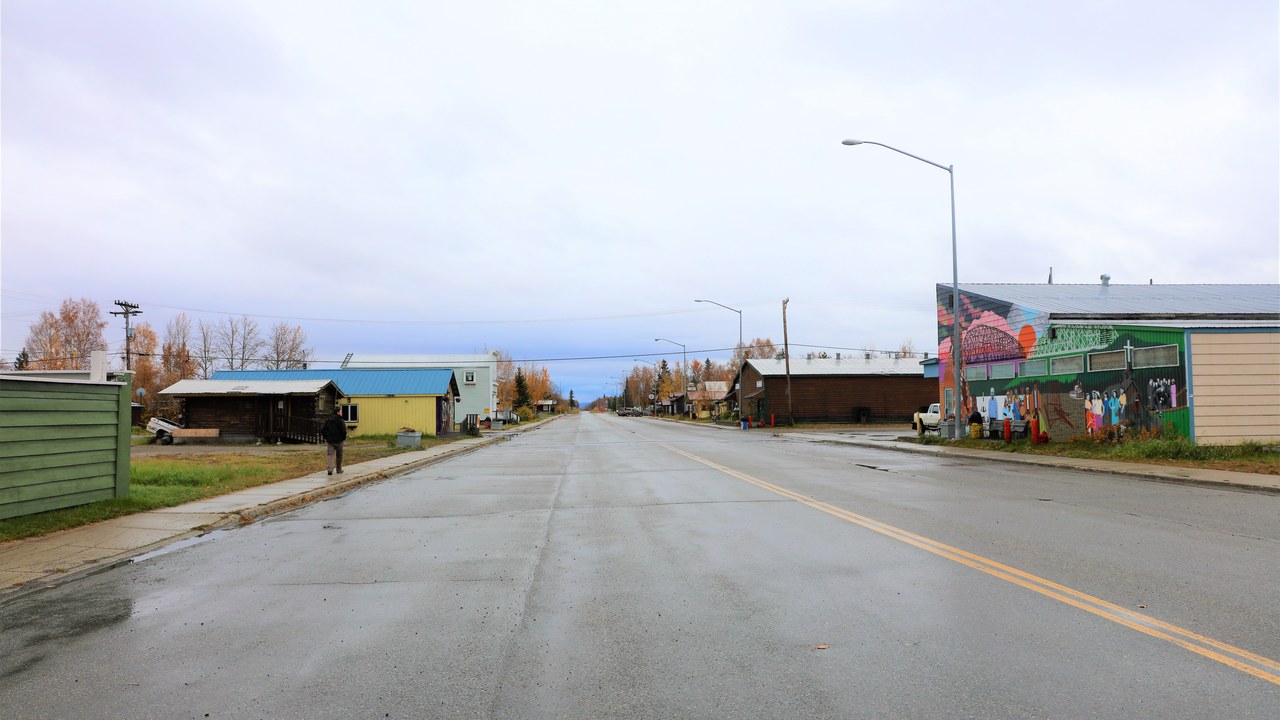
Grocery prices in Alaska’s most isolated communities run on a different scale than almost anywhere else the Supplemental Nutrition Assistance Program covers, and USDA builds that gap directly into how much a household there can receive. Under the FY2027 Cost-of-Living Adjustments memo, taking effect October 1, 2026, a four-person household in USDA’s “Alaska Rural 2” zone has a maximum monthly allotment of $2,027, compared with $1,023 for an identical four-person household in the 48 contiguous states or the District of Columbia.
Three Alaska Zones, Three Different Ceilings
USDA does not treat Alaska as a single region for SNAP purposes. The state is split into Urban, Rural 1, and Rural 2 zones, each with its own maximum allotment table, because the cost of a comparable grocery basket climbs the farther a community sits from a road system or regular barge and freight service. In FY2026, a four-person household’s maximum allotment ran $1,285 in Alaska’s Urban zone, $1,639 in Rural 1, and $1,995 in Rural 2, according to USDA’s own regional tables, which list all three zones side by side with the 48-state, Hawaii, Guam, and Virgin Islands figures.
The FY2027 memo, laid out on USDA’s cost-of-living adjustment page, carries that same three-way split forward with higher dollar amounts. Rural 2, the zone covering Alaska’s most remote villages, again sits well above Urban and Rural 1, and its four-person figure of $2,027 is the number driving the “nearly double” comparison against the lower 48.
Hawaii, Guam, and the U.S. Virgin Islands get their own separate tables in the same memo, each set above the 48-state figures but below Alaska’s Rural 2 tier. In FY2026, Hawaii’s four-person maximum ran $1,689, Guam’s ran $1,465, and the U.S. Virgin Islands’ ran $1,278, all higher than the 48-state figure but well short of Alaska Rural 2’s $1,995 that same year. Alaska is not simply “the expensive state” in USDA’s model; it is the only one of the five non-contiguous jurisdictions split into three cost tiers instead of one.
Free retirement updates: Want plain-English help keeping more of your money in retirement? The free Retirement Shield newsletter covers the benefits, deadlines, and money mistakes that cost retirees, a couple times a week. Subscribe free.
Why the Formula Treats Alaska Differently at All
SNAP’s allotments are built from the Thrifty Food Plan, USDA’s estimate of what it costs to buy a nutritious, low-cost diet for a household. USDA maintains a separate Thrifty Food Plan cost estimate for Alaska and Hawaii on top of the standard 48-state estimate, reflecting the reality that shipping food into a state with no road connection to the rest of the country, or into villages with no roads at all, adds real cost to a grocery basket that the standard formula does not capture. Splitting Alaska further into Urban, Rural 1, and Rural 2 lets the formula narrow that adjustment down to how remote a specific community actually is, rather than pricing all of Alaska the same way.
That is a meaningfully different approach than simply giving every Alaska household a flat percentage bump. A family in Anchorage and a family in a village reachable only by small aircraft both live in Alaska, but USDA’s own tables treat their cost of living as materially different, and their maximum allotments reflect that gap directly.
What “Nearly Double” Looks Like Across Household Sizes
The four-person comparison is not an outlier chosen to make the gap look bigger than it is. In FY2026, a one-person household’s maximum allotment ran $598 in Rural 2 against $298 in the 48 states, almost exactly double. An eight-person household’s maximum ran $3,591 in Rural 2 against $1,789 in the 48 states, again close to double. The four-person figures driving this comparison, $2,027 against $1,023 for FY2027, sit right in line with that same roughly-two-times ratio that shows up across nearly every household size on the table.
That consistency matters because it shows the gap is a structural feature of the cost-of-living formula, not a quirk that happens to show up at the four-person line. A Rural 2 household of any size can expect its ceiling to run close to double the 48-state figure for the same size household, year after year, as both tables move together each October.
The New Numbers Take Effect October 1
Both the Rural 2 figure and the 48-state figure come from the same FY2027 Cost-of-Living Adjustments memo, published by USDA’s Food and Nutrition Administration on August 21, 2026, roughly six weeks before the new fiscal year begins. Nothing in the memo singles out Alaska for a special adjustment cycle; the entire national table, from the smallest 48-state household to the largest Rural 2 household, updates on the same schedule and takes effect the same day.
What makes Alaska’s Rural 2 number stand out is not a different process, but the same process applied to a place where the underlying cost of food is simply higher, and has been every year USDA has published this table.
Households applying for SNAP in Alaska still go through the same eligibility process as anywhere else, including the income limits that determine whether a household qualifies before the maximum allotment ever comes into play. USDA’s SNAP eligibility page notes that gross and net income limits also run higher in Alaska and Hawaii than in the 48 states, meaning a Rural 2 household is measured against a taller income bar on the way in, not just a higher benefit ceiling once it is approved.
This article was produced with AI assistance and reviewed by a human editor. Figures are linked to their primary sources; where a claim could not be verified from the public record, we say so.
More Financial Reading